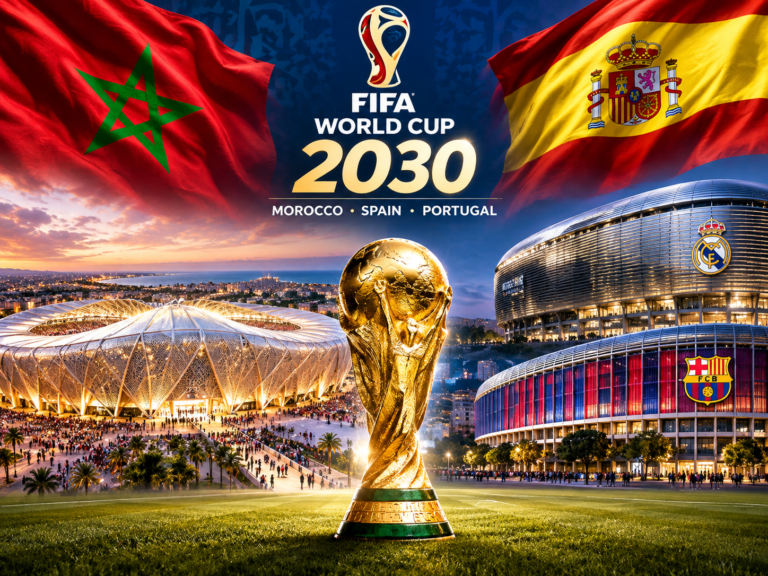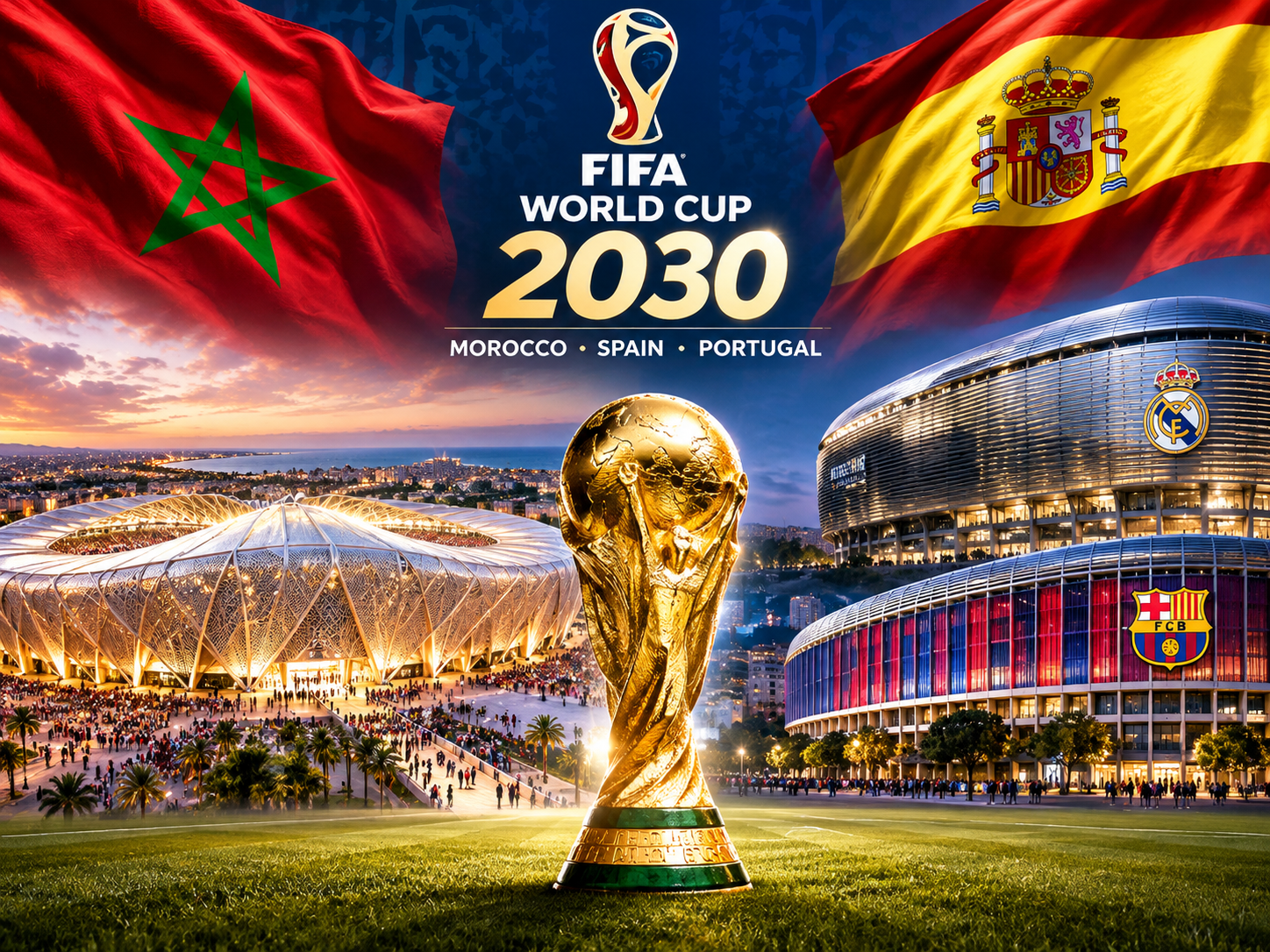
Morocco is mounting an ambitious challenge to host the 2030 FIFA World Cup final, with its planned 115,000-seat stadium threatening to overturn Spain’s expectations of staging one of the most prestigious sporting events on the planet.
A battle for international football supremacy is developing between Spain and Morocco as both countries compete for the honour of hosting the 2030 FIFA World Cup final.
Although Spain, Portugal and Morocco have been officially appointed joint hosts of the tournament, the location of its championship-deciding match remains undecided.
Spain had reportedly anticipated hosting the final, drawing confidence from its established football heritage, advanced sporting infrastructure and internationally recognised tourism industry.
However, Morocco’s ambitious infrastructure development programme has emerged as a significant challenge to those expectations.

Morocco’s Billion-Dollar Football Ambition
At the centre of Morocco’s campaign is the Grand Stade Hassan II, a stadium under construction near Casablanca with an anticipated capacity of 115,000 spectators.
The project, reportedly valued at approximately US$1 billion, would become one of the most imposing football venues in the world upon completion.
Morocco’s ambition extends beyond hosting football matches. Investment in transport infrastructure, accommodation and urban development could create wider economic opportunities connected to the tournament.
The country’s campaign also reflects the growing ambition of African football to secure a more prominent position within the international sporting landscape.
Spain’s Two Football Giants Compete
Spain possesses two internationally recognised contenders to host the final: Real Madrid’s Santiago Bernabéu Stadium and Barcelona’s Camp Nou.
Both venues offer considerable sporting prestige, supported by Spain’s experience in accommodating international sporting events and large numbers of overseas visitors.
However, competition between Madrid and Barcelona could complicate Spain’s efforts to present a unified campaign against Morocco.
Spanish football officials have disputed suggestions that presenting two competing venues necessarily weakens their position.
A Tournament Across Three Continents
The 2030 FIFA World Cup will mark the centenary of the competition, which was first staged in Uruguay in 1930.
While Spain, Portugal and Morocco will serve as the principal hosts, Uruguay, Argentina and Paraguay will each stage a commemorative match.
The tournament will therefore span three continents, creating an unprecedented geographical footprint in World Cup history.
More Than a Football Match
Hosting the World Cup final represents an opportunity to attract international tourism, strengthen national branding and showcase a country’s infrastructure to a global audience.
Morocco’s challenge also illustrates how emerging sporting nations can use major infrastructure investments to compete with established international destinations.
For countries such as Sri Lanka, the developments provide an interesting example of how sport, tourism and long-term economic development can be incorporated into a broader national strategy.
FIFA has yet to announce its final decision, leaving Spain and Morocco competing for one of football’s greatest honours.