Amid tense negotiations over tariff reductions, Washington has issued an ultimatum to Colombo: rein in your Chinese trade ties or face economic penalties. Sri Lanka pushes back, citing its neutral foreign policy.
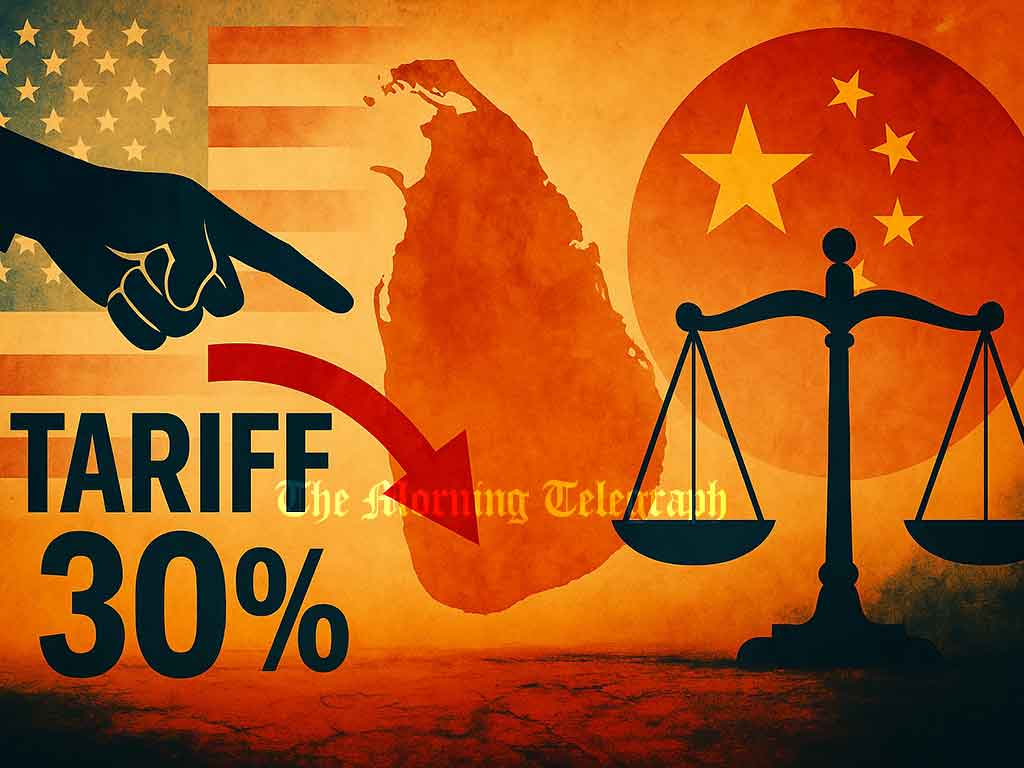
The United States has reportedly urged Sri Lanka to impose restrictions on its trade with China as a condition for reducing newly imposed reciprocal tariffs under the administration of President Donald Trump. The request came during high-level bilateral negotiations aimed at rolling back the steep 44% tariff the US announced on April 2 against Sri Lankan imports.
According to diplomatic sources, American trade officials made it clear that any meaningful tariff relief would require Sri Lanka to scale back its engagement with China. However, Sri Lankan authorities are said to have firmly rejected the demand, asserting that such a move would violate the island nation’s policy of neutrality and non-alignment in foreign affairs.
Despite the pressure, Sri Lanka has managed to secure a partial victory. At the end of the 90-day grace period under the “reciprocal tariff” review framework, Sri Lanka succeeded in reducing the proposed 44% tariff down to 30%. The breakthrough was communicated officially in a letter from President Donald Trump to Sri Lankan President Anura Kumara Dissanayake.
While the development marks a diplomatic milestone, concerns remain within the Sri Lankan administration. Although the revised 30% tariff is comparatively lower than what is being imposed on regional competitors such as Bangladesh, Laos, Myanmar, and Cambodia, it is still higher than the tariff rates granted to countries like Vietnam, raising questions about Washington’s strategic intentions.
President Trump, in his letter, underscored longstanding imbalances in the US-Sri Lanka trade relationship. He criticized Sri Lanka for its non-tariff barriers, trade restrictions, and protectionist policies, stating that they undermined fair trade and posed a threat to US national security. As a result, Trump affirmed the imposition of a 30% blanket tariff on all Sri Lankan goods entering the US market starting from the first of this month.
The tariff will be levied in addition to any existing import duties or taxes, adding significant pressure on Sri Lankan exporters already struggling with narrow profit margins and a volatile global trade environment.
Washington’s attempt to force Sri Lanka to curb trade with China is being seen by analysts as part of a broader US strategy to limit Beijing’s economic influence in the Indo-Pacific region. But Sri Lanka’s resistance signals a clear intention to maintain diplomatic autonomy, even at the cost of economic concessions.
As Sri Lanka weighs its trade options and navigates complex geopolitics, this latest episode underscores the high stakes of its economic diplomacy. With the garment sector and other key export industries hanging in the balance, Colombo will need to walk a tightrope between appeasing global powers and defending its sovereignty.