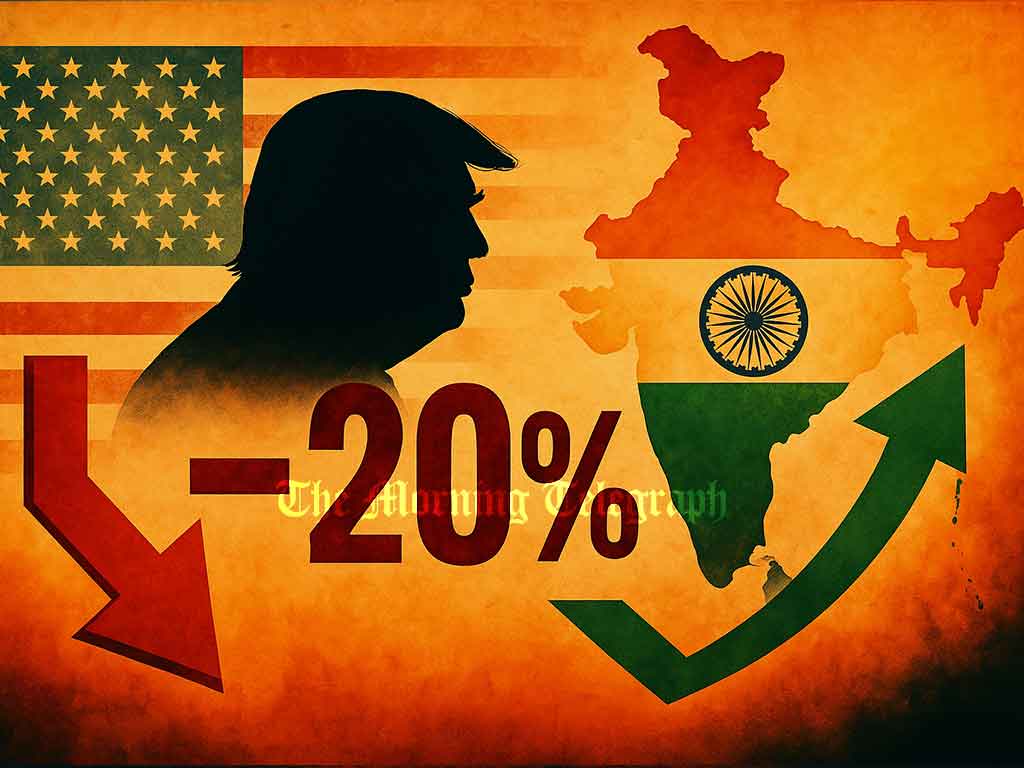
In a major win for New Delhi, India is set to receive reduced tariffs of 15–20% under a US trade deal, while Trump raises duties on other nations. The deal signals Washington’s strategic shift toward India amid rising global trade tensions.
India Set for Major Tariff Relief from US as Global Trade Tensions Escalate
India and the United States are on the brink of finalizing an interim trade agreement that could see tariffs on Indian exports cut by as much as 15–20%. The deal, expected to be announced shortly, positions India as a strategic exception amid Washington’s sweeping global tariff hikes under President Donald Trump’s “reciprocal tariff” system.
Foreign media reports confirm that, unlike other countries, India will not receive a formal tariff demand letter from the US this week. Instead, the agreement is anticipated to be unveiled through a formal statement, signaling a cooperative and preferential stance between the two economic powers.
This bilateral move stands in sharp contrast to the aggressive trade measures the US has taken against other nations. Just this week, Trump revealed plans to impose tariffs as high as 50% on several trading partners ahead of the August 1 implementation deadline. He also told NBC News that countries failing to declare their tariffs could face blanket duties ranging from 15% to 20% a stark escalation from the current global minimum of 10%.
India’s timely engagement in trade discussions with Washington earlier this year appears to have paid off. Being among the first nations to initiate dialogue with the White House in 2025, India has managed to avoid the heavy-handed penalties that are now being rolled out across the globe.
The trade deal is not only a diplomatic win for New Delhi but also a strategic maneuver by the United States to strengthen ties with a key regional ally. While countries like Bangladesh, Myanmar, Laos, and even Sri Lanka are facing new tariff burdens, India is poised to emerge with a competitive edge.
As global trade enters a new era of realignment, the US-India deal could set the tone for how geopolitical strategy and economic policy increasingly intersect in Washington’s trade calculus.