
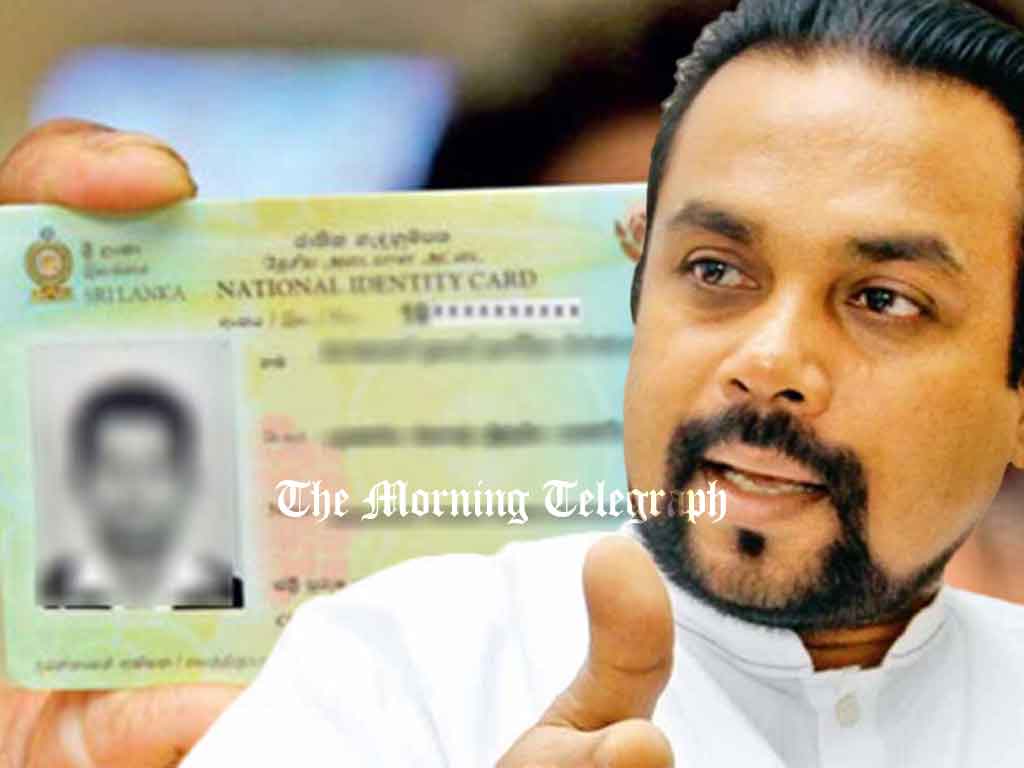
NFF leader Wimal Weerawansa exposes alleged handover of Sri Lanka’s electronic national ID system to an Indian firm, raising red flags over biometric data security, sovereignty, and a sidelined Rs. 5 billion local system.
National Freedom Front (NFF) leader Wimal Weerawansa has made explosive claims regarding the Sri Lankan government’s decision to award the development of the country’s electronic National Identity Card (e-NIC) system to an Indian non-profit firm, sparking nationwide concerns over data sovereignty and privacy.
Speaking at a press conference, Weerawansa alleged that the ‘Punarudaya’ administration has revived a dormant agreement signed in 2021 with India, allowing an Indian firm access to deeply sensitive personal information of Sri Lankan citizens. This includes biometric identifiers such as fingerprints, retina scans, and home addresses.
Weerawansa recalled that an MoU was originally signed in 2021 during the previous government between the Department of Persons Registration and an Indian organization to initiate the e-NIC system. Though shelved at the time, he claims President Ranil Wickremesinghe’s administration revived the project in 2023, allocating Rs. 3 million to get it off the ground.
However, Weerawansa argued that 99% of the e-NIC infrastructure has already been built domestically, with the Department of Persons Registration completing the system at a cost of Rs. 5 billion. He insisted that Sri Lanka already possesses the required technology, including fingerprint readers, retina scanners, and personal identification software.
“Despite all this progress, the government is now claiming the local system is flawed and is attempting to hand over the entire project to India’s National Institute for Smart Government (NISG),” Weerawansa alleged. “They are forcing the Department of Persons Registration to abandon their own system.”
The NFF leader further charged that the tender process was conducted entirely within India, effectively blocking out Sri Lankan or any third-party companies. He warned that the Indian firm would gain access to critical national databases, including individual travel patterns, accommodation records, and even medical information.
Adding to these worries, Weerawansa noted that the tender terms stipulate the Indian company would only be held 10% responsible in the event of a data breach, raising major accountability concerns.
He also disclosed that India’s Ministry of Digital Economy has already approved the tender, and urged the Sri Lankan government to halt the handover immediately to protect national interests.
“We are not against technological cooperation,” Weerawansa said. “But handing over our entire citizen identity framework to a foreign power undermines our sovereignty, puts 22 million citizens at risk, and ignores the billions already spent on local innovation.”
The controversy is likely to trigger more political debate in the weeks to come, especially amid growing regional scrutiny of foreign involvement in national digital infrastructure.



Based on recent news articles thete is no doubt that the Indian inteligence RAW is deeply involved in the Easter Sunday bombing. In view of this, is it a good idea to give this contract to an Indian company. Afterall isn’t it what the indian government wants having given funding for this project !
Are our leaders a bunch of idiots ?