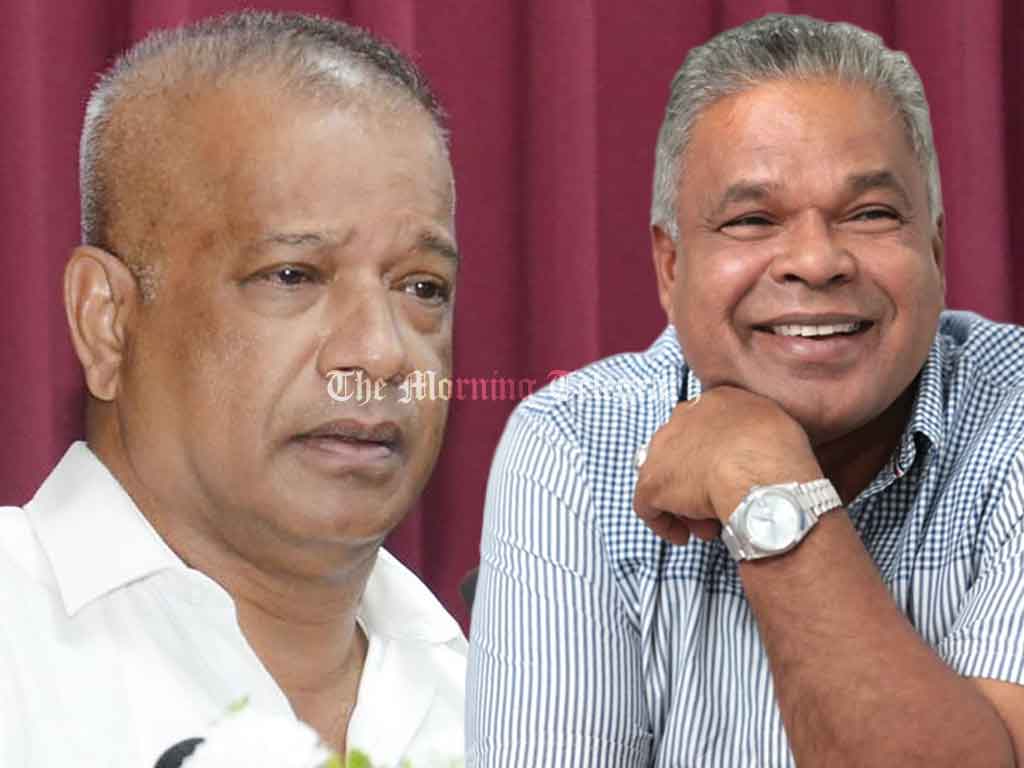
Agriculture Minister Lal Kantha defends controversial rice miller Dudley Sirisena, crediting him with ending Sri Lanka’s era of “stone-filled rice,” while addressing delays in removing unauthorized constructions from Parakrama Samudra dam. Critics accuse Dudley of building hotels on protected dam sites, but Lal Kantha separates his praise for rice distribution from his disapproval of illegal construction.
Agriculture Minister K.D. Lal Kantha has drawn a firm line between Dudley Sirisena’s role in Sri Lanka’s rice market and his controversial hotel constructions at Parakrama Samudra, stating that while Dudley may be vital to the nation’s paddy procurement, he is far less welcome when it comes to building unauthorized hotels on sensitive dam infrastructure.
Speaking at a public event, Lal Kantha revealed that the government’s latest phase of removing illegal structures from dams did not include Parakrama Samudra due to budget constraints. He assured that all such unauthorized constructions across the country’s dam network would eventually be removed, including those built at Parakrama Samudra.
“The allocated budget for this phase of removals has already been exhausted,” he said. “However, we plan to systematically eliminate all constructions built on dams including Parakrama Samudra in the near future.”
Lal Kantha emphasized that while Dudley Sirisena has received criticism for his ventures in hospitality, the country owes him a debt of gratitude in the realm of rice distribution.
“Some people keep attacking Dudley Sirisena,” he noted. “But let me remind you, if not for him, we would still be chewing on pebbles in our rice.”
He lauded Sirisena’s actions during a period of economic strain, stating that the businessman released rice into the market when the country needed it most, helping stabilize food supplies and preventing a severe grain shortage.
“Dudley Sirisena ensured that Sri Lankans had access to rice that was clean and edible. Say what you want, but he helped eliminate the era where rice had to be chewed with caution,” Lal Kantha declared.
Despite his praise, the minister maintained a firm stance against unlawful construction and reiterated his ministry’s commitment to protecting Sri Lanka’s historic irrigation systems from encroachment.
“The issue is not personal,” he clarified. “Dams are not for private development. And when the time comes, the Parakrama Samudra structures too will be dismantled.”
This statement comes amid heightened scrutiny over illegal constructions on public infrastructure, particularly in heritage and environmentally sensitive zones.
As the government navigates economic recovery and resource protection, balancing contributions from private individuals like Sirisena against national interests remains a complex and contentious issue.