
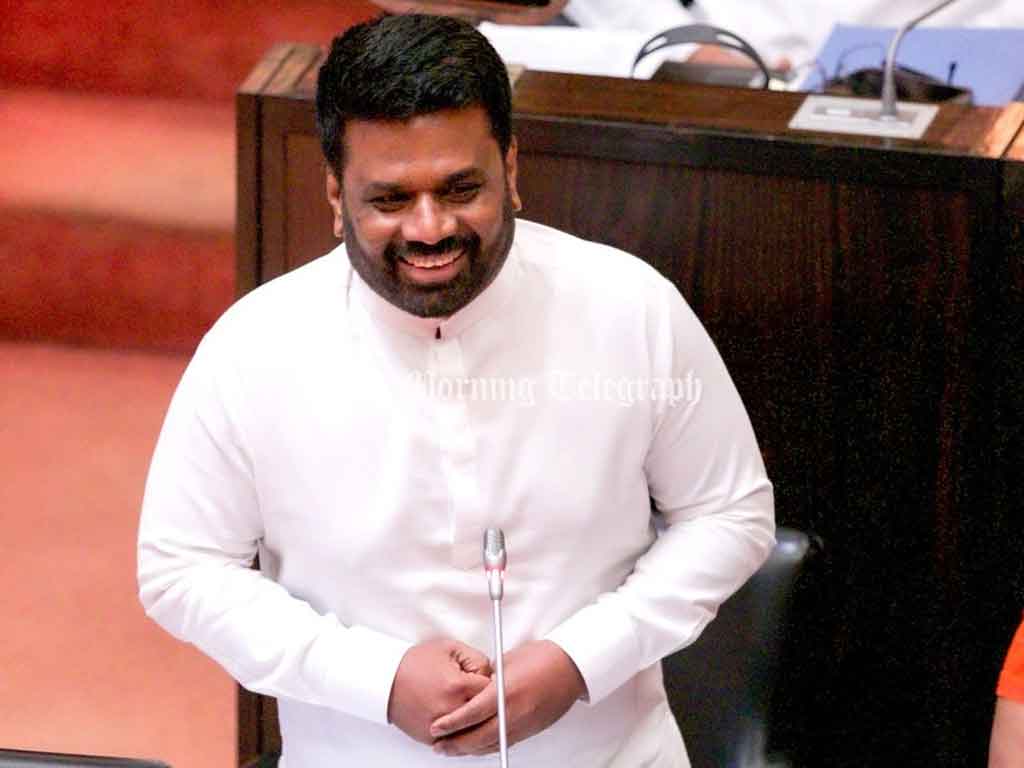
President Anura Kumara Dissanayake faces mounting pressure to fulfill his pre-election promise of abolishing the executive presidency. With no draft committee yet in sight, whispers of a sweeping constitutional overhaul and threats from the opposition signal a pivotal moment in Sri Lanka’s political future.
Is Sri Lanka Ready to Scrap the Executive Presidency? Anura Under Pressure to Deliver
The Sri Lankan government is reportedly preparing to abolish the executive presidency, a bold promise made by President Anura Kumara Dissanayake during his election campaign. Political insiders confirm that discussions are underway to bring forward a proposal that could redefine the country’s entire system of governance.
This major constitutional change, if enacted, would fulfill one of the most significant pledges made by the National People’s Power (NPP) prior to the presidential election. At the time, President Dissanayake vowed to not only abolish the executive presidency but also to introduce a new constitution aimed at empowering Parliament and restoring democratic balance.
However, months into his term, no constitutional drafting committee has been appointed. No tangible groundwork for a new constitution has been initiated either sparking concern and criticism among civil society groups and political analysts.
Against this backdrop of apparent inaction, credible sources now suggest that the President is preparing to submit a proposal to Parliament to officially abolish the executive presidency.
Political observers are watching closely to see whether this long-awaited promise will finally move from rhetoric to reality.
But the pressure isn’t just internal.
Opposition parties have reportedly grown impatient with the delay. Sources indicate they are preparing to submit a private member’s motion to Parliament one that independently calls for the abolition of the executive presidency if the government fails to act swiftly.
The private member’s motion could put the government in a precarious position, especially given how strongly the NPP campaigned on this very issue.
Many view the executive presidency as a root cause of authoritarian governance in Sri Lanka. The post was created in 1978 and has since amassed sweeping powers, often undermining parliamentary democracy. Its potential removal would represent one of the most significant political transformations in the country’s post-independence history.
If President Dissanayake follows through on this move, it could mark a decisive shift in how executive power is wielded in Sri Lanka restoring a more parliamentary-oriented system of checks and balances.
However, if the government continues to stall, the issue could quickly become a political minefield, especially as the opposition capitalizes on public expectations and legislative momentum.
With political tension building and promises hanging in the balance, all eyes now turn to the halls of Parliament. Will Sri Lanka finally bury the executive presidency or will this be yet another broken pledge in its long, complex history of constitutional reform?

JR never knew that monkeys could be president after him. Sri Lankan fortunately elected Anura who can use the same power to reverse the misgivings done to the state last 50 years. After his term he should decide only if it’s needed to be in power with same to secure the country from external forces.