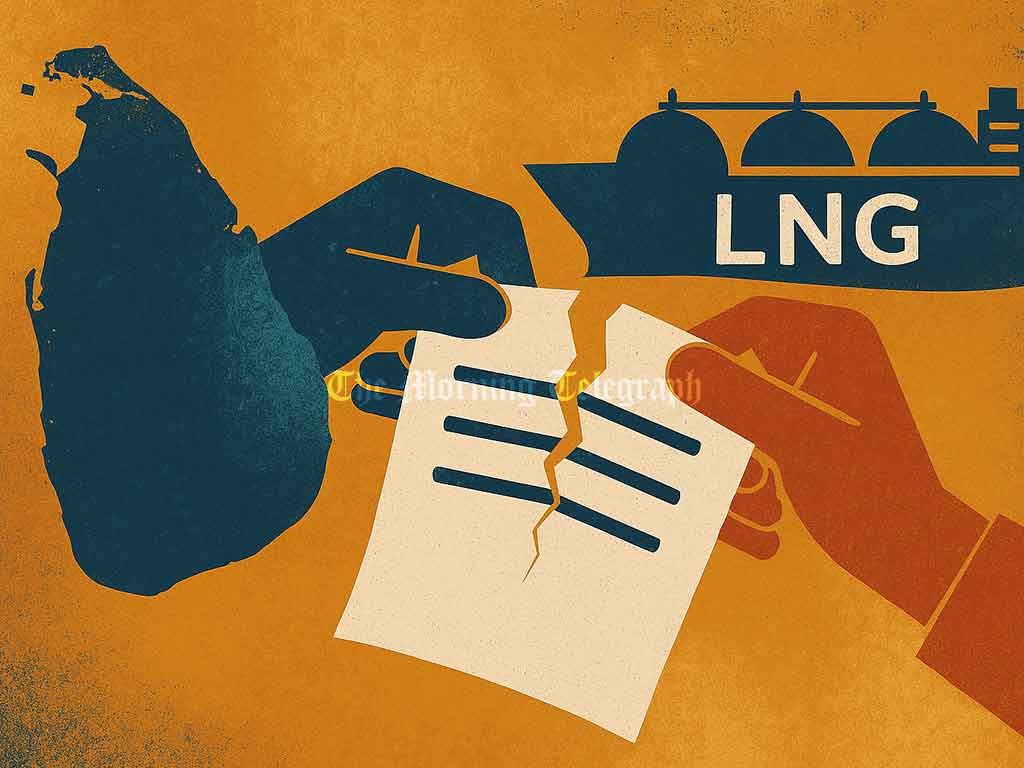
Sri Lanka is on the verge of scrapping its LNG partnership with India’s Petronet as Chinese competition heats up signalling a seismic shift in regional energy dynamics.
The Sri Lankan government is preparing to cancel a key Memorandum of Understanding (MoU) signed between India’s Petronet LNG and Sri Lanka’s LTL Holdings for the development and supply of LNG infrastructure. The Ministry of Energy has formally sought Cabinet approval to terminate the agreement, sources say.
The move follows an internal review by the Energy Ministry, which found the Petronet proposal unfit as a short-term solution, both in terms of capacity and implementation timeline. The review concluded that continuing with the Indian-backed project would lead to redundancy and excess infrastructure capacity. This is especially pertinent as Sri Lanka has already awarded the long-delayed LNG tender to a Chinese firm.
The now-shelved MoU, signed in August 2023, envisioned a multimodal LNG supply chain from India’s Kochi LNG terminal, using ISO tank containers to transport gas to the Sobadhanavi 230 MW gas turbine plant in Kerawalapitiya. It also included plans to develop offloading, storage, and regasification facilities.
Professor Udayanga Hemapala, Secretary to the Ministry of Energy, confirmed that Cabinet approval has been sought to cancel the agreement. He emphasized that while India remains a future LNG supplier candidate, the Petronet model was no longer viable due to its limited scalability and delays in deployment.
The government has not yet officially informed India or the relevant project stakeholders of the cancellation but intends to do so after Cabinet signs off.
Despite the proposed cancellation, Sri Lanka is planning a fresh LNG supply tender in the future one that will be open to competitive bidding from Indian companies like Petronet and others globally. The Energy Ministry says this ensures transparency and fosters competitive procurement practices, key to securing long-term national energy security.
The backdrop to this shift is Sri Lanka’s increasing exposure to strategic tug-of-war between India and China. By aligning LNG infrastructure development with China while distancing from the Indian MoU, Sri Lanka is making clear choices in a region where geopolitical competition is intensifying.
The Energy Ministry maintains that the decision is guided purely by national interest, practicality, and energy resilience, asserting that flexibility in LNG procurement, not fixed bilateral commitments is what Sri Lanka needs most at this critical juncture.