South Korea’s deadliest aviation disaster has reignited national fury. As officials cite pilot error in the Jeju Air crash that killed 179, grieving families accuse authorities of scapegoating the crew, demanding transparency and accountability. With missing flight data, conflicting reports, and suspicions of rushed conclusions, calls grow for an international review into the catastrophic final moments of the doomed Boeing 737.
South Korean aviation officials have concluded that pilot error played a decisive role in the Jeju Air crash that killed 179 people in December 2024, according to preliminary findings reported by The Times UK. The announcement has triggered outrage among grieving families, who accuse authorities of prematurely blaming the flight crew while obscuring critical details that may affect compensation and public understanding of the disaster.
The Boeing 737, en route from Bangkok to Muan, crashed on December 29, 2024, after both engines ingested birds reportedly Baikal teal ducks during final approach to Muan International Airport. Investigators say the pilots mistakenly shut down the still-functional engine rather than the one critically damaged by the bird strike, resulting in total engine failure.
A Chain of Deadly Errors
Officials told reporters that no mechanical fault was found. Instead, the crash was caused by a series of cockpit errors. After the bird strike, the crew disabled the left engine which was still operational rather than the right engine that had taken the brunt of the strike. The mistake caused a complete power loss, including to the flight data recorder, erasing the final four minutes of flight data.
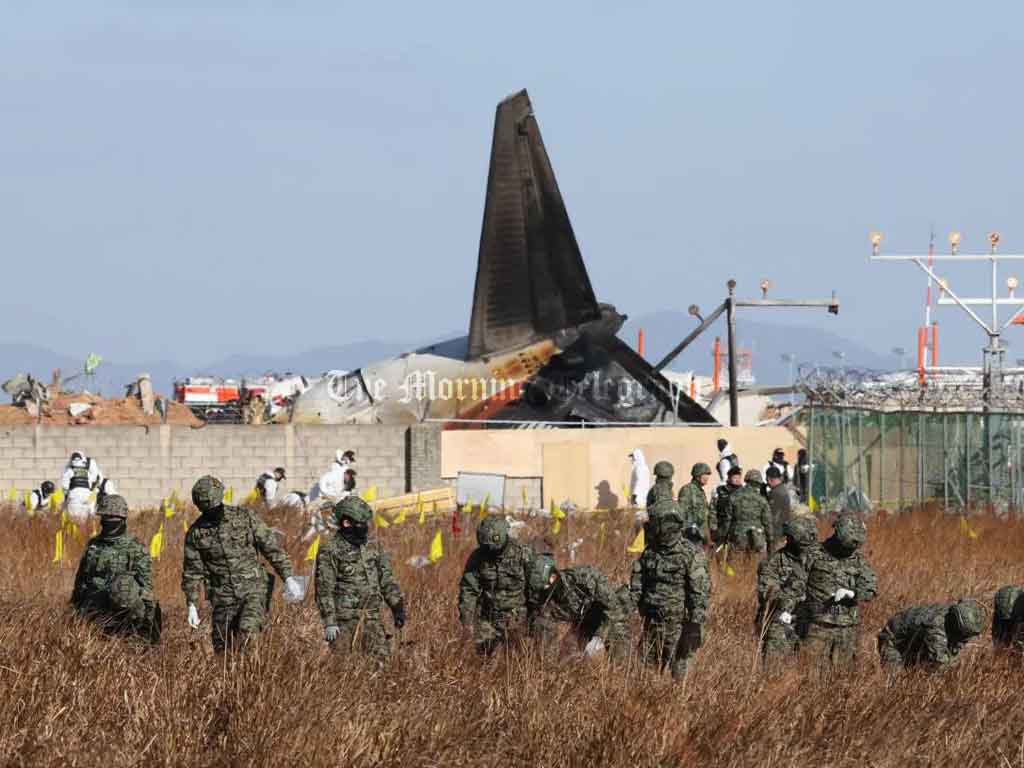
Further errors compounded the disaster. Investigators allege the pilots violated emergency protocols by attempting a dangerous landing from the opposite runway direction without deploying landing gear. The aircraft came in too fast, skidded off the runway, and exploded after colliding with a concrete embankment. Only two crew members seated in the rear survived.
“The pilot should have shut down the right engine, which was damaged, but turned off the left one instead. The power cut disabled the black box,” an MBN news official reported.
Families Erupt in Anger
The interim findings provoked intense backlash from victims’ families. A press conference on Saturday turned chaotic as relatives stormed the room, accusing officials of scapegoating the crew without sufficient proof. Authorities withdrew the report, stating it hadn’t been formally released.
“They’ve blamed it all on the pilots,” one father shouted.
Kim Yu-jin, head of the victims’ family group, criticized the process. “Investigators should present documents that justify their conclusions. We were only given the final verdict, not the evidence,” she said. She also warned that how the findings are presented could influence the compensation process.
A Grim Year for South Korea
The tragedy capped off what South Korean media called an annus horribilis for national aviation. It has intensified scrutiny of pilot training, emergency protocol, and Jeju Air’s crisis readiness. Wreckage photos showed the fuselage blackened and engines torn apart a haunting reminder of the magnitude of the disaster.
The plane’s flight data recorder and cockpit voice recorder have been sent to the U.S. for further analysis, though investigators say missing data from the final minutes may hinder a complete reconstruction.
Demands for Accountability Grow
Public debate rages over who bears ultimate responsibility. While early findings point to pilot error, aviation experts say cockpit design, real-time air traffic decisions, and airline procedures must also be examined.
Some families are urging the South Korean government to bring in international aviation experts for the final investigation stage. “We don’t want to shield the pilots,” one representative said, “but we demand fairness, dignity, and a thorough review not a rushed judgment.”