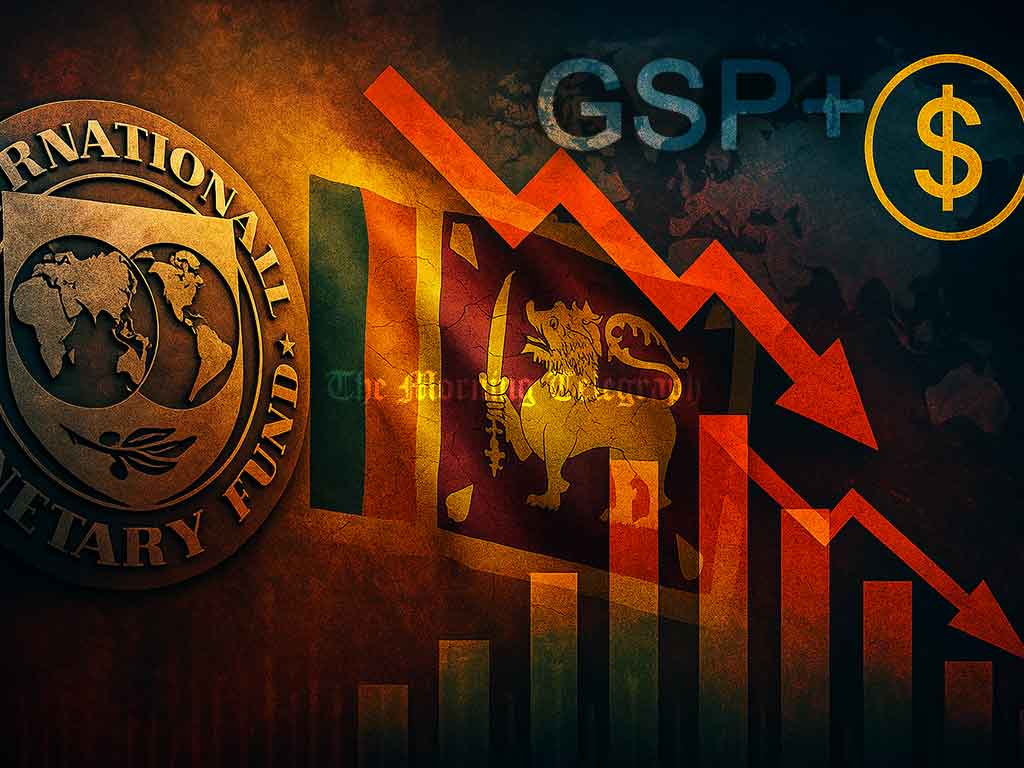
Sri Lanka faces a looming economic threat as GSP+ trade concessions near expiry and steep US tariffs threaten major exports. The IMF is closely monitoring ongoing negotiations to assess how deep the damage could be.
Sri Lanka’s economy is on edge as it confronts two major threats that could destabilize its trade and export sectors. The International Monetary Fund (IMF) is monitoring the situation carefully before making a final assessment, as key negotiations unfold.
The first major concern is the expiration of the European Union’s GSP+ (Generalized System of Preferences Plus) concession in 2027. The second is the United States’ imposition of steep tariffs under its reciprocal tax system, which could severely impact Sri Lanka’s export-driven industries.
GSP+ has been instrumental in bolstering Sri Lanka’s export economy by allowing tariff-free access to the European market. The loss of this concession will significantly increase costs for exporters and reduce the country’s competitiveness in global markets.
At the same time, the reciprocal tax system initiated by the US has already begun to bite. Originally proposed at 44%, the tariff has been reduced to 30% following negotiations, with the possibility of further reduction still on the table. Ongoing discussions between Sri Lanka and the US Trade Representative are considered pivotal for averting deeper economic fallout.
The IMF has raised red flags about the external vulnerabilities Sri Lanka now faces due to global trade uncertainties. However, it has opted to delay issuing a formal assessment until the outcome of the US tariff talks is finalized.
Economists warn that this tariff policy could severely disrupt Sri Lanka’s major export sectors including apparel, tea, rubber, and coconut. These industries account for a significant share of the country’s foreign exchange earnings and support hundreds of thousands of jobs. Any impact on them could create a ripple effect, leading to widespread job losses and reduced household incomes.
The tariff-induced slowdown could also undermine government revenues and threaten the country’s already fragile fiscal recovery. If the US maintains high tariffs and the EU follows through with GSP+ termination, Sri Lanka’s external sector may face its most significant crisis since the 2022 economic collapse.
Ultimately, the final outcome of negotiations with the US will be critical. A favorable agreement could soften the blow and restore some investor confidence. However, failure to resolve the tariff issue and a lapse in GSP+ could deepen Sri Lanka’s economic vulnerabilities, pushing recovery further out of reach.