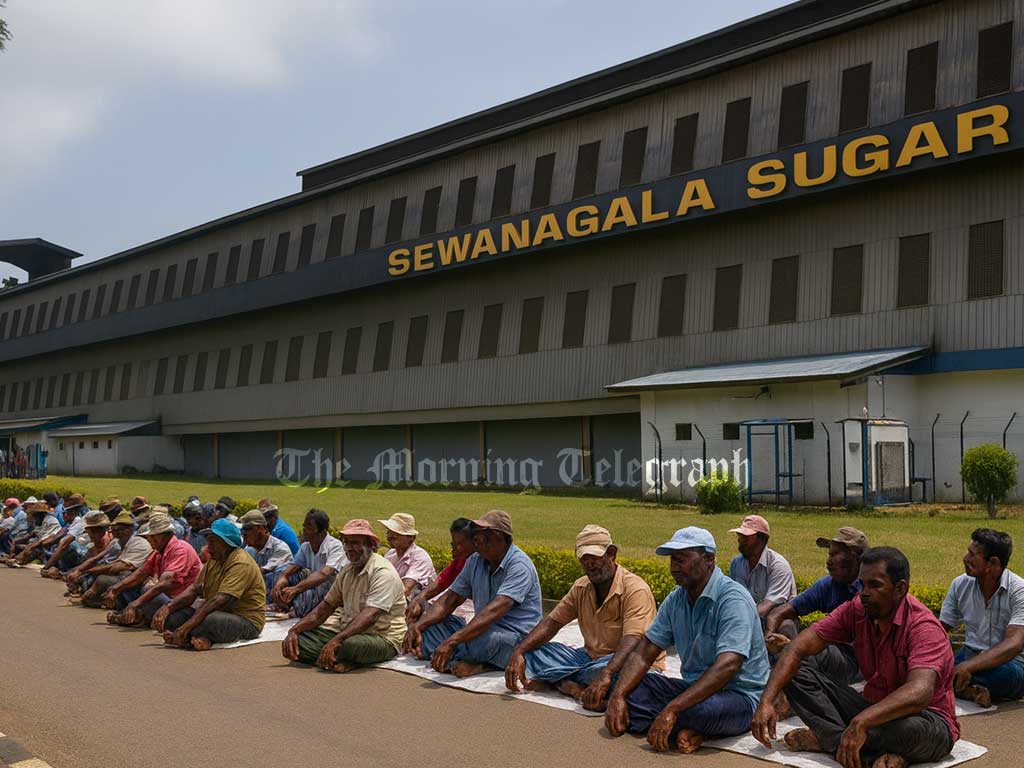
Sewanagala sugarcane farmers and tractor drivers have launched a dramatic satyagraha in front of the sugar factory, protesting unpaid dues, delayed harvests, and deepening financial despair. Despite talks with company officials, no resolution was reached, triggering a complete suspension of cane cutting and calls for presidential intervention.
A fresh wave of protest erupted in Sewanagala today as sugarcane farmers, workers, and tractor drivers began a satyagraha in front of the Sewanagala Sugar Factory. The demonstration, organized by the Jana Aragala Puravaresiyo movement, comes in response to multiple grievances—chief among them, the failure of the Sugarcane Management Authority to pay dues owed to sugarcane farmers and suppliers.
On July 28, a crucial meeting was held in Colombo with the participation of the Sewanagala Sugar Company’s Chairperson Sandamali Chandrasekara and Executive Director Deepika K. Gunaratne, along with leaders from the Sugarcane Farmers’ Federation and Tractor Associations. However, according to the Federation’s Chairman Ruwan Sanjeewa, the talks ended in stalemate, prompting the farmers to stop all sugarcane harvesting operations.
During the meeting, farmer representatives outlined a series of pressing issues. These included unpaid balances for previously supplied sugarcane, significant delays in cane collection, and technical setbacks—such as only one of the company’s two sugarcane cutters being operational, with no clarity on repairs for the other. Some farming families, they revealed, are now facing extreme hardship, unable to feed their children due to months of withheld payments. Many sugarcane workers have mortgaged personal belongings just to cover basic rent.
Tractor drivers echoed the financial distress, citing an inability to meet lease payments for their vehicles. Desperate to remain afloat, some have even pawned their wives’ and children’s belongings to survive. They have demanded immediate settlement of their dues and proper truck weighing mechanisms to avoid manual unloading when loads exceed seven tons.
In response, the company’s leadership admitted to ongoing financial difficulties stemming from the sluggish sale of sugar and ethanol. They claimed they could only issue partial payments depending on current sales. The payment of employee salaries has also been delayed, though efforts were reportedly made to settle them by July 29. Additionally, the company has asked willing parties to donate sugar stocks back to the factory to ease its crisis.
Given the situation, both farmers and tractor associations have resolved to escalate the matter to the ministerial or presidential level. They are seeking an urgent meeting with top government officials to push for a permanent resolution. Until then, sugarcane harvesting will remain suspended, with harvested and stacked cane sitting idle in fields and on trailers awaiting a breakthrough.