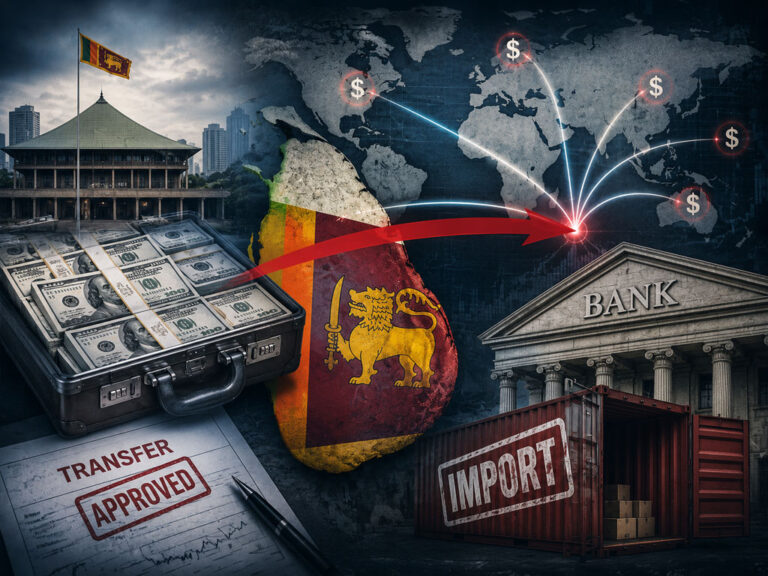
Sri Lankan exports to the United States face a heavy blow as a 30% reciprocal tariff takes effect on August 1. With no agreement reached between Colombo and Washington, exporters brace for steep losses amid rising costs, global competition, and economic uncertainty.
Sri Lanka’s export industry is bracing for a major setback as a new 30% reciprocal tariff on goods entering the United States comes into force tomorrow (August 1). This hike, set to take effect without a final trade agreement in place between the two nations, threatens to destabilize an already fragile economic recovery.
Despite extensive discussions, the negotiations between Sri Lanka and the United States have failed to yield a deal in time. As a result, the full brunt of the additional tariffs will be imposed on top of existing duty rates, making Sri Lankan goods significantly more expensive in the American market.
Exporters are expressing deep concern over their future competitiveness, especially as regional rivals like Indonesia, the Philippines, and Vietnam continue to benefit from lower tariff concessions. These countries already enjoy a cost advantage in terms of both production and logistics, leaving Sri Lanka at a distinct disadvantage.
Analysts point out that this sudden tariff increase could further damage Sri Lanka’s trade profile, particularly in the apparel, rubber, and tea industries, which rely heavily on US demand. In addition to external pressures, the country’s high energy costs, rising wages, and logistical inefficiencies are compounding the crisis.
American consumers are also expected to feel the impact, with retail prices on Sri Lankan goods likely to increase due to the tariffs. This could dampen demand, reduce purchasing power, and ultimately shrink export volumes from Sri Lanka to the US.
Economists warn that the resulting decline in export revenue could deal a severe blow to the country’s already strained foreign exchange reserves. With no alternative markets ready to absorb the shortfall, the loss of US trade revenue may cascade into broader economic instability.
Sri Lanka’s reliance on export earnings has become even more critical in the wake of its ongoing fiscal crisis. The failure to secure tariff relief through timely negotiations now risks compounding existing problems, with export sector leaders urging the government to act swiftly and strategically to limit the fallout.
Unless urgent steps are taken to regain market competitiveness and strengthen trade diplomacy, Sri Lanka may find itself edged out of one of its most lucrative export destinations—at a time when every dollar counts.