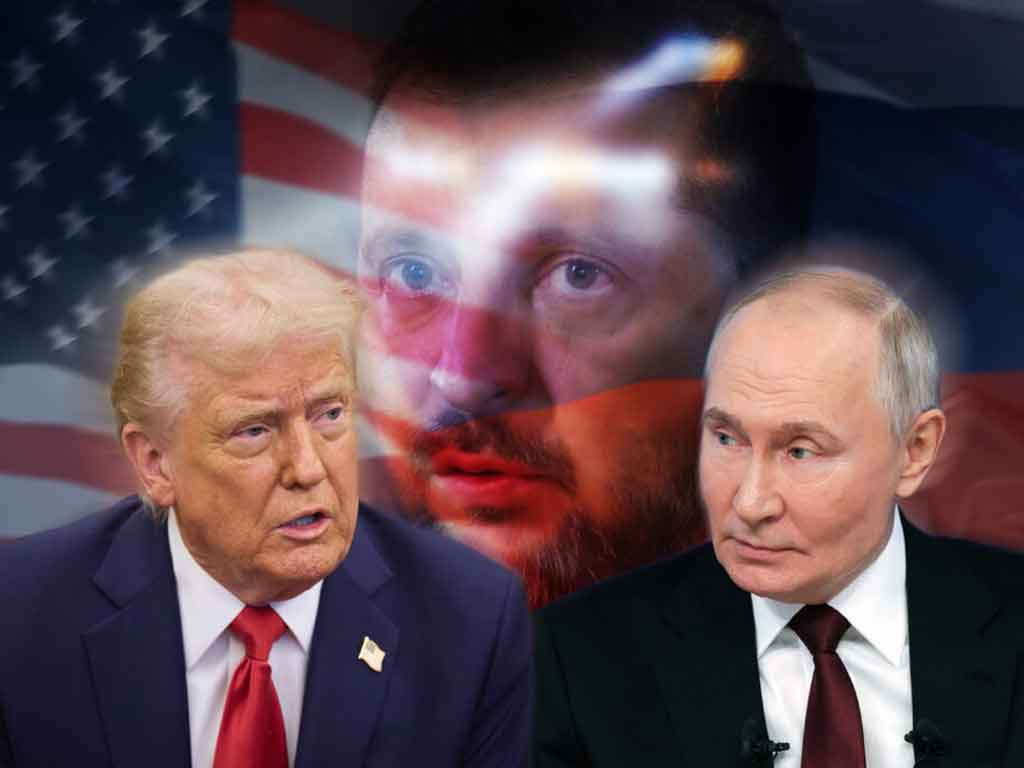
As Trump and Putin prepare for a surprise summit in Alaska, hopes for peace clash with fears of escalation. Behind the photo ops lies a dangerous reality: no clear agenda, deep mistrust, and the risk of another global conflict.
Trump may be erratic, even unhinged, but the greater danger lies in his unpredictability. In that unpredictability, he could still make moves designed to fracture BRICS+, altering the balance of global power.
The hastily arranged Trump–Putin summit in Alaska has taken many by surprise. Coming after years of bloody conflict and amid what some call the final phase of genocide, the meeting is being watched with both hope and deep suspicion. Public opinion across the globe, with the notable exception of Israel, remains overwhelmingly anti-war. Yet the ability to prolong war does not lie with the people but in the hands of elites. These are the power brokers and profiteers who thrive on conflict, for whom peace is bad business. Whether labeled the military-industrial complex, the MIMAC, or some other term, their network includes think tanks, entertainment interests, and contractors who ensure that war remains profitable. Conflicts persist not because of the people’s will but because of the ambitions and greed of those at the top, whether in Washington, Moscow, or Kyiv.
The Friday meeting comes wrapped in inflated expectations and willful ignorance of hard realities. Why now? What is truly on the table? Some European diplomats suspect that developer Steve Witkoff may have misunderstood or miscommunicated key points to Putin in preliminary talks. And does a real agenda even exist? Trump is not known for consistency or strategic depth. His admission that this will be little more than a feel-out session says more than his vague references to possible territorial swaps or redrawn Ukrainian borders. Earlier this year, I called Trump “Mr. Jekyll and Dr. Hyde,” and my view has not shifted. A wolf may shed its coat, but not its nature. A leader who tolerates and supports atrocities cannot be trusted to pursue peace—not even in Ukraine, where the U.S. and NATO desperately need an exit strategy from the proxy war they began well before 2014.
The symbolism of Alaska has not gone unnoticed. Some point to historical and even religious overtones, but by the time such speculation is parsed, the meeting will be over. The likeliest outcome? No breakthrough on Ukraine. Instead, expect a carefully staged photo opportunity with no binding commitments. Trump will boast about having “forced” Putin to meet on American soil. Putin will relish the image of walking into what was once Russian territory without fear. One will project dominance as host, the other as a man reclaiming symbolic ground.

Alaska here is more symbol than territory, a reminder of the transactional politics that have long driven imperial powers. It is proof that sovereignty is never absolute, that borders can shift, and that major decisions are often dictated by profit. Strategically, Alaska sits as a jewel in the Arctic, rich in resources, vital shipping lanes, and a key stage for the next chapter of great-power rivalry. This meeting could just as easily test the waters for future confrontations in the Arctic as it could in flashpoints like Taiwan.
Without a clear agenda, detailed preparations, or the authority to cut a deal, especially on behalf of third parties, this summit can offer little more than limited normalization. It is, in essence, two wartime adversaries meeting face-to-face in a proxy war where the U.S. is battling Russia and arguably losing. Some may see value in dialogue even under hostile conditions, but such optimism must be tempered by the reality of a crumbling nuclear order.
The optimism of those who believe Trump and Putin will edge toward peace in Ukraine is difficult to understand. Trump has never supported Ukraine taking a peaceful neutral stance outside NATO. He has never pledged to stop arms sales to Europe that fuel the war. Even if the two were to shake hands for the cameras, would that suddenly transform the fabled “green table” of diplomacy into a real peace table? Or would it be yet another display of leaders who only resolve conflicts when it suits their own power, conflicts they themselves perpetuate?
I will not gamble on an outcome. This is not a political game; it is about human lives. It is unrealistic to expect anything meaningful from a feel-out session, especially from a man who has denied the humanity of Palestinians and nearly initiated a nuclear strike on Iran during sensitive negotiations. A rational observer would hesitate to trust such a person with a used car, let alone the fate of peace.
The need now is for vigilance. The world edges closer to a Third World War than to authentic peace talks. Even if Trump wanted a settlement in Ukraine, his lack of establishment support in the U.S., along with opposition from European hawks tied to the arms industry, makes genuine peace unlikely. For these actors, war is a golden goose, and peace is a financial loss. If one conflict winds down, they look to ignite another, whether in Iran, Taiwan, the Caucasus, or an as-yet-unseen battlefield.
Trump’s volatility may be his greatest danger, especially if it leads to destabilizing BRICS+. His scheduled meeting with the “letter R” on Friday may produce headlines, but the world continues to sleepwalk into darker times. Optimism, under such conditions, feels less like hope and more like self-deception.