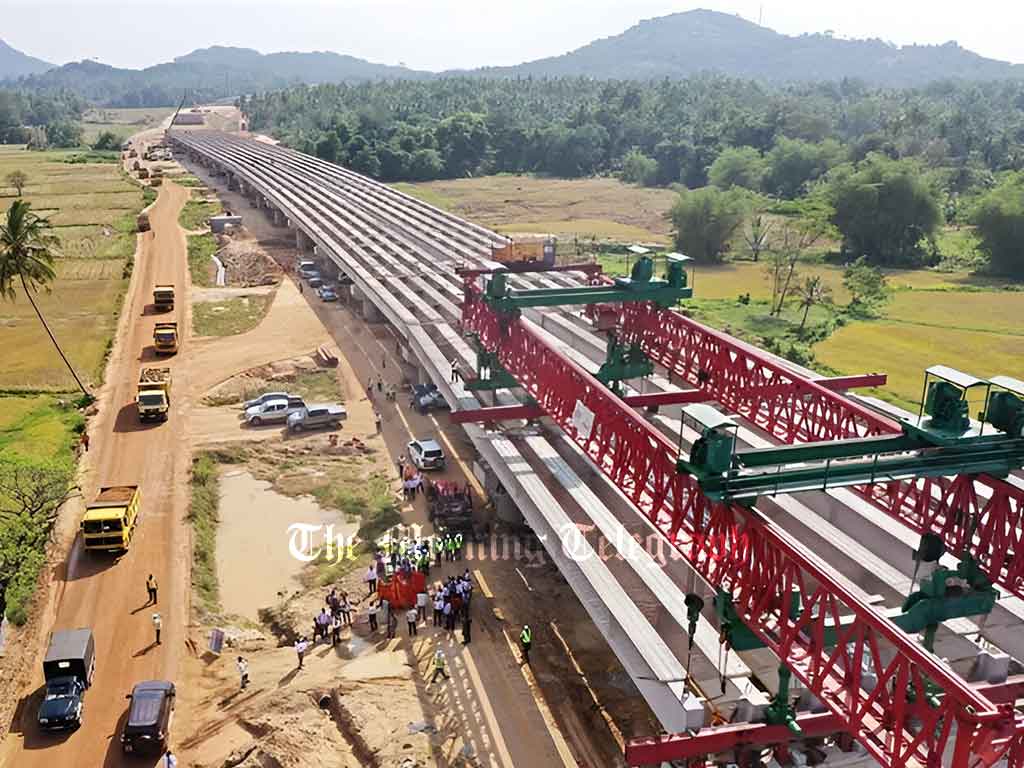
Sri Lanka is set to borrow the yuan equivalent of $500 million from China’s Exim Bank, alongside releasing $438 million from government funds, to restart construction on the long-delayed first section of the Central Expressway. President Anura Kumara Dissanayake has already sought cabinet approval for the financing arrangement, which requires amending the original commercial contract agreement.
The shift to borrowing in Chinese yuan means that Sri Lanka, which has no yuan inflows, will need to convert its limited US dollar reserves to repay the loan. The conversion clause was requested directly by China’s Exim Bank, adding pressure on Sri Lanka’s foreign currency reserves amid an ongoing debt restructuring process.
The project, a 37.1-km stretch from Kadawatha to Mirigama handled by the Metallurgical Corporation of China Limited (MCC), has remained stalled for years, achieving only 36.38 percent progress since work began in September 2020. Earlier this month, a government-appointed committee recommended negotiating with MCC to settle billions of rupees in outstanding payments and resume construction.

The delays have largely stemmed from Sri Lanka’s economic crisis, which halted loan repayments to Exim Bank and triggered a lengthy restructuring process. The initial agreement, signed in March 2019, provided for $989 million in concessional loans, but only $51.5 million was disbursed before suspension. Following restructuring, Exim Bank has now agreed to release only $500 million, leaving the government to cover the remaining $438 million.
The Ministry of Finance confirmed that in April this year Sri Lanka informed China of its commitment to continue the expressway project under the revised terms. After discussions, both sides agreed to an interest rate cap in the range of 2.5 to 3.5 percent. With work continuing, the government will also be required to pay around $200 million in principal and interest to the contractor.
Meanwhile, a proposal by five of Sri Lanka’s leading construction companies to cancel the original direct contract awarded to MCC in 2015–16 and call for fresh, competitive tenders has been rejected, ensuring the project remains firmly under Chinese control.