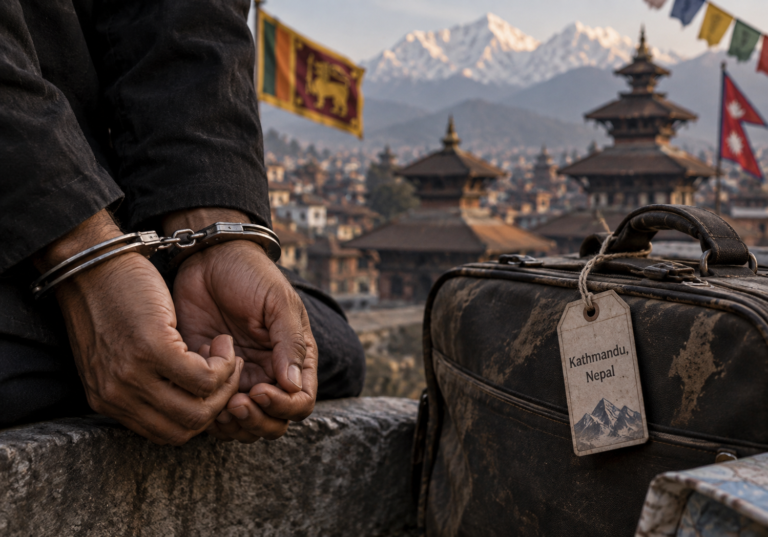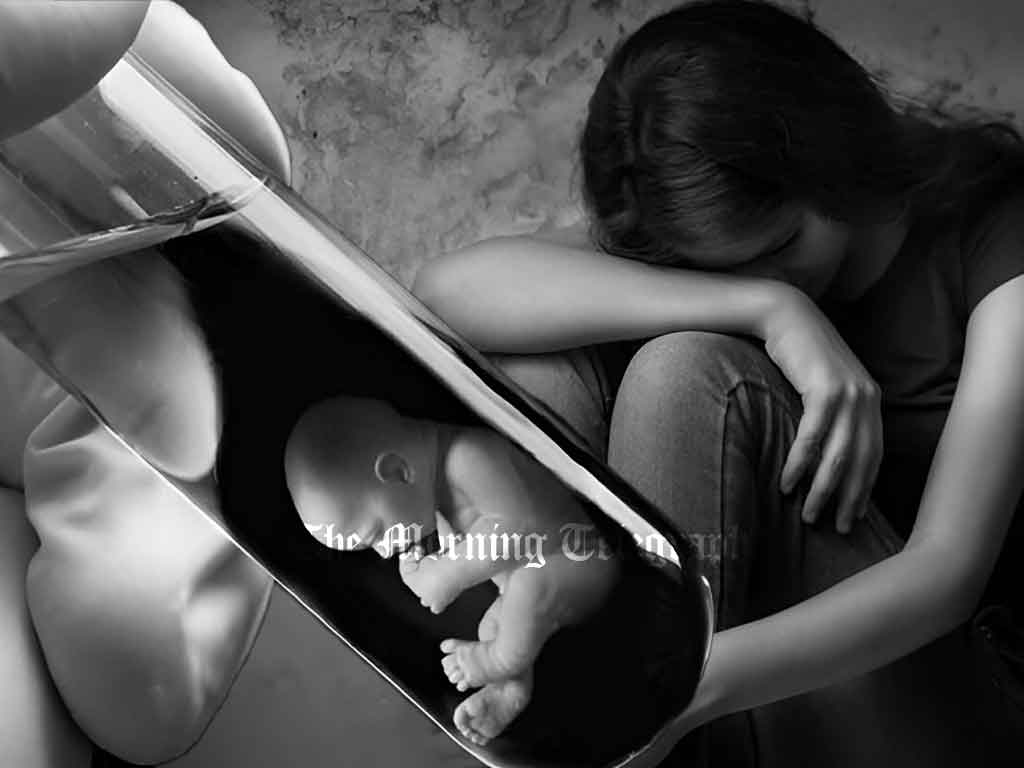
A shocking scandal in Nepal has exposed how underage girls were tricked into selling their eggs to IVF clinics. Hidden chats, forged records, and painful procedures reveal a dark industry thriving under weak laws. Families demand justice as the government scrambles to close dangerous loopholes.
Khunsang, who lives in the Nepalese capital Kathmandu, used to occasionally check her 17-year-old sister Dolma’s mobile phone and social media accounts.
The 21-year-old was caught off guard by a post on Dolma’s Snapchat account and a series of Instagram messages.
“I saw something like a needle sticking into a hand and giving it saline… it was like a tap. I was curious and started looking more,” Kunsang said.
She was shocked by what she found.
“I saw a chat between my sister and her best friend [Jasmine]… with another girl. They were talking about egg donation and going to clinics. The girl who was an agent was a friend of my sister’s best friend,” Kunsang added.
After further research on the Internet, Kunsang was convinced that her sister and a close friend had also been victims of an IVF clinic in Kathmandu, which was using brokers to lure underage girls to sell their eggs for money.
Infertile couples often resort to IVF treatment, which involves fertilizing eggs and sperm from donors.
Norbu, 39, is Dolma’s best friend, who was a victim of the egg-selling racket. Jasmine’s father. After questioning the suspect, the families of both girls reported the incident to the police.
“The girls are 17 years old. But [the suspect] took them to the clinic saying they were 22. He even gave them false names. The doctor at the clinic told us that we had no legal right to question them,” Norbu said.
“Then we went to the police’s organ trafficking bureau. They had never heard of such a case before. They were surprised. We don’t know how long it will take for justice to be served,” he added.
Underage victims and false reports
The incident soon gained local media attention, and the revelations it produced sparked public outrage, highlighting the urgent need to regulate the industry.
It also exposed legal loopholes and weak oversight at more than 50 fertility clinics operating in the country that are either approved or awaiting approval by Nepal’s Ministry of Health and Population for specialized medical treatments.
Nepal’s health minister said that the government was taking the matter seriously and was working to ensure that fertility treatments followed legal and ethical standards.
In mid-July, Nepalese authorities announced that they had launched an investigation into the operating standards of IVF clinics.
Human organ trafficking According to Chandra Kuber Khapung, head of the Nepal Police’s Central Investigation Bureau, who took over the investigation, the broker is believed to have received around $330 for each egg, and then gave a small portion of it to the girls in question.
“Girls under the age of 18 were used to collect eggs without any permission from their parents or guardians,” Khapung said.
“We also found that these girls had undergone a painful procedure. These girls were given injections for ten days to ensure that their eggs were mature. After that, the surgery is done… to collect the eggs. This surgery can even cause serious health complications. They didn’t even get permission from their godparents to do this.”
Police believe that hospital records, including fake names and ages of the donors, were forged, and that some who initially received money for the eggs later became middlemen and recruited others for the same. Senior Superintendent of Police Hobindra Bogathi described the process as painful and unethical.
“It is a notorious act to put minors in such a challenging situation,” Bogathi said.
Five people, including three doctors, were arrested in July, but all were later released on bail as further investigations into the incident were conducted.
Legal laxity
There is currently no age limit for donating eggs or sperm in Nepal. As a result, police are prosecuting under Nepal’s Children Act (2018), which stipulates that children are subject to physical harm or medical treatment. Those involved in the practice could face a fine of up to $550 and up to three years in prison.
There are more than 50 fertility clinics operating across Nepal, many of which are believed to be unregistered due to weak legal oversight, local media reported.
A 2020 Public Health Regulation classifies IVF as a specialized medical service under the Ministry of Health, and while institutions providing the service are required to regularly renew their licenses to ensure a certain standard of care, some say enforcement has been lax.
“We don’t have any laws that define the standard practices to be followed when donating or retrieving eggs or sperm,” says Dr. Sri Prasad Adhikari, director of the Paropakhar Maternity and Women’s Hospital in Kathmandu, which has created a lot of mismanagement.
He also said Nepal should bring in laws that ensure that only adults can make such donations after a thorough medical examination.
“We have been asking the government to introduce a law for a long time,” said Dr. Bhola Rijal, a leading gynecologist and fertility specialist who performed Nepal’s first IVF baby in 2004 and is advocating for greater legal compliance in the sector.
“We need to introduce policies that ensure that our services are available to the needy people living in low-income rural areas of Nepal.”
Nepal’s Health and Population Minister Pradeep Paudwal said the alleged incident raised serious concerns about the governance of the health sector.
“We have already started an investigation into the incident. We will soon issue new guidelines to fill the existing gaps,” he said.
He said the government would consider Nepal’s legal minimum age for marriage, which is 20, when determining the age limit for donors.
What about other countries?
Many countries already have strict laws on egg and sperm donation.
Under India’s Assisted Reproductive Technology (Regulation) Act (2021), only women between the ages of 23 and 35 are allowed to donate eggs and men between the ages of 21 and 55 are allowed to donate sperm.
Egg donation can only be done once, and using intermediaries to recruit donors is a criminal offence, punishable by up to eight years in prison and a fine of up to US$23,000.
In the UK, eggs can only be obtained from donors under the age of 36, and sperm can only be obtained from those under the age of 46.
It is a criminal offence for a person or a licensee to give or receive any payment or benefit for the provision of gametes, embryos or human-genetically modified embryos.
Under the Human Fertilisation and Embryology Authority (HFEA) regulations, convictions can result in imprisonment, a fine or both.
However, in the UK, egg donors are paid more than US$1,300 per donation to cover their travel and accommodation costs.
In the US, egg donors must be legal adults, between the ages of 21 and 34, and young enough to minimise the health risks to the children.
Donors must be in good health and free of hereditary conditions. According to the American Society for Reproductive Medicine, they must be able to prove they are fit to have a child, but this is not essential.
Mental and physical stress
Norbu said that they are fighting to ensure that similar incidents do not happen to others in the future.
“We had to face this unnecessary situation. But we want these children to be safe. We came to the police because we are afraid that these agents will put other girls in danger,” he added.
Norbu is also worried about the stigma they could face if their family’s privacy is damaged.
“My family is under a lot of stress. After this incident, my wife had to take medication for her blood pressure again,” he said.
“My daughter is also suffering from mental stress. Doctors said she might be thinking too much, which could lead to depression. We haven’t received a full medical report yet,” he added.
Norbu says he would like the government to introduce stricter laws to prevent irregularities in IVF treatment centres.
“I recently told the doctor at the hospital that collecting eggs from 16 to 17-year-olds means that no minor girl in Nepal is safe. Likewise, using minor girls means that a large number of women between the ages of 20 and 35 are involved in this. These clinics are looking for a lot of money.”
Kunsang is also worried.
“Involving minor girls is a very immoral act and a serious crime. I think it is a crime like the one shown in the movies. The perpetrators should be put in jail.”
Names have been changed to protect identities.
SOURCE :- BBC SINHALA