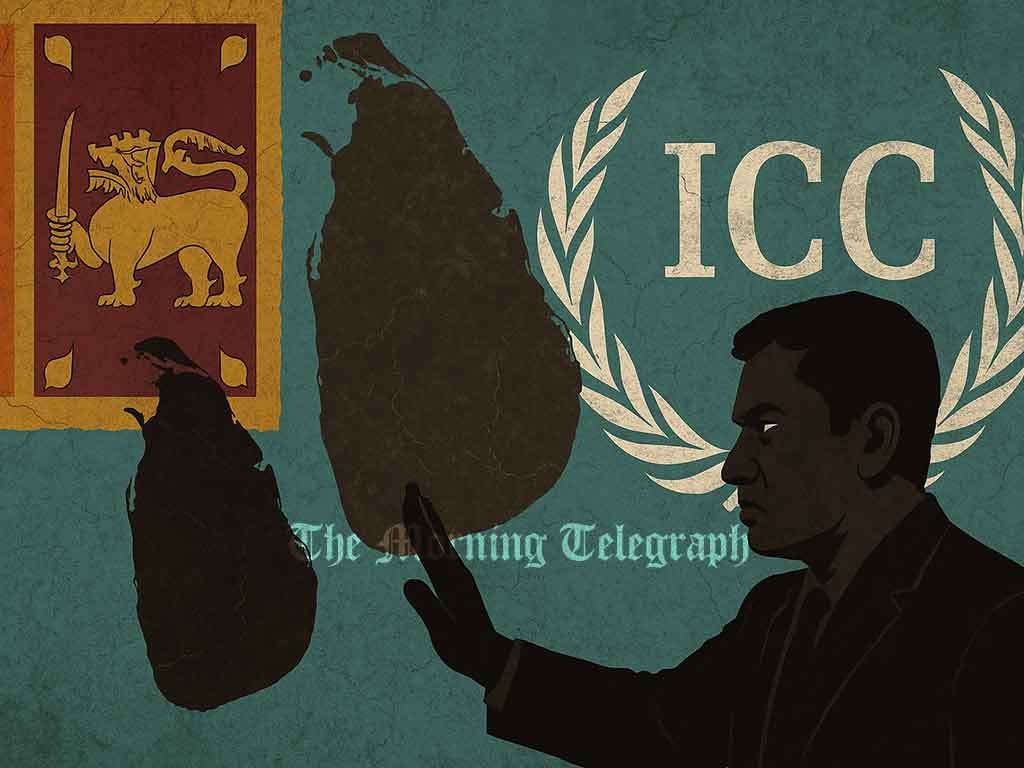
Sri Lanka has once again resisted mounting international pressure to accede to the Rome Statute of the International Criminal Court (ICC), insisting that accountability and reconciliation will only be pursued through domestic mechanisms under national sovereignty.
Sri Lanka is unlikely to sign or ratify the Rome Statute of the International Criminal Court at this time, Foreign Ministry spokesperson Thushara Rodrigo confirmed. Despite repeated calls from the United Nations and global rights groups, the government maintains that its priority remains domestic reconciliation and democratic reforms.
Rodrigo explained that the government continues to engage openly with the UN. “The High Commissioner paid a very friendly visit to Sri Lanka. His activities have been transparent, and he was open to public questioning at a press conference. The government has worked closely with him, and that cooperation will continue,” he said.

He stressed that while the government acknowledges the importance of accountability, it must be done within a constitutional and sovereign framework. “Those who have broken the law must be held accountable. But it has to be pursued through our own judicial institutions,” Rodrigo added.
His remarks came shortly after the UN High Commissioner for Human Rights presented a critical report on Sri Lanka to the Human Rights Council. The report urged the government to implement deep reforms to end entrenched impunity and deliver justice for victims of war crimes and human rights abuses committed during and after the armed conflict.
Among its key recommendations, the UN called on Sri Lanka to accede to the Rome Statute, arguing that membership would create an “enabling environment for transitional justice” and ensure impartial accountability for international crimes.
The report also highlighted serious gaps in Sri Lanka’s justice system. Despite more than 15,000 cases filed with the Office for Missing Persons (OMP), only 18 have been clarified, undermining trust among families of the disappeared. The High Commissioner warned that unless Sri Lanka joins international frameworks like the ICC, accountability failures will continue.
He further urged the government to release long-term detainees held under the Prevention of Terrorism Act, halt military land acquisitions in the North and East, and guarantee the impartiality of institutions like the OMP. These measures, the report said, would demonstrate genuine commitment to justice and reconciliation while rebuilding trust with war-affected communities.
While acknowledging international concerns, Rodrigo emphasized that Sri Lanka cannot allow external bodies to override national sovereignty. “As a sovereign state, accountability must be pursued through sovereign institutions,” he concluded.