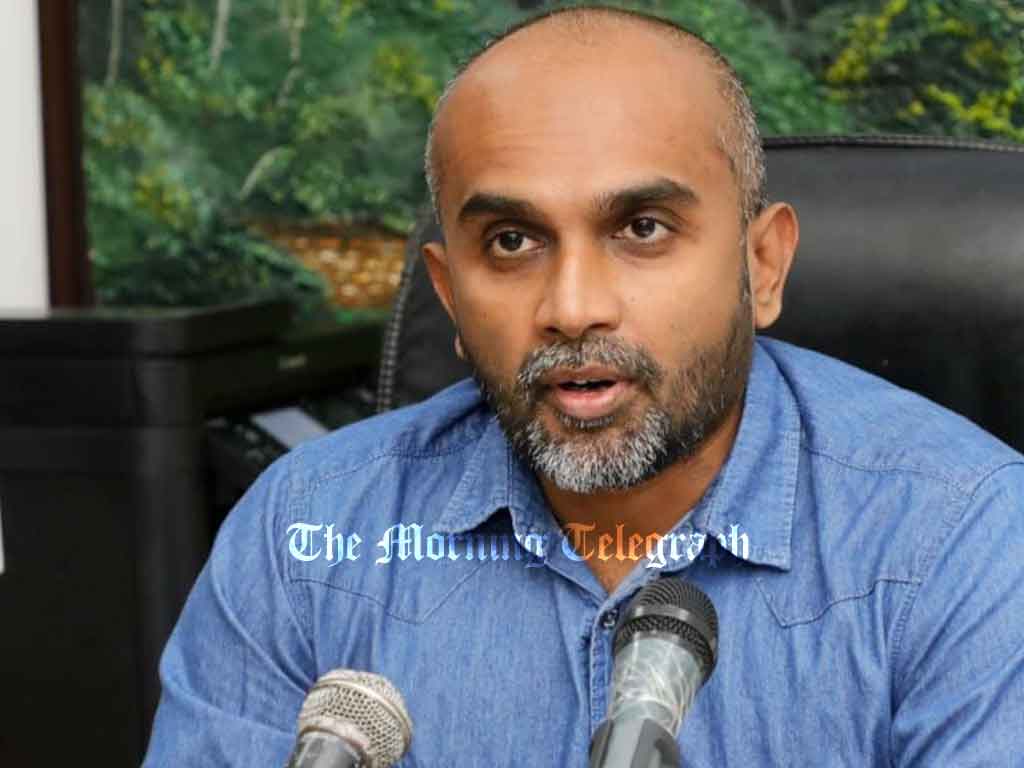
Deputy Transport Minister Prasanna Gunasena has stirred debate by claiming that printing money does not fuel inflation, insisting that the process is a routine national requirement and that Sri Lanka’s economy has already stabilized.
Deputy Minister of Transport Prasanna Gunasena has stated that the government’s decision to print money is carried out according to the financial needs of the country. Speaking to the media, he explained that printing currency is not an unusual measure but a practice that takes place regularly every year to meet fiscal requirements.
Responding to questions about the government printing Rs. 1.225 trillion within the last ten months, the Deputy Minister dismissed fears that the move would escalate inflation. He stressed that prices of goods in Sri Lanka have already stabilized, countering the argument that printing money automatically leads to rising costs.
According to Gunasena, managing money supply is a balancing act that supports the economy during periods of financial stress. He reiterated that currency printing, when aligned with government policy and economic demand, does not directly trigger inflation. Instead, he argued, external shocks and supply-side pressures play a larger role in driving up the cost of living.
The Deputy Minister’s remarks come at a time when Sri Lanka is grappling with recovery challenges following its economic crisis, and public concerns remain over rising food prices, debt, and fiscal discipline. His defense of the government’s monetary strategy signals an attempt to reassure both the public and investors that the situation remains under control.

While critics argue that excessive money printing risks devaluing the rupee and undermining stability, Gunasena insisted that the government’s approach is measured and necessary for the nation’s economic recovery.