History shows a chilling truth: in moments of upheaval, ordinary people fueled by deprivation, ideology, and rage, become the very monsters they once opposed. From Paris to Petrograd, Nanjing to Haiti, and even modern Colombo, liberation too often mutates into cruelty disguised as justice.
“We stand for organised terror this should be frankly admitted. Terror is an absolute necessity during times of revolution.” Lenin’s words, coldly precise yet disturbingly candid, crystallise a recurring paradox in human history: in times of political convulsion, common men and women driven by frustration, deprivation, and the intoxicating righteousness of ideology transform into instruments of monstrous violence.
The Red Terror in Petrograd after 1918 demonstrated this descent. Following an attempt on Lenin’s life, over five hundred people were executed within days, many without trial, as soldiers, peasants, and workers participated in purges and pogroms under the banner of revolutionary justice. This was no accident of history but an archetype. The same script has repeated itself from Paris in 1793 to the barricades of 1848, from Nanjing during the Taiping Rebellion to the Haitian uprisings, and Mao’s Red Guards in Beijing. In every instance, movements hailed as liberations morphed into theatres of vengeance, with the oppressed driven by anger and despair assuming monstrous roles.

The French Revolution remains the classic example. Amid famine, inequality, and the collapse of monarchy, Robespierre’s “emanation of virtue” produced the Reign of Terror. Guillotines claimed nobles and peasants alike. Queen Marie Antoinette’s execution became a ritualistic spectacle of vengeance, sanctified as justice. Robespierre declared, “To punish the oppressors of humanity is clemency; to forgive them is cruelty.” Ordinary citizens, once bound by morality, now became agents of sanctioned bloodshed. The upheaval of 1848 brought similar excess—urban workers and the poor, consumed by resentment, erected barricades, rioted, and destroyed property, blurring the line between liberation and barbarity.
Russia’s collapse into revolution bred its own monstrosity. Lenin’s explicit sanction of violence turned disaffected peasants and soldiers into instruments of systemic terror. The Cheka’s swift executions, arrests, and purges were framed as protection of the revolution, but they revealed something darker: in the absence of restraint, anger and vengeance perpetuate themselves, justifying atrocity in the name of virtue. Marxist theory may explain such uprisings as inevitable struggles against oppression, but Russia proves another reality rage, once untethered, devours not only oppressors but also its own, producing tyrannies indistinguishable from those they replaced.
The Taiping Rebellion amplifies the pattern further. Led by Hong Xiuquan, peasants infused with religious zeal rose against the Qing dynasty. The siege of Nanjing in 1853 brought mass killings and brutal militarisation, showing how despair and promises of divine justice can birth crucibles of violence. Similarly, the Haitian Revolution achieved emancipation yet intertwined it with cruelty enslaved Africans, driven by centuries of oppression, staged bloody uprisings that simultaneously freed and terrorised, turning on colonists and collaborators alike. Liberation here was never free of monstrosity.
The Cultural Revolution in China offers perhaps the starkest illustration. Mao’s campaigns mobilised millions of youths into Red Guards, tasked with destroying “old culture” and punishing “class enemies.” “The purpose of the Great Proletarian Cultural Revolution is to destroy the old culture. You cannot stop us!” one Red Guard declared. Students, unrestrained by conscience or morality, engaged in humiliations, purges, and violence against teachers and peers. Writer Jung Chang later admitted, “I was not forced to join the Red Guards. I was keen to do so.” This revealed the terrifying ease with which ideology summons cruelty not by coercion but by voluntary zeal.
Thinkers from Hobbes to Rousseau warned of such dangers. Broken social contracts leave people vulnerable to vengeance. Gustave Le Bon explained how crowd identity overrides morality. Carl Schmitt showed how political theology turns the friend–enemy distinction into justification for atrocity. These frameworks clarify why revolutions, though often framed as emancipation, frequently spiral into monstrosities.
History bears grim witness: from the guillotines of Paris to the Red Guards in Beijing, liberation repeatedly curdled into terror. It challenges simple narratives of revolution as pure progress. The unsettling reality is that monsters rarely reside only in rulers—they also emerge from the collective psyche of the aggrieved. When social despair, political pressure, and moral collapse converge, the very agents of liberation become its cruelest instruments.
The haunting lesson is this: the mask of revolution conceals not only the promise of justice but also the lurking potential for orchestrated and spontaneous monstrosity. It is a cautionary tale for citizens, policymakers, and scholars alike—a reminder that the boundary between righteous upheaval and collective fury is perilously thin.
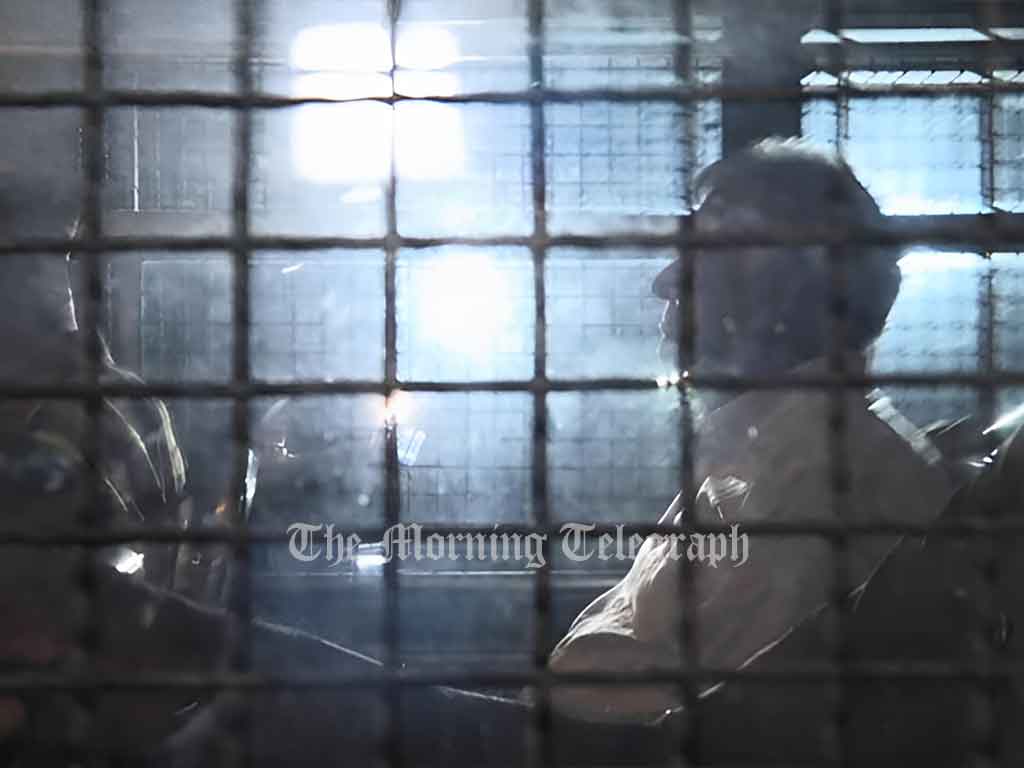
The arrest of former President Ranil Wickremesinghe until 26 August starkly mirrors this history. Sparked by an anonymous complaint, swiftly transmitted by the President’s Secretary, and transformed into public spectacle, it exemplifies the perilous interplay of symbolic justice and collective frustration. To some, it offered fleeting satisfaction, especially among rural constituencies long resentful of Colombo elites. Yet it offered no structural reform.
In truth, it was more theatre than governance. A drama of vengeance rather than measured justice. No prudent statesman would sanction such action. Instead, it reflects the motives of an insecure and unbalanced actor, inflamed by resentment and desperation, converting sober governance into a stage for symbolic assertion masquerading as justice.
Thus the axiom repeats: in times of social tension, the revolutionary monster is not always an insurgent outsider. It often rises from within authority itself, driven not by foresight or reason but by raw fear, vindictive zeal, and unmediated emotion.