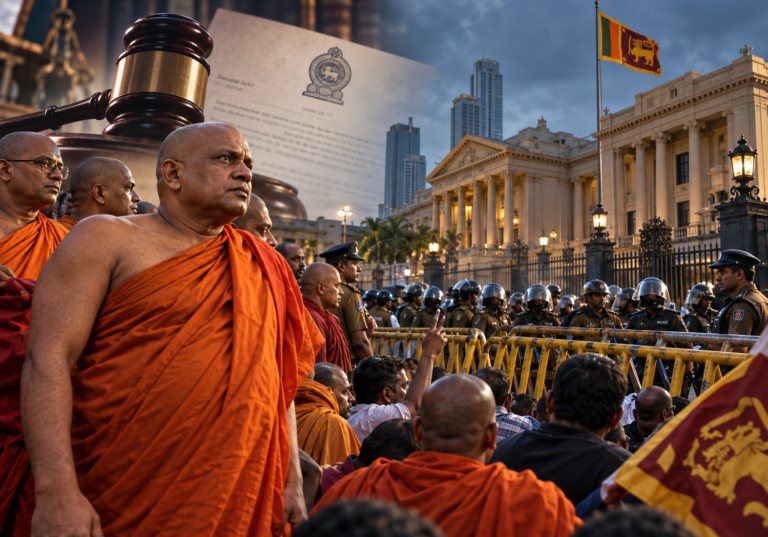
With Ranil Wickremesinghe preparing for a critical court hearing, the Samagi Jana Balawegaya’s youth and council members gather in Colombo, declaring that Sri Lanka’s democratic institutions, not just one man are under threat.
As Sri Lanka braces for former President Ranil Wickremesinghe’s court appearance tomorrow, the Samagi Jana Balawegaya (SJB) has mobilized its youth activists and newly appointed council members in Colombo. The arrest of Wickremesinghe on charges of misusing state funds during his 2023 London visit has ignited fierce political debate, with accusations of political revenge overshadowing the case itself.
SJB’s Stand for Democratic Integrity
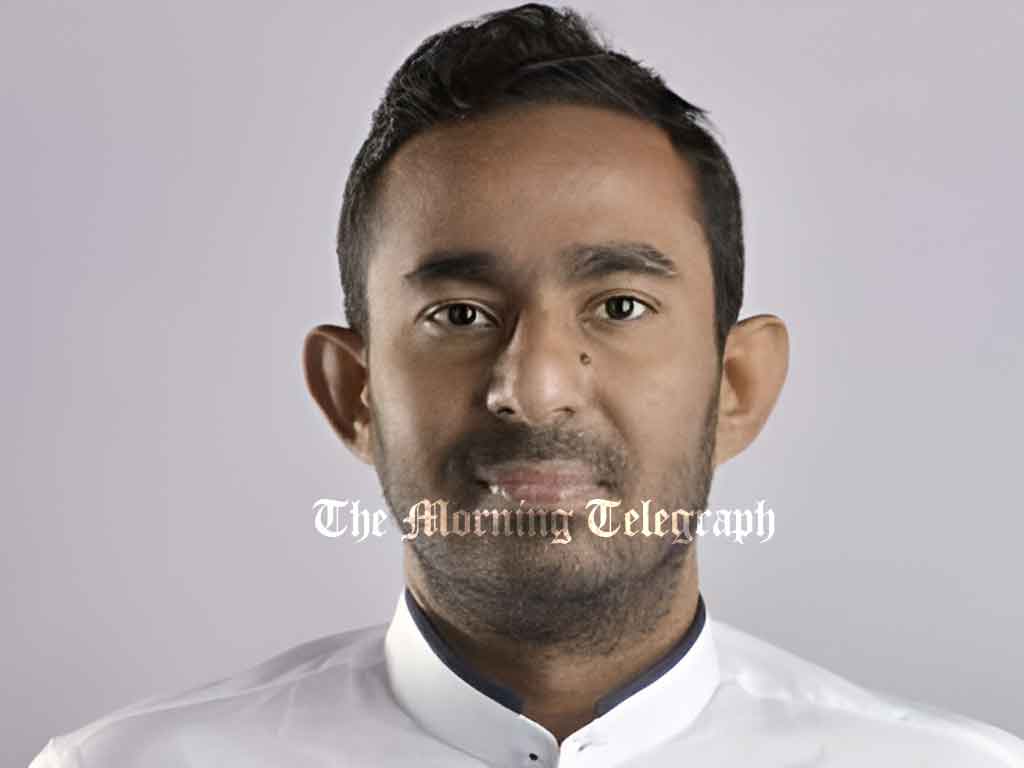
National Youth Organizer Chamith Wijesundera, also recently sworn in as a Kotte council member, is at the forefront of the mobilization. He warned that what is happening extends far beyond one individual. “This is not only about Wickremesinghe. It is about protecting the credibility of the country’s institutions and ensuring that justice is not bent by political interference,” he said.
Wijesundera, who has consistently spoken out on issues of governance and transparency, argued that Wickremesinghe’s arrest reflects a broader political failure. He pointed to recent scandals involving false credentials and misinformation among candidates as proof that accountability has become selective. According to him, this case cannot be isolated from the structural weaknesses that continue to define Sri Lanka’s politics.

Mobilization of Youth and Council Members
Ahead of the hearing, the SJB youth wing is joined by the newly sworn-in Colombo Municipal Council members to form a united front. Their aim is not to defend Wickremesinghe personally but to demand that justice remains impartial. Among the 29 sworn-in members are 11 women, representing the party’s push for broader democratic engagement, with Opposition Leader Sajith Premadasa attending the swearing-in ceremony.
Wijesundera emphasized that the gathering is about ensuring the law is applied equally. “Selective justice undermines public confidence. The law must serve everyone without exception,” he stated.
A Fractured Political Context
Wickremesinghe’s arrest on August 22, 2025, has added fuel to an already tense political climate. He is accused of spending public funds on his wife’s honorary professorship ceremony in the UK, though his allies have rejected the accusations outright. Supporters insist the charges are politically motivated, while the government maintains that they are part of a broader anti-corruption drive.
The SJB has long kept its distance from Wickremesinghe’s United National Party (UNP). Yet, in this moment, the party insists that its responsibility is to defend due process, not endorse the man himself. Party leaders argue that weaponizing legal processes for political gain undermines both the judiciary and the principle of equal justice.
A Call for Accountability
Wijesundera also used the rally to challenge the government’s wider record on accountability. He demanded investigations into cases of fabricated qualifications and misinformation within politics, stressing that such practices weaken democracy itself. “The way the government responds will show whether its promises of democratic values are real or empty words,” he said.
The SJB’s demonstration highlights the party’s attempt to frame itself as the country’s defender of democratic values while the government wrestles with credibility. With no clear majorities emerging in recent local government elections, particularly in institutions like the Colombo Municipal Council, the rally also serves as a strategic move to consolidate power.
Looking Toward the Hearing
All eyes are now on the Colombo Magistrate’s Court, where Wickremesinghe is set to appear tomorrow. The turnout of SJB youth and council members is expected to capture significant national attention, signaling that this case is about more than alleged misuse of funds—it is about the fate of democratic governance in Sri Lanka.
Wijesundera urged restraint and peaceful advocacy, noting that the struggle is not only legal but also symbolic. The outcome of this hearing could reshape the country’s political discourse, determine the trajectory of anti-corruption campaigns, and test the resilience of Sri Lanka’s institutions.