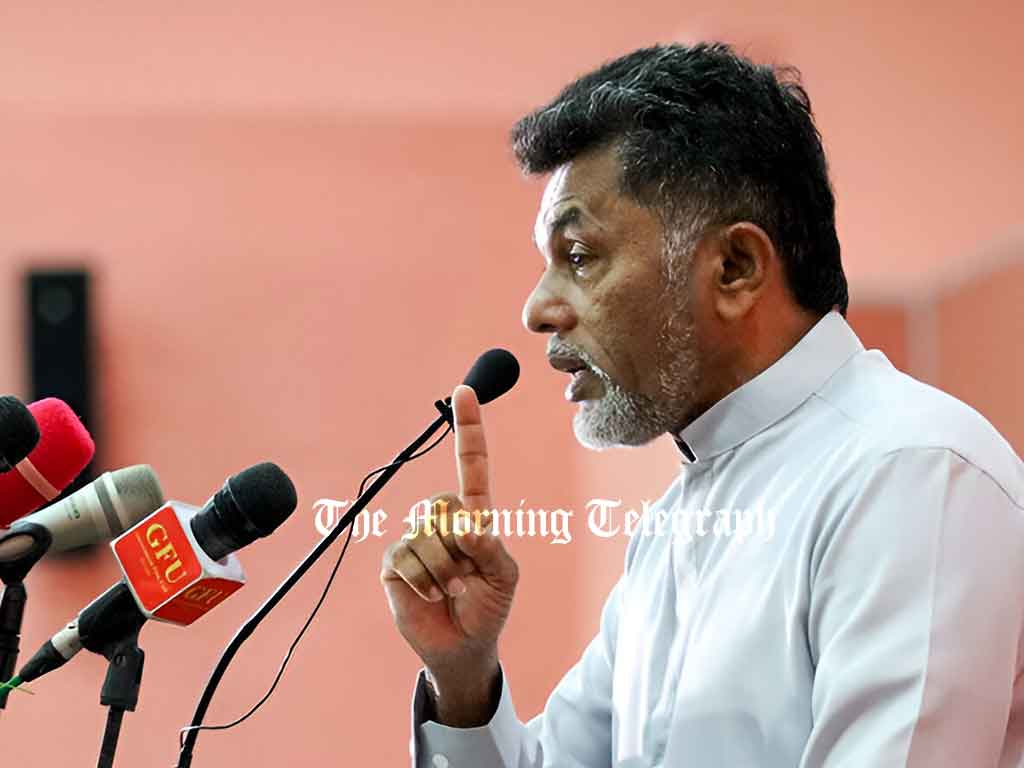
Deputy Minister T.B. Sarath sparked outrage by declaring that farmers cannot demand paddy prices based on both production and “social cost,” insisting the government already has the most scientific program to buy their harvest. His remarks, made during a visit to the Kaudulla Farmers’ Colony, highlight the widening gap between farmer struggles and political spin.
Deputy Minister of Housing T.B. Sarath claims that his administration has devised the most scientific system for purchasing paddy from farmers, brushing aside complaints that their harvest is undervalued.
Speaking during his inspection tour of the Kaudulla Farmers’ Colony Paddy Warehouse, Sarath ridiculed those who say that a kilo of parched paddy is purchased for Rs. 120. He shot back by asking at what price the rice is eventually sold to the people, suggesting that critics are ignoring the balance between farmer income and consumer affordability.
Sarath argued that the production cost of paddy and the so-called “social cost” farmers bear are not the same thing, insisting that prices cannot be calculated by combining the two. According to him, this distinction is crucial if the government is to maintain a sustainable system for both farmers and consumers.

At the same time, Sarath stressed that he has consistently fought to secure a fair return for farmers, but only within the limits of actual production costs. He presented his approach as the most practical way to protect both agricultural producers and the public who rely on rice as their staple food.
The Deputy Minister’s comments, however, are likely to provoke anger among struggling farmers who argue that their real hardships—from loans and fuel costs to family survival—cannot be dismissed as irrelevant “social costs.” With rural communities already under immense pressure, the claim of a “scientific” program may do little to calm frustration on the ground.