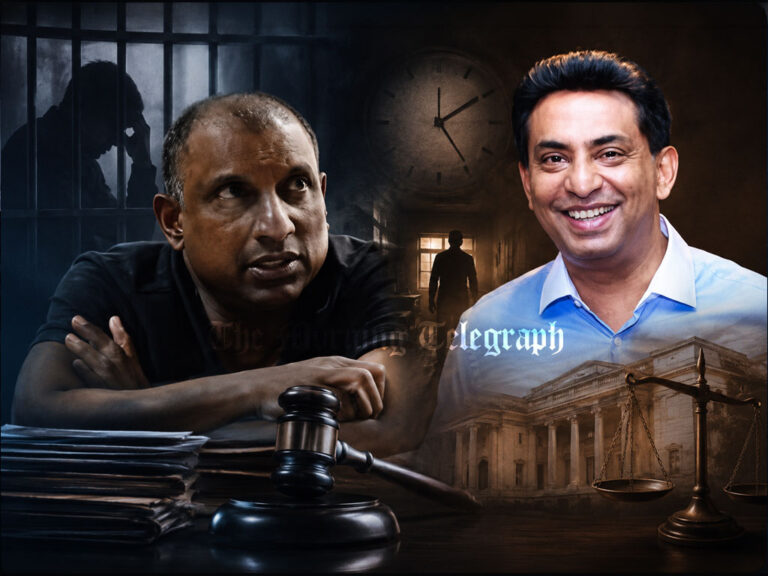
Sri Lanka’s justice system has turned into a stage where the actors swap roles at will today’s prosecutors were yesterday’s accused, and tomorrow they may well be victims again. From Batalanda to bond scams, from buses burnt to backroom deals, the same faces keep circling the spotlight, pretending to be saviors while dragging the nation deeper into hypocrisy.
Minister Bimal Rathnayake recently declared that former President Ranil Wickremesinghe should have been arrested decades ago for Batalanda, the 1983 racial violence, and the infamous Treasury bond scams of 2015. Wickremesinghe now faces charges under the Public Property Act, remanded for alleged misuse of state funds. Supporters of tough anti-corruption measures rejoice at his arrest, but the larger question remains: do the JVP and NPP have the moral authority to prosecute corruption when their own past reeks of destruction and terror?
The late 1980s remain a dark reminder of the JVP’s bloody history, 553 SLTB buses, 15 depots, 16 trains, 24 railway stations and countless power installations destroyed in their so-called revolution. Maithripala Sirisena later revealed that the JVP also torched 245 of the nation’s agrarian service centers and Paddy Marketing Board warehouses, leaving paddy stocks to burn. If justice had been properly served, many of today’s JVP leaders would not be in Parliament but behind bars.

The Batalanda torture chamber still hangs as a political ghost. Why has the second part of the parliamentary debate on the Commission’s report been delayed? Could it be because it exposes crimes the JVP committed in the late 1980s? And if the JVP is so indignant about Treasury bond scams, why did they cosy up to Wickremesinghe’s UNP between 2015 and 2019, shielding him during the 2018 constitutional coup? Selective outrage seems to be their political strategy.
During the Yahapalana regime, Wickremesinghe and the JVP worked hand in glove, using the CID under Shani Abeysekera as their political hit squad. Courts stayed open past midnight, political rivals were arrested, and the process turned into a circus. Most cases collapsed, allowing the Rajapaksas to play the victim card and return with public sympathy.
Today, the pattern repeats. The JVP/NPP has reinstated Abeysekera as CID Director and elevated Ravi Seneviratne to key posts. Both openly campaigned for the NPP, and Seneviratne now serves as Secretary to the Ministry of Public Security. With the CID acting as a party tool, “independent investigations” look more like staged performances. Meanwhile, the Police Chief insists the department is free from political interference, even as pro-government activists seem to predict arrests before they happen.
The irony is inescapable—Ranil Wickremesinghe now cries foul about victimisation, forgetting that he himself once weaponised the very same institutions during Yahapalana. In Sri Lanka’s political theatre, yesterday’s enablers become today’s victims, and tomorrow they may again be the executioners. The guilty judging the guilty is no longer scandal—it is business as usual.