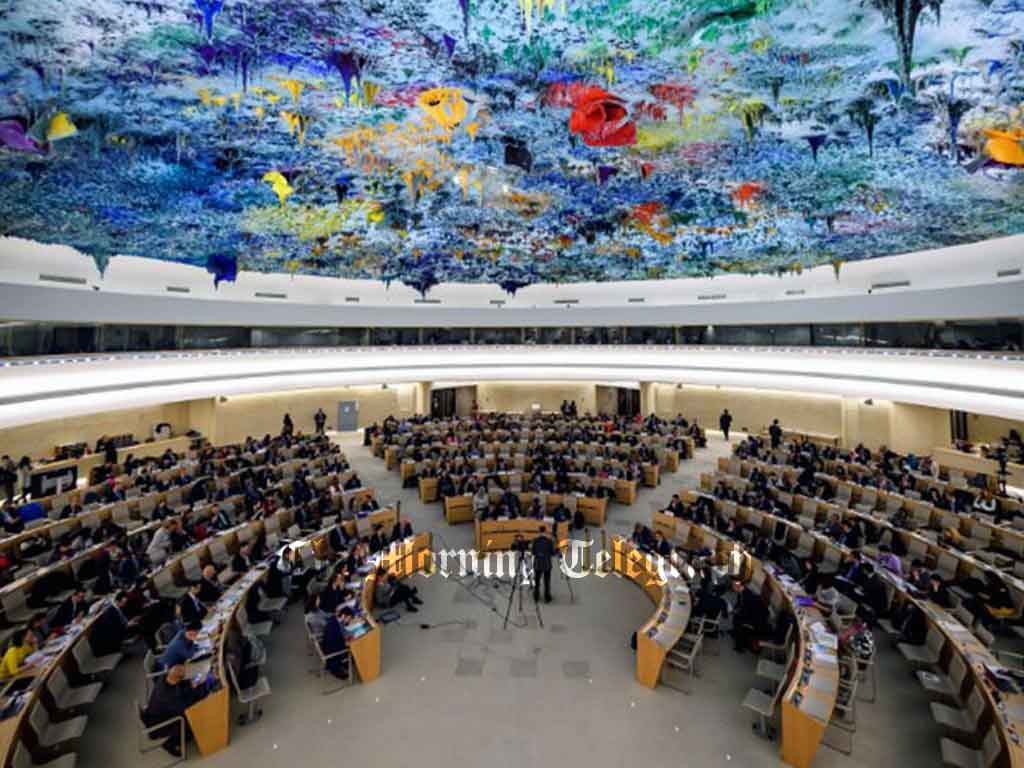
Sri Lanka has firmly rejected the UN Human Rights Council’s latest report, calling external accountability projects harmful to national reconciliation and stressing the need for a balanced and accurate assessment.
The Permanent Mission of Sri Lanka to the United Nations in Geneva has issued a strong response to the report of the High Commissioner for Human Rights on Sri Lanka, presented to the 60th session of the UN Human Rights Council.
In its reply, the Sri Lankan mission made it clear that the country does not recognize Resolution 57/1, which formed the basis of the High Commissioner’s report. Officials reiterated that Sri Lanka will continue to oppose the Sri Lanka Accountability Project, arguing that such externally driven programs are detrimental to the local reconciliation process.

At the same time, Sri Lanka emphasized its ongoing cooperation with the Office of the High Commissioner for Human Rights and reaffirmed its commitment to permanent human rights mechanisms. The mission requested that the final report on Sri Lanka be presented in an accurate and balanced manner that reflects the reality on the ground.
Sri Lanka’s statement also outlined steps taken by the government to improve the human rights situation, including reforms aimed at addressing systemic issues. The mission acknowledged that challenges remain, but insisted that these must be addressed through domestic mechanisms rather than external pressure.
By standing firm, Sri Lanka signaled its determination to safeguard its sovereignty while continuing to engage with global human rights institutions on its own terms.