Every few months Sri Lanka mourns yet another bus disaster. From Yangalmodara in 2005 to Ella in 2025, the cycle of reckless driving, neglected roads, and unheeded warnings has left the nation trapped in a nightmare of preventable tragedies.
Sri Lanka’s history of bus accidents is filled with grief and unanswered questions. The Yangalmodara level-crossing crash of April 2005 remains etched in memory as the worst in recent decades. A bus driver, racing to Colombo, ignored railway signals and collided with the Kandy Express train. The result was catastrophic: 41 people dead, 35 others injured, and a nation in shock. Both the driver and conductor were later sentenced to death, but even this harsh punishment failed to deter future recklessness.
Twenty years later, the lessons of Yangalmodara seem forgotten. On May 11, 2025, an SLTB bus overloaded with 84 passengers toppled off a steep cliff in Garadiella, Kotmale, killing 22 and injuring 34. Investigators found that the driver had been on the road for more than 13 hours without rest. Fatigue, combined with overcrowding, turned the vehicle into a coffin on wheels.

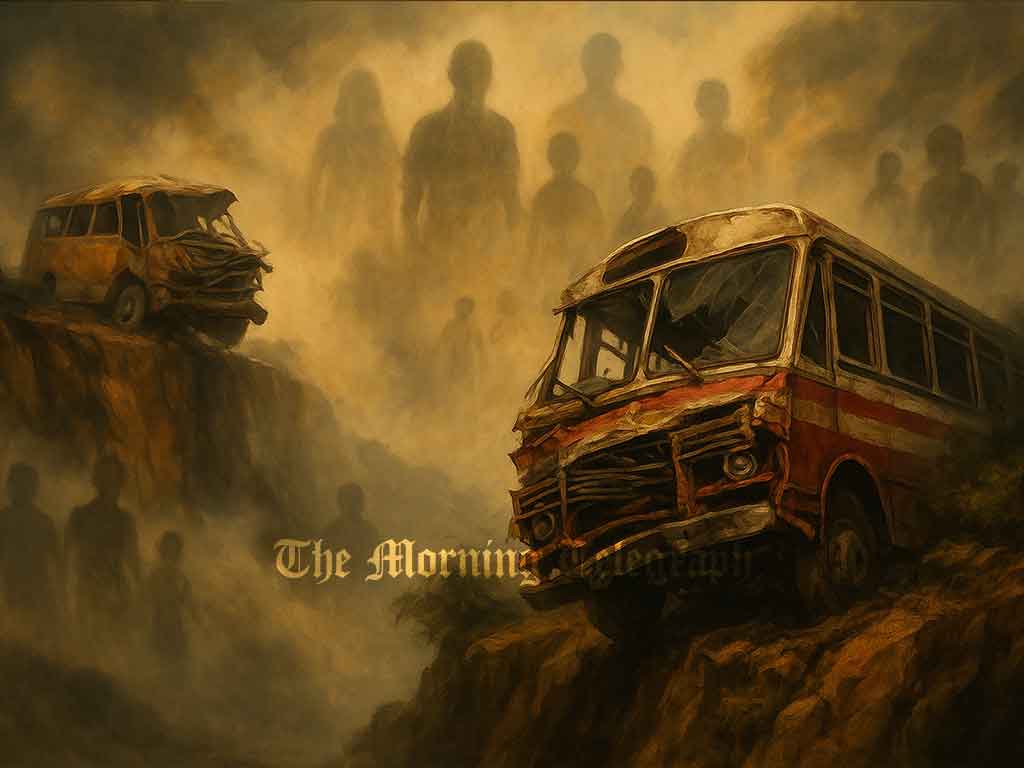
Just months later, on September 4, 2025, tragedy struck again. A bus carrying employees of the Tangalle Municipal Council collided with a jeep before plunging 1,000 feet down a precipice on the Ella–Wellawaya road. At least 15 people, including children, lost their lives, while 16 others were seriously injured. Images of rescue teams, villagers, and even hotel staff descending cliffs with ropes to save survivors highlighted both the horror of the accident and the bravery of ordinary Sri Lankans.
The Numbers Behind the Tragedy
Statistics show that these accidents are not random misfortunes but part of a deadly pattern.
- In 2023, 2,341 people died in road accidents.
- In 2024, that number climbed to 2,521.
- By July 2025, 1,332 deaths had already been recorded, including 60 from private bus crashes and 30 involving SLTB buses.
Behind each figure is a family torn apart, a community in mourning, and a nation failing to address its most obvious safety crisis.
Why Do These Disasters Keep Happening?
Every major accident tells the same story:
- Reckless and fatigued driving pushed by unrealistic schedules and competition for passengers.
- Overcrowding, with buses carrying far more than their legal capacity.
- Poorly maintained hill-country roads with minimal safety barriers.
- Weak enforcement of existing traffic laws and accountability systems.
The Yangalmodara crash was blamed on driver negligence. Kotmale was linked to fatigue and overcrowding. Ella involved speeding and possible brake failure. Yet the underlying problem is the same: a system that tolerates danger until it becomes disaster.
Beyond Grief: A Call for Reform
Each tragedy sparks grief, anger, and promises of reform. Yet, little changes. The Ella crash eerily mirrored the 2002 bus accident at the same 24th milepost, where 21 people died on nearly the same day and time. History, it seems, is not just repeating but mocking Sri Lanka’s failure to act.
If the country does not move beyond mourning into structural reforms, this cycle will continue. Reforms must include:
- Strict enforcement of driver work-hour limits.
- Mandatory vehicle safety inspections.
- Road safety investments, especially in hill-country highways.
- A cultural shift where reckless driving is treated not as bravado but as criminal negligence.
A Nation That Must Break the Cycle
Sri Lanka’s bus crashes are not simply accidents. They are symptoms of a broken system of public transport and road governance. As grieving families gather again in Tangalle, Kotmale, and Ella, one truth remains undeniable: until serious reforms are carried out, buses will keep plunging, and headlines will keep echoing the same tragic story.
It is time for Sri Lanka to decide, will it continue to write obituaries, or will it finally rewrite the rules of road safety?