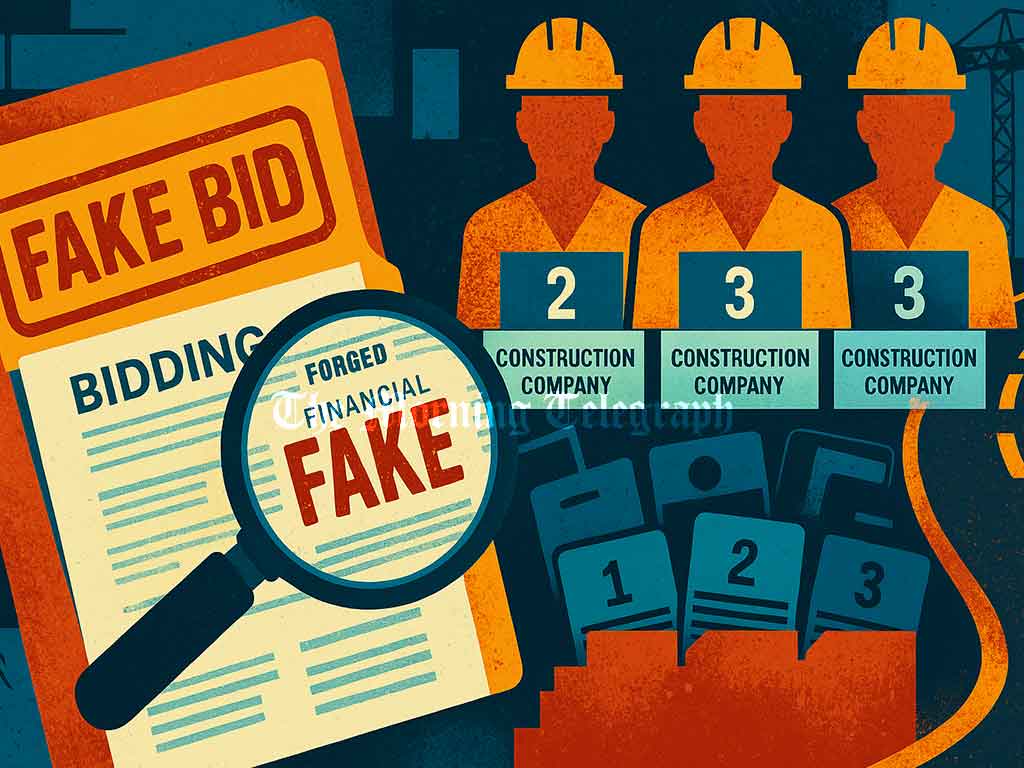
Sri Lanka’s construction industry has been rocked by revelations that three top firms submitted forged financial documents to secure a multimillion-dollar Central Expressway contract. The case marks the first major test of tough new procurement guidelines aimed at ending corruption in public projects.
Three leading construction companies, all ranked under the highest CS2 classification by the Construction Industry Development Authority (CIDA), are facing blacklisting after allegedly providing false financial information to win part of the Central Expressway project.
The forged documents reportedly included fake audited financial statements presented as part of the bid submission. Cabinet sources confirmed that this is the first time contractors may be blacklisted under the new procurement rules introduced in January, designed to clamp down on fraud, corruption, and irregularities in government projects.

Cabinet has directed the Secretary to the Ministry of Highways to follow “appropriate procedures” against the firms implicated. Highways Minister Bimal Ratnayake also secured Cabinet approval to instruct the National Procurement Commission and CIDA to take decisive action against the contractors.
According to Minister Ratnayake’s memorandum, the High-Level Procurement Committee endorsed the Bid Evaluation Committee’s recommendation to pursue sanctions against the firms for submitting technical documents containing “elements of fraud and corruption.”
The new procurement guidelines give sweeping powers to blacklist or ban bidders, contractors, suppliers, and service providers if they are found guilty of submitting forged qualifications or false information. Sanctions may also extend to public officials involved in procurement violations, under the updated Public Procurement Code of Conduct.
Officials confirmed that a special committee will be appointed to conduct a thorough investigation into the scandal. If found guilty, the contractors risk losing their licenses and being barred from future projects, marking a landmark crackdown in Sri Lanka’s construction sector.
The case is expected to send shockwaves across the industry, where corruption and manipulated bidding have long undermined credibility and transparency.