A chilling account of how Sri Lanka’s most feared underworld figure exposed names, networks, and fortunes, only for his revelations to be buried with him after a mysterious killing in police custody.
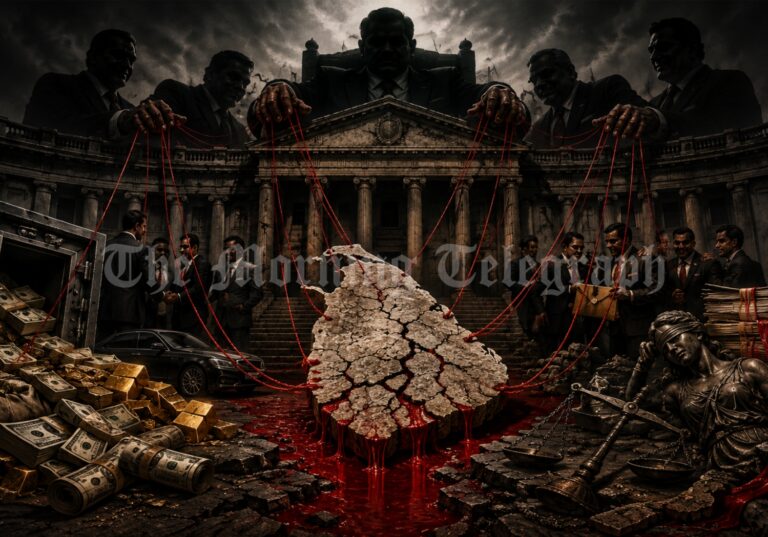
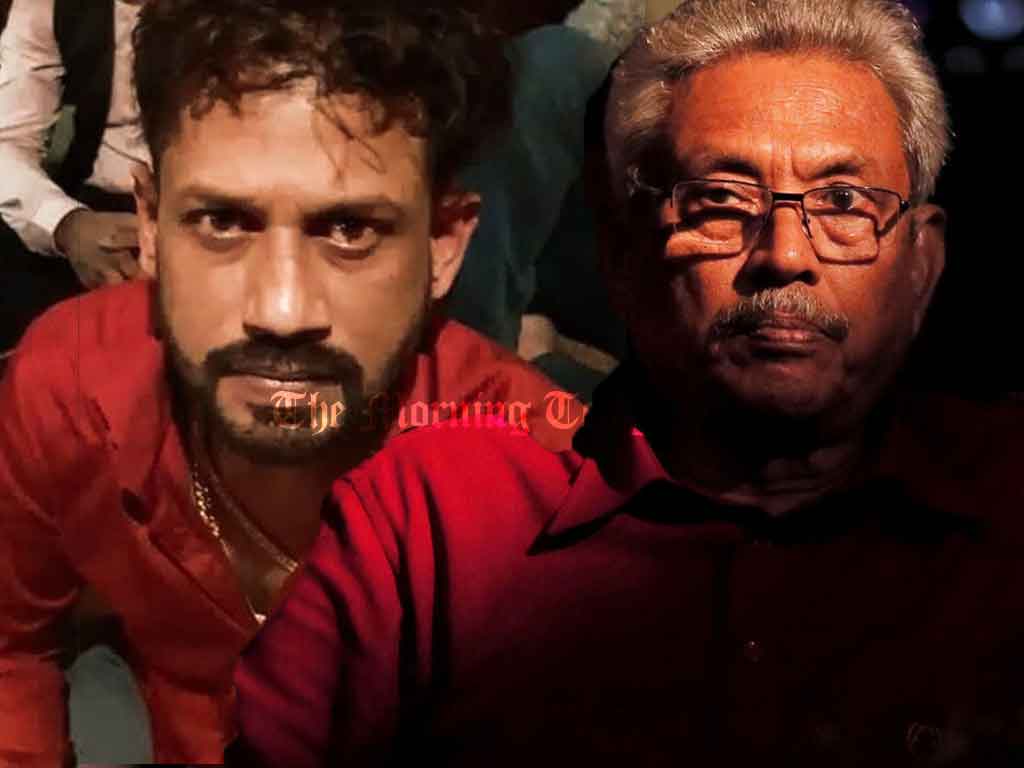
When Makandure Madush was gunned down in 2020 while supposedly guiding police to a stash of heroin, many assumed his reign as Sri Lanka’s underworld godfather had finally ended. What few realised was that with his death, a dark treasure trove of secrets, implicating over 80 politicians, businessmen, police officers, and public officials was sealed shut. His disclosures to investigators were enough to shake governments, topple ministers, and rewrite the history of Sri Lanka’s nexus between crime and politics. Yet today, almost five years later, not one of those politicians has faced a serious inquiry.
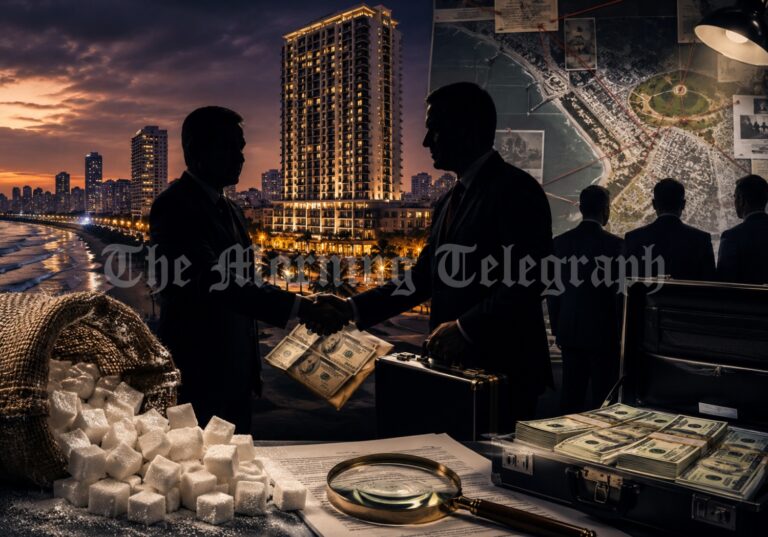
Madush’s confessions, many delivered directly to the Criminal Investigation Department (CID), painted a sordid picture of Sri Lanka’s underworld interwoven with political power. He had listed names: MPs, ministers, provincial councillors, even Pradeshiya Sabha members. He detailed how drug money funded elections, how safe houses were built, how business ventures were bankrolled with illicit cash. At the time, police officials even shared snippets with the media, confirming that Madush owned hotels in Dubai and amassed a sprawling property empire in Sri Lanka. Yet nothing substantial was ever recovered. No land was seized. No accounts were frozen. His murder ensured that silence prevailed.

The Politician Madush Feared Most
Among his revelations was a damning dossier on a powerful Western Province politician who had graduated from municipal council politics to provincial leadership, eventually securing a parliamentary seat and even becoming a state minister. According to CID sources, this politician was one of Madush’s biggest allies in laundering drug money and providing political cover. Investigators were reportedly ready to arrest him and others, but the abrupt collapse of the Yahapalana government halted the process. Transfers of senior CID officers who had pursued these leads ensured that the files were shelved.
At the time, retired Senior DIG Ravi Seneviratne served as Secretary to the Ministry of Public Security and had been at the helm of the CID. Under him, Shani Abeysekara, then CID Director, led many of the interrogations. Both men were well aware of the scale of Madush’s network. Yet after 2019, political winds shifted, and the trail went cold.
Money, Elections, and Political Protection
Madush’s testimony revealed how deep political complicity ran. He described how drug profits financed election campaigns, with entire buildings rented out to serve as campaign bases. He recounted how politicians helped launder money by setting up vehicle rental companies, restaurants, and construction businesses in his name. Intelligence reports later suggested that one such venture, a vehicle rental company was even inaugurated under the patronage of a former Prime Minister.
By the mid-2010s, Madush was running his empire from Dubai, sending instructions to his network of lieutenants back home. He became the unrivalled don of Sri Lanka’s underworld, feared and respected in equal measure. Politicians courted him for money, criminals deferred to him for protection, and police officers quietly warned him of raids.
The Fateful Dubai Arrest
On February 5, 2019, Dubai police raided a hotel where Madush was celebrating his daughter’s birthday. The bust was unprecedented: 31 Sri Lankans were arrested alongside him, including notorious criminals like Kanjipani Imran and Rotumba Amila, as well as a father–son music duo, an actor, a prison officer, and others from diverse walks of life. It was a who’s who of Sri Lanka’s underworld and its extended social circle.
Initially, Dubai authorities hesitated to extradite Madush, but diplomatic lobbying by then-President Maithripala Sirisena changed the outcome. A Sri Lankan delegation, including Foreign Minister Tilak Marapana and Attorney General’s officials, negotiated his deportation. One by one, suspects were sent back, and in May 2019, Madush himself arrived in Colombo, escorted by CID officers.
Detained under the Prevention of Terrorism Act, he became a goldmine of intelligence. He named names, described properties, and explained how his network functioned. He exposed links with police officers, prison guards, and customs officials. For investigators, it was as if the veil over Sri Lanka’s underworld had finally been lifted.
From CID Custody to a Bullet
For 18 months, Madush remained in CID custody. Then, suddenly in October 2020, he was handed over to the Colombo Crimes Division (CCD), reportedly on “orders from above.” Within 24 hours, CCD claimed to have recovered 10 kilos of heroin in Kotikawatta based on Madush’s tips, drugs that somehow never surfaced during his year and a half at CID.
On October 19, CCD officers prepared to take him to Maligawatta, allegedly to recover another 22 kilos of drugs hidden in a government housing complex. But as they entered the compound, a gunman appeared, shot Madush in the head while he was handcuffed and surrounded by armed police, and vanished into the night.
The story defied belief. How could an unknown assailant approach one of Sri Lanka’s most heavily guarded detainees, fire at close range, and escape without being caught? How could so few officers have known of his transfer, yet the gunman still anticipated his arrival? To this day, no one has been arrested for the killing.
The Silence That Followed
With Madush dead, the 80 names he exposed seemed to evaporate. The CID, once vocal about his confessions, fell silent. Politicians implicated in his testimonies breathed a sigh of relief. Properties he claimed to own in Sri Lanka and Dubai were never traced. His hotels and businesses vanished into the shadows.
Even more damning, investigations into police officers and public servants connected to him were quietly dropped. Madush had revealed how prison officers smuggled phones and drugs, how police officers tipped him off, and how government officials facilitated his financial networks. Yet no prosecutions followed.
The public, once hopeful that the drug empire would be dismantled, watched as the state buried both Madush and his revelations.
The New Gatekeepers
Ironically, the two men who knew Madush’s disclosures best, Ravi Seneviratne and Shani Abeysekara—are today in positions where they could restart investigations. Both served directly in the CID during Madush’s interrogations and are intimately familiar with his network. Yet the political will to unearth those secrets appears absent.
For many, the episode proves that Sri Lanka’s war on drugs is more performance than substance. Politicians parade seizures of heroin and ice for the cameras, but the machinery of protection, laundering, and complicity remains untouched.
The Ghost of Madush
Madush’s story encapsulates the tragedy of Sri Lanka’s fight against crime. A man who knew too much was silenced, not by his enemies but under the custody of the state. His death allowed powerful figures—politicians, businessmen, officials to breathe free.
Every election since has been haunted by whispers of his list of 80 names. Some of those politicians still sit in Parliament, still wield influence, still campaign on promises of law and order. Voters have never been told the truth.
For ordinary Sri Lankans, the questions remain unanswered. Who ordered Madush’s transfer to CCD? Who tipped off the assassin? Why were his revelations never pursued? And above all, how long will Sri Lanka’s politics remain captive to the underworld it once promised to crush?
Until those questions are answered, Makandure Madush will remain less a man than a symbol: a reminder that in Sri Lanka, crime and politics are often two faces of the same coin, and that truth itself can be buried as easily as a body.