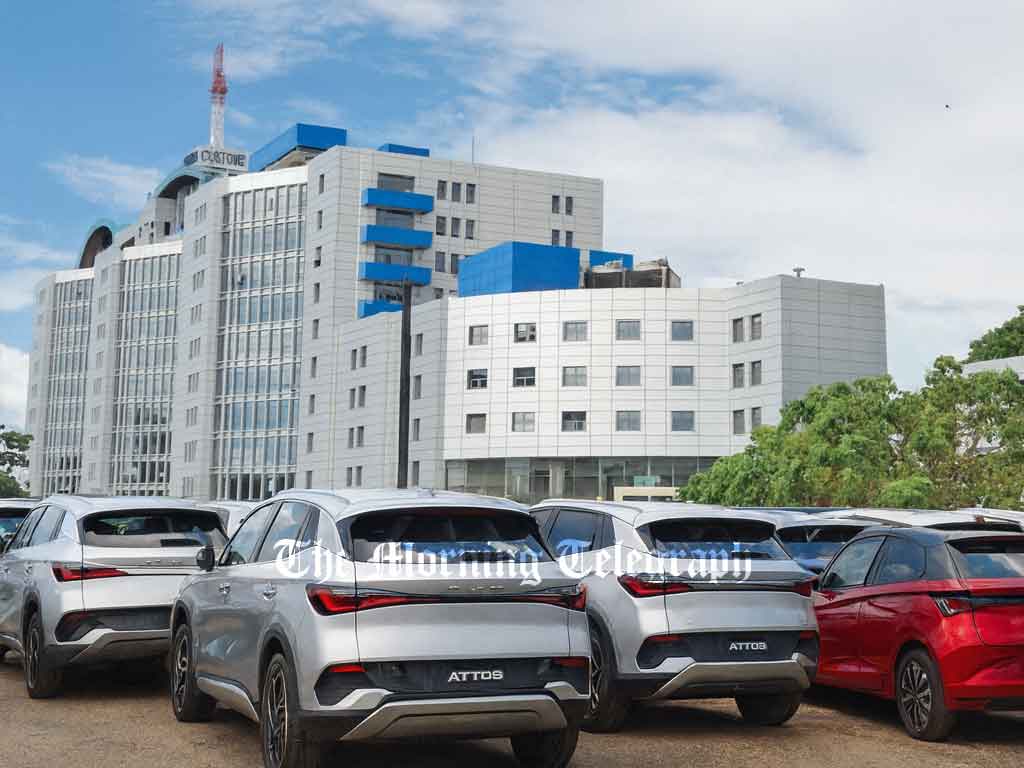
Sri Lanka Customs has once again seized more than 1,000 BYD electric vehicles, reigniting a battle over alleged tax evasion and outdated regulations, leaving importers in crisis and the public questioning why only BYD faces this relentless chokehold.
Sri Lanka’s Customs appears stuck on one issue alone, targeting BYD vehicles while leaving the public wondering what is really going on. Reports confirm that more than 1,000 BYD cars imported into the country have been detained by Customs, accused of being declared with understated motor capacity in order to pay less tax. The controversy mirrors a previous case that had already caused widespread uproar.
The initial allegations surrounded the BYD ATTO 3 model. Customs claimed that even though the vehicle was manufactured with a 150kW motor, it was declared as 100kW, leading to a tax reduction of nearly 3.6 million rupees per car. John Keells CG Auto Pvt Ltd, the official importer of BYD vehicles, countered by saying that while the installed motor has a 150kW capacity, the manufacturer restricted its output to 100kW via software, meaning their declaration was accurate.

This dispute first came to a head in July 2025, when nearly 1,000 ATTO 3 vehicles were blocked from release at the port. The company was forced into legal action, while Customs maintained it taxed vehicles strictly on the installed motor’s capacity, regardless of software adjustments. A technical committee, including experts from the University of Moratuwa, was appointed to evaluate the vehicles’ true capacity.
The matter was temporarily resolved when the parties reached an agreement before court, allowing the vehicles to be released under a bank guarantee equivalent to the disputed tax—about 3.6 billion rupees. Yet, against this backdrop, another consignment of more than 1,000 BYD vehicles has now been seized.
According to sources, the detained stock this time includes not only ATTO 3 but also ATTO 1, ATTO 2, and Dolphin models. Allegations extend further, with 70kW vehicles reportedly declared as 49kW, alongside other discrepancies.
The disputed details are as follows:
- BYD ATTO 3 declared at 100kW, actual 150kW.
- BYD Dolphin Dynamic declared at 49kW, actual 70kW.
- BYD Dolphin Premium declared at 99kW, actual 150kW.
- BYD M6 declared at 100kW, actual 120kW.
- BYD Seal Dynamic declared at 100kW, actual 150kW.
Until the technical committee delivers its final ruling on the original ATTO 3 case, action on this second detention will be based on that decision. Meanwhile, John Keells CG Auto may once again be forced to release vehicles under a massive bank guarantee of several billion rupees.
This fresh consignment reportedly includes 200 ATTO 1 units, 100 ATTO 2 units, 450 ATTO 3 units, and 250 Dolphin cars. The importer is facing serious setbacks, with financial and reputational damage mounting.
The situation has triggered frustration among the public. Many argue that at a time when companies are attempting to bring environmentally friendly cars at affordable prices, Sri Lanka’s outdated legal framework and bureaucratic inefficiency are crushing innovation. Critics believe that unless clear rules and regulations are established and aligned with global standards, the dream of affordable electric vehicles for the Sri Lankan public may remain out of reach.
The larger question now raised is whether Customs is acting fairly or exposing its inefficiency by focusing disproportionately on BYD. Observers point to outdated laws as the root cause. If Customs were to modernize its procedures and prioritize international criteria, both the public and businesses would benefit, and Sri Lanka could finally embrace the progress that environmentally friendly vehicles represent.