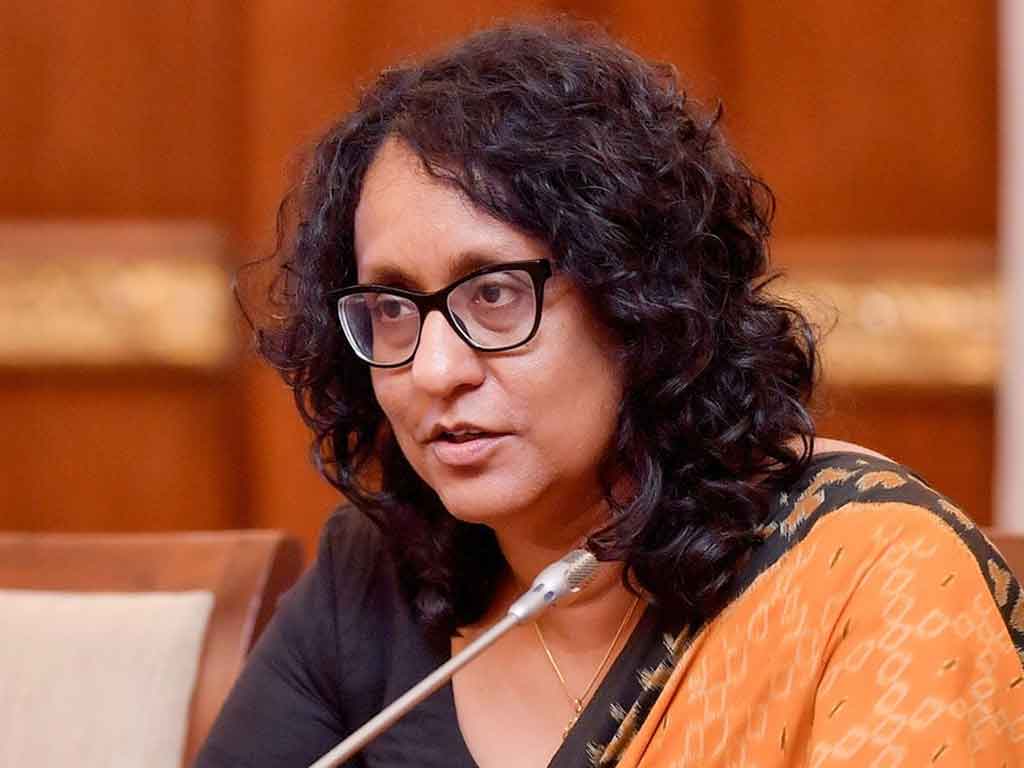
Prime Minister Dr. Harini Amarasuriya has condemned the threats made against female MPs in Parliament, declaring that the growing skills and confidence of women legislators have challenged entrenched male dominance. Calling the incident shameful, she urged the Speaker to enforce strict measures to curb harassment and ensure dignity in the House.
Prime Minister Dr. Harini Amarasuriya issued a powerful statement in Parliament, addressing the disturbing verbal threats made by Samagi Jana Balawegaya MP Prasad Siriwardena against female MP Lakmali Hemachandra. She described the act not only as an attack on Hemachandra but also as a broader assault on the dignity and security of all women in Sri Lanka.
According to Dr. Amarasuriya, the conduct of the opposition MP represents a deeper cultural problem that has plagued Sri Lanka’s politics for decades – the systematic silencing and intimidation of women in positions of authority. She emphasized that Parliament, already notorious for having the lowest representation of women in South Asia, cannot allow such behavior to continue if the country is to move forward.

Addressing the Speaker directly, she said: “A MP who is known as the media spokesperson of the Opposition Leader has spoken threateningly to MP Lakmali Hemachandra. This cannot be considered a threat made only to that MP. This is a parliament with the lowest representation of women in South Asia. Even in such a situation, I see threatening a female MP as violence, harassment. We are trying to defeat this culture. This is how these people behaved here this morning.” Her words underscored the seriousness of the incident, which has drawn widespread outrage on social media. Citizens across the island have condemned the exchange, expressing frustration with what they see as the outdated and toxic attitudes of some legislators.
The Prime Minister urged opposition MPs to pay attention to public opinion, noting how disgusted people have been with the incident. She pointed out that the voices of citizens, amplified through platforms such as Facebook, X, and TikTok, reveal the growing impatience with male-dominated parliamentary culture. “Therefore, I request the opposition MPs to look at what is being spread on social media about these incidents. That is the opinion of the people. Study what the people are saying. See how disgusting that incident is. The citizens of this country no longer expect that system,” she said.
She reminded the House that Sri Lanka has only recently managed to increase its number of female MPs to 22 – still a very small minority in a 225-member Parliament. These women, she argued, represent not just themselves but the aspirations of all Sri Lankan women. “The violence against women in this country begins with such verbal statements. The skills of new female MPs have become a challenge to this parliament. It has become a challenge to the masculinity of the MPs, and that is the problem here.”
She stressed that every time a woman MP is threatened or harassed in Parliament, it sends a dangerous message to all women across the country, particularly young girls who dream of entering politics one day. The Prime Minister’s intervention also highlighted the importance of role models. She said that young girls watching parliamentary proceedings are deeply influenced by the behavior of MPs. When female politicians are belittled or intimidated, it undermines these girls’ ambitions to serve their country. “The little girls who are watching the actions of these members dream of becoming like this one day. You are influencing those dreams,” Dr. Amarasuriya warned.
Her comments served as a reminder that representation is not just symbolic; it actively shapes the choices and aspirations of future generations. Addressing the Speaker once again, she called for concrete measures to curb harassment and threats in Parliament. She emphasized that the time has come for the House to adopt mechanisms that will hold MPs accountable for their words and behavior. “Hon. Speaker, please devise some method to control such behavior of members,” she urged, highlighting that the integrity of Parliament itself is at stake.
She further reminded MPs that the composition of Parliament has shifted, with the governing side now holding more seats in provinces such as the Western Province than the opposition. This, she argued, is proof that the people of Sri Lanka want change in both policy and parliamentary conduct. “The people put this opposition in this position because they want that change in Parliament too. Debate and behave in a decent manner,” she added.
The Prime Minister’s words reflect a broader shift in Sri Lankan politics. For decades, women in leadership positions have faced ridicule, harassment, and underrepresentation. Even trailblazing figures such as Sirimavo Bandaranaike and Chandrika Bandaranaike Kumaratunga faced personal attacks that undermined their authority. Today, however, the rise of younger women MPs such as Lakmali Hemachandra signals a new wave of political engagement that is directly challenging the old patriarchal order.
What makes this moment different is the presence of a female Prime Minister who is willing to call out sexism in Parliament directly and demand institutional reform. Her intervention has amplified the voices of millions of Sri Lankan women who feel ignored, marginalized, or silenced in politics.
Prime Minister Harini Amarasuriya’s statement marks a decisive stand against the toxic masculinity that has long shaped Sri Lankan politics. By framing the harassment of MP Lakmali Hemachandra as not just an isolated incident but a threat to all women, she has shifted the debate to a national level.
Her message is clear: the rise of female MPs is not a threat to democracy but a sign of progress. The real threat lies in clinging to outdated notions of masculinity that silence and demean women. With more women entering Parliament, the challenge now is to ensure that their voices are heard, respected, and protected.
Sri Lanka, like much of South Asia, has a long road ahead in achieving gender equality in politics. But as the Prime Minister noted, the people have already spoken. They want a new kind of Parliament, one that respects women, embraces change, and builds a future where young girls can aspire to lead without fear.