The United Nations General Assembly has approved a landmark resolution urging “concrete, timely and irreversible steps” toward a two-state solution between Israel and Palestine, with Sri Lanka among the nations voting in favour. The move signals renewed global momentum to address one of the world’s most intractable conflicts.
The UN General Assembly voted decisively in favour of a resolution that aims to revive long-stalled negotiations between Israel and Palestine. The seven-page text, first launched at an international conference co-hosted by Saudi Arabia and France in July, underscores the urgent need to advance peace through a two-state framework.
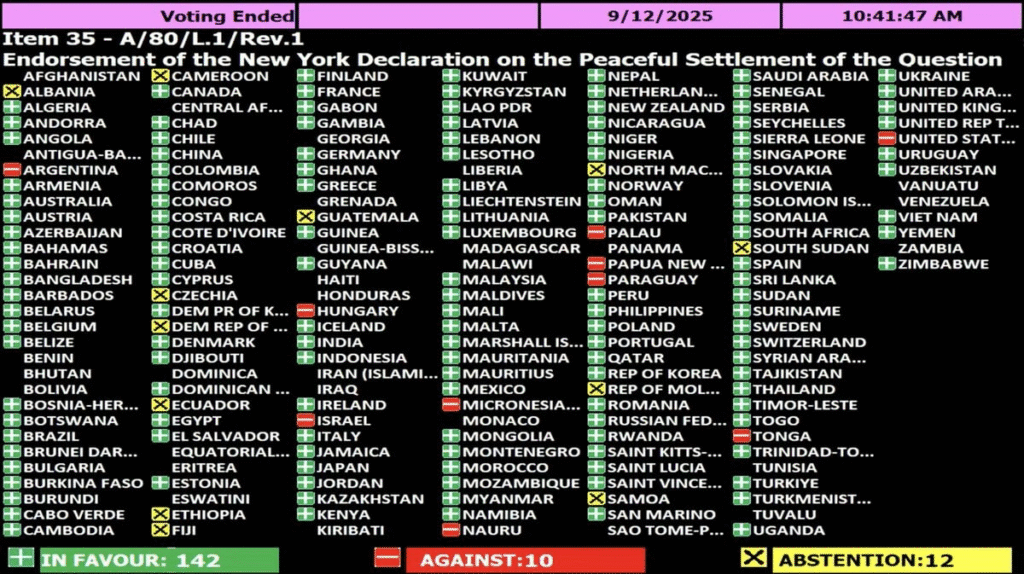
In total, 142 countries voted in favour of the resolution, while 10 opposed it and 12 abstained. Among the supportive nations was Sri Lanka, which aligned itself with the majority of the international community in recognising the two-state solution as the foundation for lasting peace in the Middle East.
The resolution calls for both parties to take “concrete, timely and irreversible steps” to secure the rights of Israelis and Palestinians alike, reaffirming the international consensus that two sovereign states remain the only viable pathway to peace.

The United States and Israel, however, boycotted the July conference where the resolution was drafted, and both countries voted against the measure in the General Assembly. Their opposition highlighted the sharp divisions that persist over how to resolve the decades-old conflict.
For many delegates, the vote was more than symbolic. It was a call to action, pressing for renewed negotiations and a revival of dialogue after years of stalemate, violence, and humanitarian crises. The statement emphasised that the rights of both peoples must be protected equally, with Palestinians gaining recognition of their statehood and Israelis assured of security.
The timing of the resolution is critical. It comes just ahead of a major meeting of world leaders at the UN, where the future of the Middle East peace process is expected to dominate discussions. Observers suggest that the overwhelming support for this measure could place additional diplomatic pressure on Israel and its allies, as well as provide momentum for regional and global stakeholders determined to find a resolution.
For Sri Lanka, supporting the resolution is consistent with its long-standing position of advocating for peace, justice, and sovereignty in global conflicts. By voting in favour, Colombo has joined a resounding global call that the two-state solution is not only a political necessity but also a moral imperative.
As the General Assembly prepares for its high-level sessions, the resolution has set the stage for renewed debate, renewed hope, and the possibility that global unity may yet translate into meaningful progress.