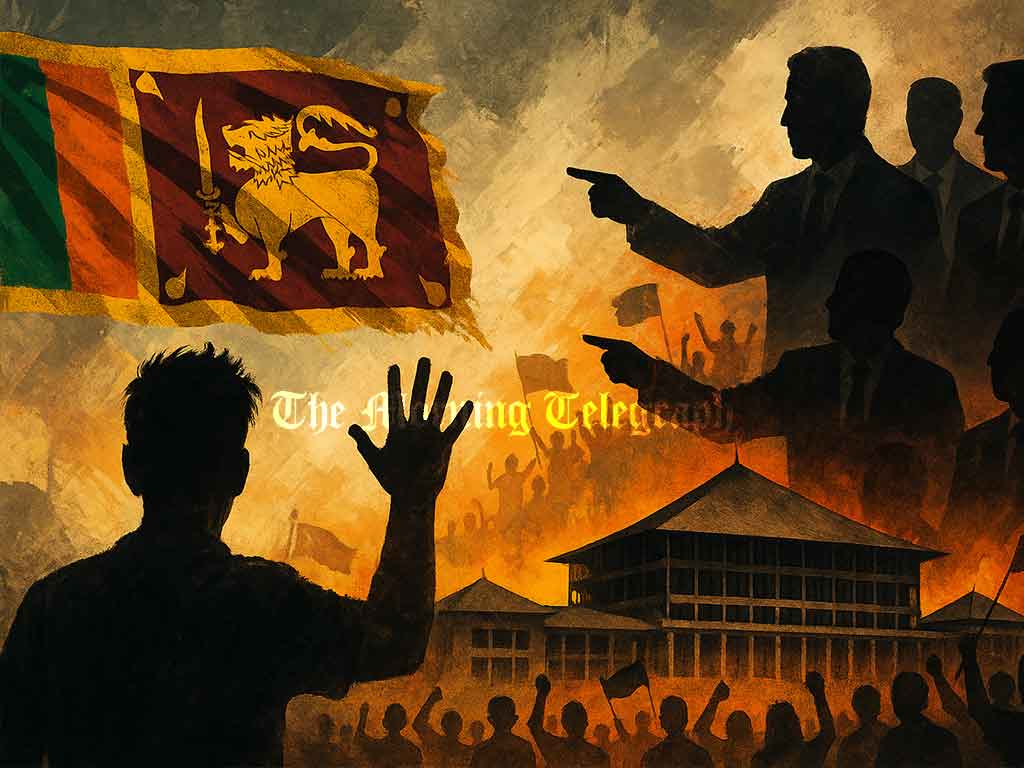
A chilling allegation of a plot to plunge Sri Lanka into chaos remains ignored, raising fears of political cowardice and foreign interference that could once again destabilize the nation.
The past few years have brought an extraordinary reckoning for former heads of state across the globe. In Brazil, former President Jair Bolsonaro was sentenced to 27 years and three months in prison for plotting a military coup after losing the 2022 presidential election. The ruling, handed down by a panel of five Supreme Court judges, sparked heated debate. One dissenting judge voted for acquittal, and Bolsonaro’s legal team has already challenged the decision. Yet, the symbolism of the conviction is striking: the judiciary moved decisively against a conspiracy to subvert democracy.
That international backdrop casts a harsh light on Sri Lanka, where accusations of a far more dangerous conspiracy remain largely unaddressed. It is a silence that gnaws at the credibility of the state, for the allegation was not made by a fringe activist or political opponent but by the then Speaker of Parliament, Mahinda Yapa Abeywardena himself.

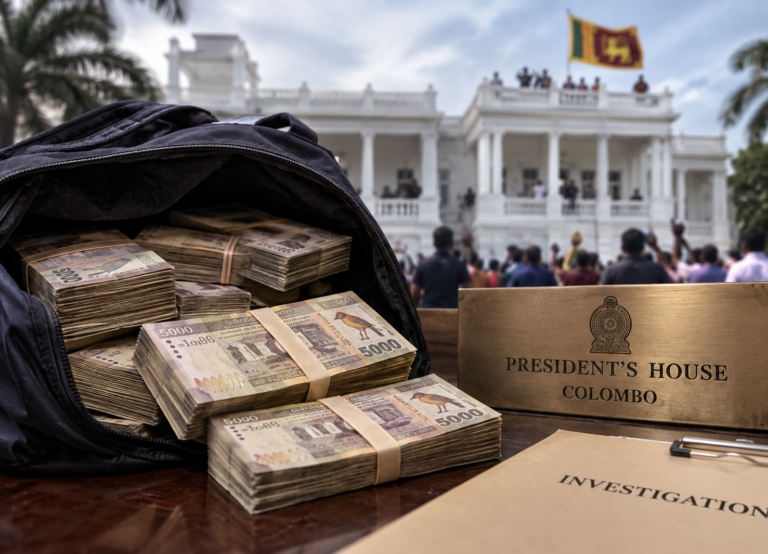
In 2022, at the height of the Aragalaya uprising that forced President Gotabaya Rajapaksa to flee the country, Abeywardena stunned Parliament by declaring that he had been pressured to appoint himself as Acting President in violation of the Constitution. The claim, if true, points to an attempted coup disguised within a mass uprising, a deliberate plan to plunge the country into anarchy.
“The objective of those who wanted me to do so was to create another Libya or Afghanistan here. They did not want to resolve the crisis here or restore law and order to protect this country … I was asked to name a Prime Minister and Cabinet of ministers and rule the country, but I was determined to protect democracy,” Abeywardena revealed. He added that both foreign and local actors had pressured him and that when he refused, he was intimidated.
This statement alone should have triggered a parliamentary inquiry or even a judicial probe. Instead, it has been left to gather dust while Brazil acts decisively against its conspirators. Why the glaring difference?
Echoes of Past Allegations
Conspiracies, both real and imagined, are not new in Sri Lanka’s political landscape. In 2015, the UNP-led Yahapalana government accused then-President Mahinda Rajapaksa of attempting to hold on to power after losing the presidential election. Figures such as Minister Mangala Samaraweera claimed Rajapaksa had tried to persuade military and police chiefs to support a coup. That allegation eventually collapsed, with Rajapaksa returning to power years later through the ballot box.
But the claim made in 2022 by Speaker Abeywardena is of an entirely different magnitude. This was not speculation from political rivals but testimony from the presiding officer of Parliament during the country’s most volatile crisis in recent history.
Foreign Interference Allegations
Leader of the National Freedom Front Wimal Weerawansa amplified the controversy by claiming that foreign powers were behind the push to oust President Gotabaya Rajapaksa and Prime Minister Mahinda Rajapaksa. He went further, alleging that the United States had played a role in the conspiracy. These assertions were swiftly rejected by U.S. Ambassador Julie Chung, who dismissed them outright.
Still, the possibility of foreign meddling cannot be brushed aside so easily. The geopolitical stakes in Sri Lanka are immense. The island sits on one of the world’s busiest shipping lanes, courted by both China and the United States. In such a context, any attempt to destabilize Sri Lanka carries international implications. Abeywardena’s warning about both foreign and local actors should have demanded serious scrutiny.
The July 9 Uprising
The events of July 9, 2022, remain etched in memory as thousands of protesters stormed Colombo, occupying government buildings and eventually forcing Gotabaya Rajapaksa to resign and flee. While celebrated by many as a victory of people’s power, others saw the uprising as the culmination of a well-orchestrated destabilisation campaign. Gotabaya himself later blamed his ouster on a conspiracy.
If Parliament had fallen completely into the hands of protestors, Sri Lanka risked descending into chaos akin to Libya, where foreign intervention and internal strife fractured the state. The possibility that such an outcome was not accidental but designed raises urgent questions. Why, then, has there been no serious investigation?
Bolsonaro in Jail, Sri Lanka in Silence
The contrast with Brazil could not be starker. Bolsonaro plotted to stay in power through a military coup, and his country responded by holding him accountable. In Sri Lanka, by comparison, Abeywardena’s revelation of an attempted unconstitutional takeover has not even prompted a probe.
If those who pressured him had succeeded, the country might have spiraled into full-blown anarchy. There is no guarantee that the forces behind the 2022 conspiracy will not attempt something similar again. Bangladesh offers a parallel: its ousted Prime Minister Sheikh Hasina also alleged foreign hands were behind the uprising that removed her government in 2024.
Silence of the Opposition
Equally troubling is the silence of Sri Lanka’s political class. Neither the NPP-led government nor the SJB-led Opposition has shown any interest in investigating Abeywardena’s claims.
For the JVP-led NPP, the hesitation may stem from self-preservation. During the Aragalaya, its leaders made a determined yet unsuccessful bid to seize control of Parliament. Opening an inquiry could expose embarrassing truths or even implicate allies. The Opposition’s silence, however, is less understandable. Its MPs have chosen passivity over accountability, raising the question: how can they be so lily-livered in the face of a threat to national sovereignty?
This abdication of responsibility risks eroding public trust further. When legislators refuse to confront allegations of conspiracy, they allow the specter of destabilisation to linger unchecked.
Doomed by Denial
Doomed is the nation that ignores warnings of conspiracy and leaves the truth buried. When Speaker Abeywardena said he was pressured to violate the Constitution, he was pointing to a plot with the potential to tear Sri Lanka apart. That allegation remains untested, unexamined, and unanswered.
The danger is not only in what happened in 2022 but in what might happen again. If local and foreign actors sought to push Sri Lanka into chaos once, what prevents them from trying again? Without accountability, without truth, history will not only repeat itself but also strike harder.
Sri Lanka cannot afford to sweep conspiracies under the rug. Silence breeds weakness, and weakness invites manipulation. The refusal of both government and Opposition to investigate Abeywardena’s revelation reflects either cowardice or complicity. Both possibilities are equally dangerous.
Brazil jailed Bolsonaro for his coup attempt. Sri Lanka, by contrast, has turned its back on its own allegations. Until that changes, the nation remains vulnerable to unseen hands pulling the strings of unrest.
The people of Sri Lanka deserve answers. They deserve transparency. Above all, they deserve leaders with the courage to confront the truth rather than hide from it. The conspiracy they don’t want investigated could be the very one that defines the country’s future.