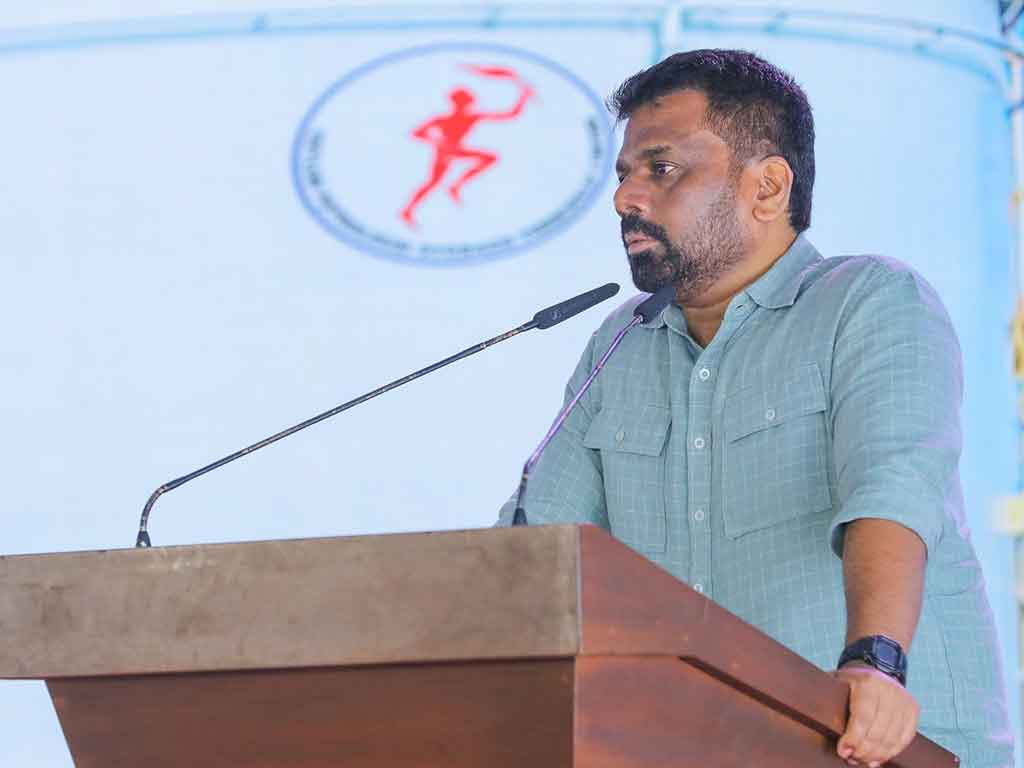
At the launch of six new oil storage tanks in Kolonnawa, President Anura Kumara Dissanayake didn’t just talk about fuel and energy security. He ripped into outdated institutions, trade union politics, and wasteful state spending, promising closures, modernization, and reforms — but will his words turn into action or stay as another expensive speech?
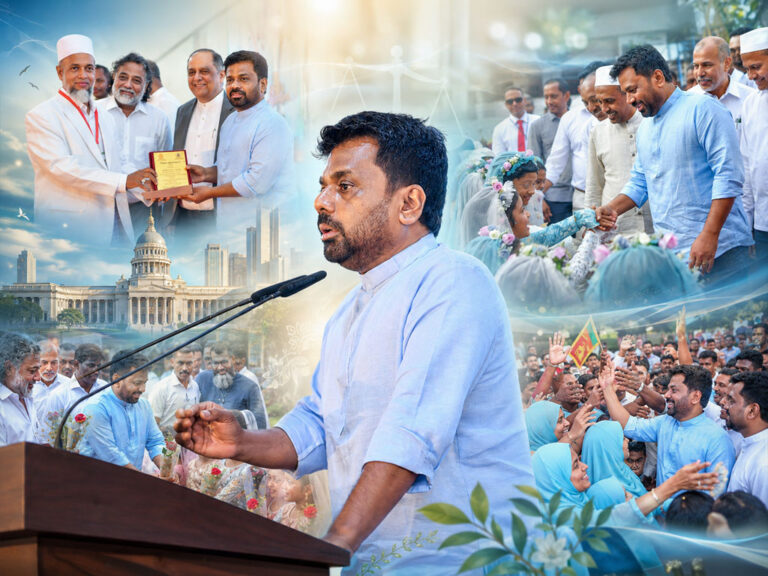
President Anura Kumara Dissanayake used the launch of construction work on six new oil storage tanks at the Kolonnawa Petroleum Storage Complex to send a blunt message to the nation: Sri Lanka will no longer tolerate institutions that drain public money without delivering services. He announced the closure of 33 such government institutions, calling them “useless” and stressing the urgent need for modernization, mechanization, and reform across the state sector.
The President opened his address by recalling the painful memories of 2022, when people died waiting in fuel and gas queues. He assured citizens that his government is committed to ensuring such tragedies never happen again. The new Kolonnawa facility, which will include three tanks of 15,000 cubic metres, two tanks of 7,000 cubic metres, and one tank of 5,000 cubic metres, is intended to strengthen Sri Lanka’s fuel security and prevent future shortages.

“The country will be built in a way that such a crisis will never occur in Sri Lanka again,” he declared. He emphasized that stability comes not just from construction projects but from embracing innovation, science, and technology. According to him, institutions that fear modernization cannot develop, and a country that resists innovation cannot advance.
He warned trade unions not to obstruct government programmes, saying, “If any trade union obstructs the programme being implemented by the government, we will not hesitate to take the necessary decisions.” He criticized past practices where employees of state corporations were exploited for political gain, noting that his administration has ended that culture.
The President also addressed energy reform and governance. He reminded the public of past failures, such as the stalled Kerawalapitiya LNG conversion project, which could have halved electricity costs but was delayed due to political conflict between leaders. Similarly, misuse of renewable energy licences under previous administrations had turned waterfalls and wind power into political handouts. He contrasted these failures with his government’s reforms, pointing to projects like the 100-megawatt solar power plant in Siyambalanduwa and the halving of wind energy production costs in the North.
On petroleum, he announced plans to modernize and use the 24 government-owned oil tanks in Trincomalee and finalize related agreements on schedule. He noted that the Ceylon Petroleum Corporation earned Rs. 18.2 billion in profit over the past eight months, but insisted these earnings must benefit the public indirectly through health and education rather than direct subsidies.
Turning to governance, Dissanayake took aim at state institutions that exist only to pay salaries. “Some institutions lease their land and use the income to pay employees’ salaries. Does the country need such institutions?” he asked. He criticized the culture of politicians and former presidents living in state houses for decades, pledging that his government would end such practices and create a more accountable, civilized state.
The President also highlighted upcoming reforms in public service, warning that individuals resistant to new political norms would be removed. He stressed that public servants must treat every rupee as a corporate asset. He announced that Rs. 330 billion will be allocated for salary increases by 2027, but warned that such spending must translate into real public benefit.
On law and order, he condemned the existence of an “underground state” formed by organized crime networks and vowed to dismantle it. “Organized crime groups have created a great disaster in society. We will definitely end this underground state,” he said, praising the police for their role in maintaining law and trust.
Dissanayake also touched on education reform, calling for the creation of “developed citizens who can fearlessly express ideas and take collective action.” He argued that education is central to Sri Lanka’s long-term progress, alongside timely project completion in infrastructure. “It is the responsibility of officials to complete the Central Expressway on time, and the government will provide all necessary support for this,” he concluded.
The President’s message was clear: state institutions must either modernize or close, energy must be secured through science rather than politics, and Sri Lanka must leave behind the waste and corruption of the past if it is to build a resilient and self-sufficient economy.