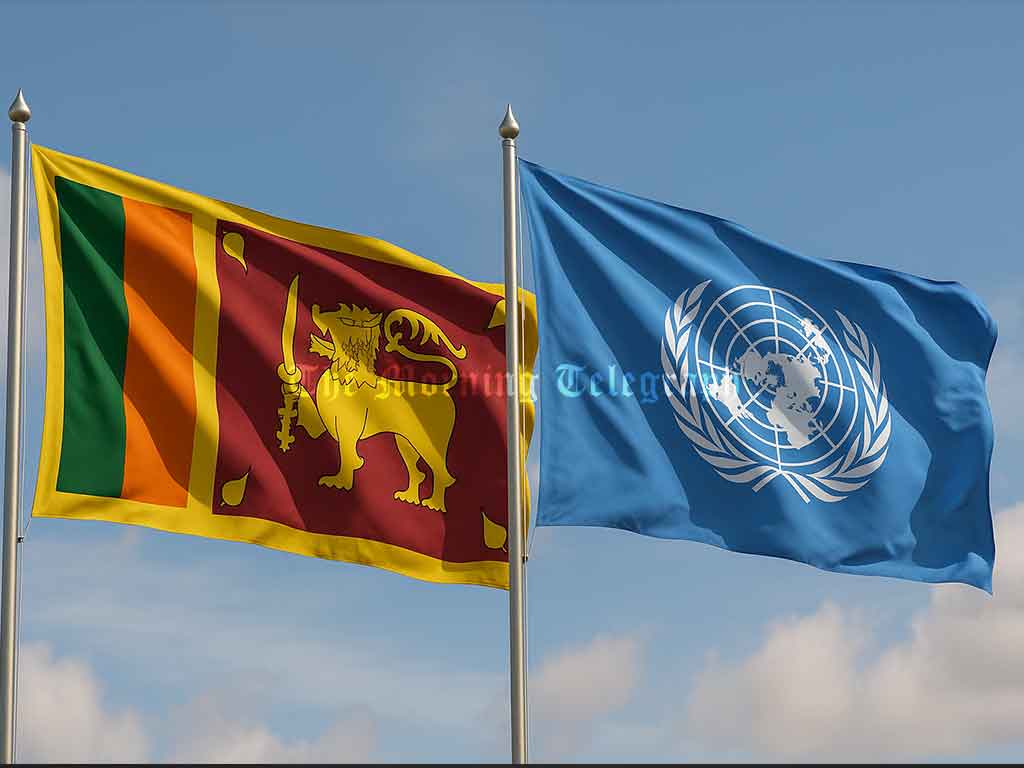
The UN Committee on Enforced Disappearances is set to grill Sri Lanka in Geneva, as families of the missing demand truth and accountability while the government prepares reports that critics call hollow promises.
The United Nations Committee on Enforced Disappearances (CED) will place Sri Lanka under the global spotlight as it reviews the country’s compliance with international obligations to prevent and address enforced disappearances. This review will take place during the Committee’s 29th session in Geneva from September 22 to October 2, 2025. For Sri Lanka, where tens of thousands of people remain unaccounted for after decades of armed conflict, the session carries immense weight and political significance.
The Geneva review is not limited to Sri Lanka alone. Montenegro and Benin will also be examined, as all three countries are State parties to the International Convention for the Protection of All Persons from Enforced Disappearance. Each government is required to present detailed reports outlining its progress in implementing the Convention. These submissions are then scrutinized by a panel of ten independent experts who evaluate compliance, highlight failures, and demand accountability.

Sri Lanka’s specific review is scheduled for September 26, with two public dialogue sessions at the Palais Wilson in Geneva. The first session will run from 10:00 to 13:00 and the second from 15:00 to 18:00 (Geneva time). During these hearings, the Committee will consider reports submitted by the Sri Lankan government as well as shadow reports from non-governmental organizations, many of which argue that official submissions sanitize the truth and gloss over serious failures. Civil society groups are expected to document ongoing concerns, including a lack of genuine investigations, political interference, and the ineffective functioning of the Office on Missing Persons.
Enforced disappearances remain one of the darkest unresolved issues in Sri Lanka’s modern history. During the decades-long armed conflict, tens of thousands of individuals were reported missing—suspected to have been abducted, detained, or killed. Families of the disappeared continue to demand answers, pressing for truth, justice, accountability, and reparations. The pain of not knowing the fate of their loved ones has been described as a wound that refuses to heal. Despite repeated promises by successive governments, concrete progress has been limited, and the families’ calls for justice remain largely unanswered.
The Committee’s 29th session will open with a symbolic tribute to victims of enforced disappearance. A video from the first-ever World Congress on Enforced Disappearances, held earlier this year in Geneva, will be presented as a reminder of the global urgency of the issue. This Congress brought together families, civil society organizations, and international experts to push for stronger accountability mechanisms and to share experiences of fighting against impunity.
Beyond reviewing individual countries, the Committee will also assess its own periodic report on urgent actions. Alarmingly, the number of urgent cases of enforced disappearances recorded by the CED has surged by 120 percent over the past five years, rising from 969 to 2,132. In its most recent session alone, 144 new cases were registered. This sharp increase underscores the continued global crisis of enforced disappearances, with Sri Lanka’s unresolved cases standing out as particularly troubling.
For Sri Lanka, the scrutiny comes at a politically delicate time. The government has often attempted to balance international pressure with domestic nationalist rhetoric, insisting that it has taken steps to address the issue while simultaneously resisting deeper investigations that might implicate senior political and military figures. Civil society groups argue that this duality has created an environment of denial and inaction. They highlight how political interference continues to block genuine accountability and how the families of victims are left to fight a lonely, exhausting battle.
The upcoming review offers a crucial opportunity for the international community to demand more than vague promises. It will test whether Sri Lanka is willing to confront its past honestly and create effective mechanisms for justice—or whether it will continue its vanishing act, hiding behind bureaucratic reports and empty pledges.
As the Palais Wilson sessions draw closer, all eyes will be on Geneva. For the families of the disappeared, this is not merely a diplomatic exercise. It is another chapter in their decades-long struggle for truth and justice. The world will now see whether Sri Lanka can finally begin to answer the question that haunts so many: where are the missing?