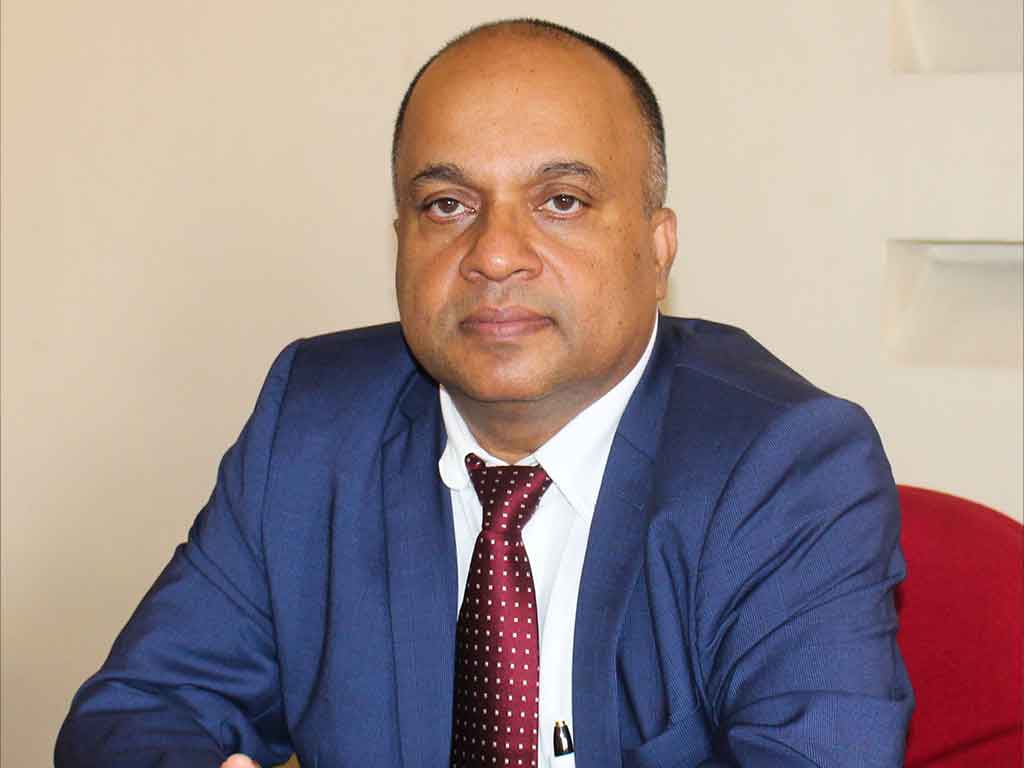
He returned with hope, armed with global experience, determined to build Sri Lanka’s science and technology sector. Instead, Professor Saman Senaweera walked away, citing political interference, lack of support, and a system still “at a primitive level.” His resignation exposes the cracks in the government’s promises of reform.
Resignations from key government posts have become a recurring theme under the current administration, and the latest name to join the list is one that carried both prestige and promise. Professor Saman Senaweera, a globally respected academic with decades of experience in Australia, Japan, and the United States, has resigned from his positions as Chairman of the National Science Foundation, Director of the National Institute of Nanotechnology, and Interim CEO of the National Institute of Nanotechnology.
The Media Secretary of the Ministry of Science and Technology confirmed his resignation earlier this week, marking yet another loss for the country’s already fragile scientific and technological institutions.

“I Came to Help, Not to Fight Political Battles”
When asked about the reason for his sudden departure, Professor Senaweera did not hesitate. His frustration, he explained, stemmed from political interference and a lack of institutional support.
“I came to Sri Lanka after working in several universities in Australia to do some work for the country. As I continued my work, I saw that things were happening outside my scope, without my knowledge. I did not get the necessary support to continue,” he said.
The professor added that he had taken over the National Institute of Nanotechnology at a time when it was in severe decline. “I was doing everything I could to revive it. Then I heard that the minister was planning to remove me. So I asked myself, why am I staying here? That’s when I decided to leave.”
A Return with Hope, Met with Disappointment
Professor Senaweera had been living in Australia before returning to Sri Lanka a year and a half ago. Initially joining the University of Ruhuna, his alma mater, he later accepted government appointments in science and technology.
But the idealism that brought him back soon collided with ground realities. “When you come to Sri Lanka, there is harassment. The environment to take things forward was lost. That’s why I left,” he explained.
He was particularly bitter about the lack of genuine support for those invited back to contribute to national development. “People are asked to return to this country. But inside, there is no support. Even when someone tries to get things done properly, the system does not allow it. I realized these people are still at a primitive level.”
Despite his disappointment, the professor stressed he is not leaving Sri Lanka for good. “I don’t plan on going back to Australia anytime soon. I really want to stay and work here. If I get an opportunity to contribute at a different level, I will take it.”
Believing in Change
So why did he return in the first place? Professor Senaweera explained that he had believed in the promise of reform. “I came back because I saw a small change in this government. I felt I should give it support. To make change, there is no point shouting from abroad. That is why I left everything and returned.”
His return, however, ended in disillusionment. Instead of being empowered to lead transformation in science and technology, he felt undermined by politics.
Who is Professor Saman Senaweera?
Professor Senaweera’s credentials are formidable. Educated at Royal College, Polonnaruwa, and Central College, Kekirawa, he obtained his first degree from the University of Ruhuna before earning a PhD in plant physics from the University of Western Sydney, Australia.
He spent a decade lecturing in plant biology at Western Sydney and later held senior positions at Tohoku University in Japan and the University of Illinois in the United States. He eventually returned to Australia, joining the University of Southern Queensland as a senior academic.
With such a background, his return to Sri Lanka was seen as a coup for the government, a signal that highly qualified expatriates were willing to invest their knowledge in national development. His appointments to lead the National Science Foundation and Nanotechnology initiatives were expected to drive innovation.
Ambitious Projects Left Midway
During his tenure, Professor Senaweera said he initiated several major projects. “We started many things that had never been done before. Unfortunately, I had to leave while leading a big program,” he lamented.
He emphasized that his resignation was not meant as a political attack. “I am not here to launch a political battle. I want to change the situation. My resignation is a message about the problems in the system.”
Ministry Denial
While Professor Senaweera cited interference and lack of support, the Ministry of Science and Technology downplayed his claims. Media Secretary Nithya de Silva insisted there was “no problem” as stated by the professor. Attempts to reach Minister Krishantha Abeysena for comment were unsuccessful.
The contrast between Professor Senaweera’s account and the ministry’s response only highlights the wider credibility gap in the government’s handling of science and technology.
A Broader Pattern of Resignations
Professor Senaweera’s resignation is not an isolated incident. In recent months, several appointees across government institutions have quit citing political pressure, inadequate resources, or ethical concerns. These resignations paint a grim picture of governance, suggesting that even capable professionals with global experience cannot thrive in an environment where politics dominates over expertise.
A Larger Message
For many observers, the professor’s resignation is symbolic. It underscores the failure of Sri Lanka to retain and empower talent, especially those who return from abroad with a sense of duty. His words carry particular weight: “We are asked to return, but inside the country, there is no support. Science and technology are not taken seriously. Instead of building up, we dig holes for ourselves.”
At a time when Sri Lanka desperately needs innovation to overcome economic stagnation, losing figures like Professor Senaweera is not just a setback—it is a warning.