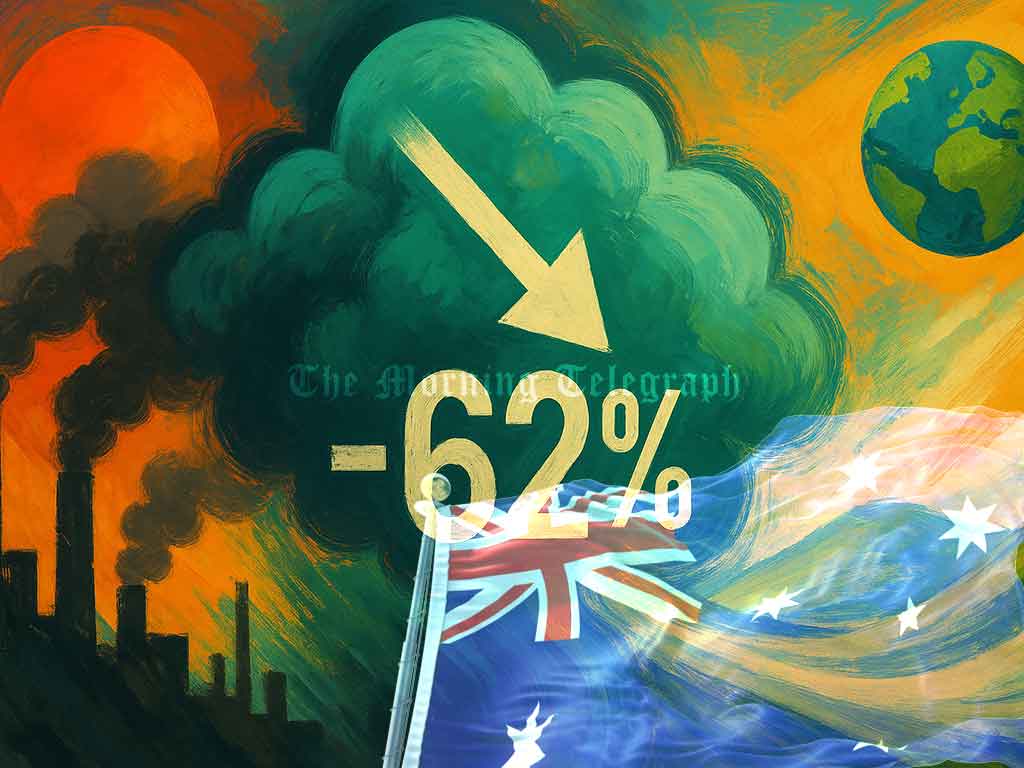
Australia, one of the world’s highest per-capita polluters, has announced a new target to reduce its carbon emissions by at least 62% compared to 2005 levels by 2035. The goal significantly raises the country’s previous pledge to cut greenhouse gases by 43% by 2030.
Prime Minister Anthony Albanese described the plan as “responsible, science-backed, and achievable with proven technology” when unveiling the new target on Thursday. He will formally confirm the commitment at the UN General Assembly in New York later this month.

The new target aligns with recommendations from the Climate Change Authority, which advised a reduction of between 62% and 70% to meet international benchmarks. It also fulfills Australia’s obligations under the 2015 Paris Climate Agreement, which aims to limit global warming to 1.5°C above pre-industrial levels.
Australia has been increasingly affected by climate extremes, including record-breaking droughts, floods, bushfires, and mass coral bleaching at the Great Barrier Reef and Ningaloo Reef. A government-commissioned risk assessment warned that failure to act could result in more heatwave deaths, reduced water quality, and rising sea levels threatening 1.5 million people, alongside a potential A$611bn drop in property values.
The emissions target remains politically contentious. Opposition leader Sussan Ley and the Liberal National coalition have criticized the plan, calling it costly and lacking credibility. Meanwhile, environmental advocates and Greens MPs have pushed for faster action.
Despite the ambitious climate goals, Australia continues to approve fossil fuel projects. Most recently, Woodside’s North West Shelf gas project received approval to operate until 2070, drawing condemnation from climate experts and environmental campaigners, including Australian Greens MP Larissa Waters, who called it a “betrayal” by the Labor government.