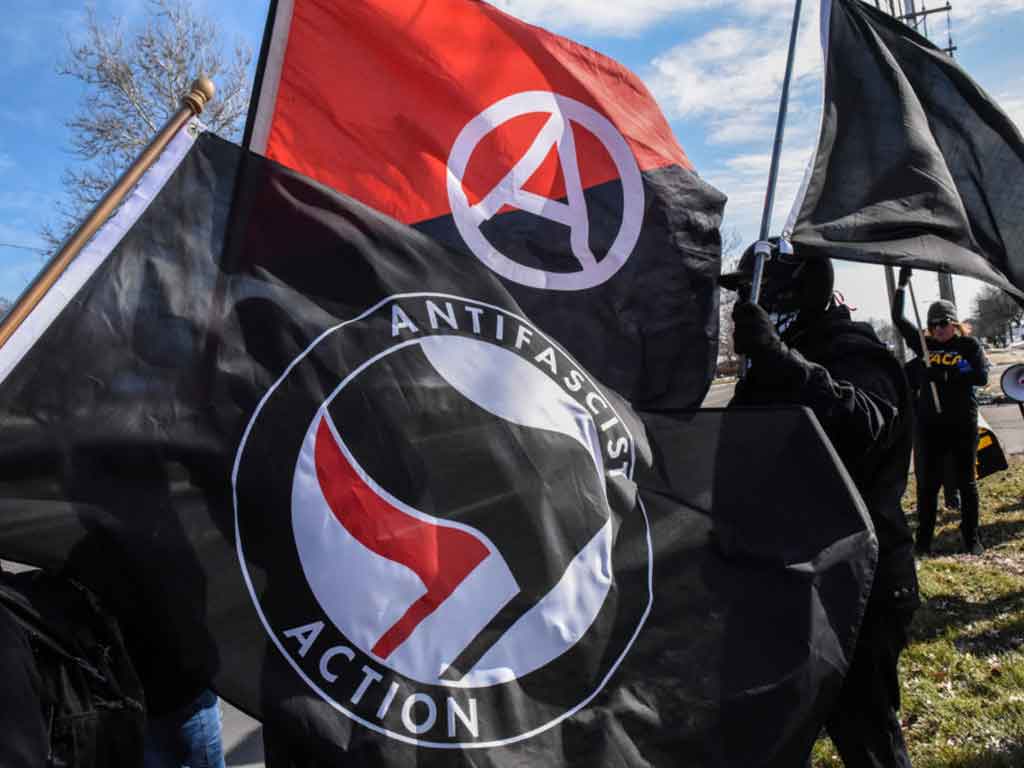
President Donald Trump has signed an executive order formally designating Antifa as a “domestic terrorist organisation,” a move aimed at intensifying his crackdown on what he describes as the “radical left.” The announcement follows the killing of conservative activist Charlie Kirk, though investigators have not linked the murder suspect to Antifa.
The designation, typically reserved for foreign groups, gives the administration expanded authority to investigate and disrupt Antifa activities, seize assets, and potentially ban affiliated individuals. The order directs federal agencies to “investigate, disrupt, and dismantle” illegal operations tied to the movement.
Antifa, short for “anti-fascist,” is not a traditional organisation but rather a loose network of activists with no formal leadership or membership list. Its adherents generally oppose far-right and fascist groups and have been active in protests since Trump’s 2016 election victory and the 2017 Charlottesville rally. Members often wear dark clothing and masks, and some have engaged in violent confrontations with right-wing groups, actions supporters argue are defensive.

The movement is ideologically diverse, drawing anarchists, socialists, and anti-capitalists, while embracing pro-LGBTQ and pro-immigration stances. Yet the absence of a centralised structure makes it unclear how Trump’s designation will be enforced. Critics also warn that the administration has frequently used “Antifa” as a catch-all label to describe broader left-wing opposition.
White House officials defended the decision as fulfilling a campaign promise. Trump, who first floated the idea in 2020, insisted the designation was overdue, accusing Antifa of escalating violence nationwide. His press secretary highlighted incidents in recent years where Antifa-linked activists allegedly attacked law enforcement officers, disrupted pro-Trump events, and carried weapons to rallies.
Legal experts point out that U.S. law allows terrorist designations only for foreign organisations, raising questions about the order’s enforceability. For now, Trump’s move is largely symbolic but signals an escalation in his war against the American left.