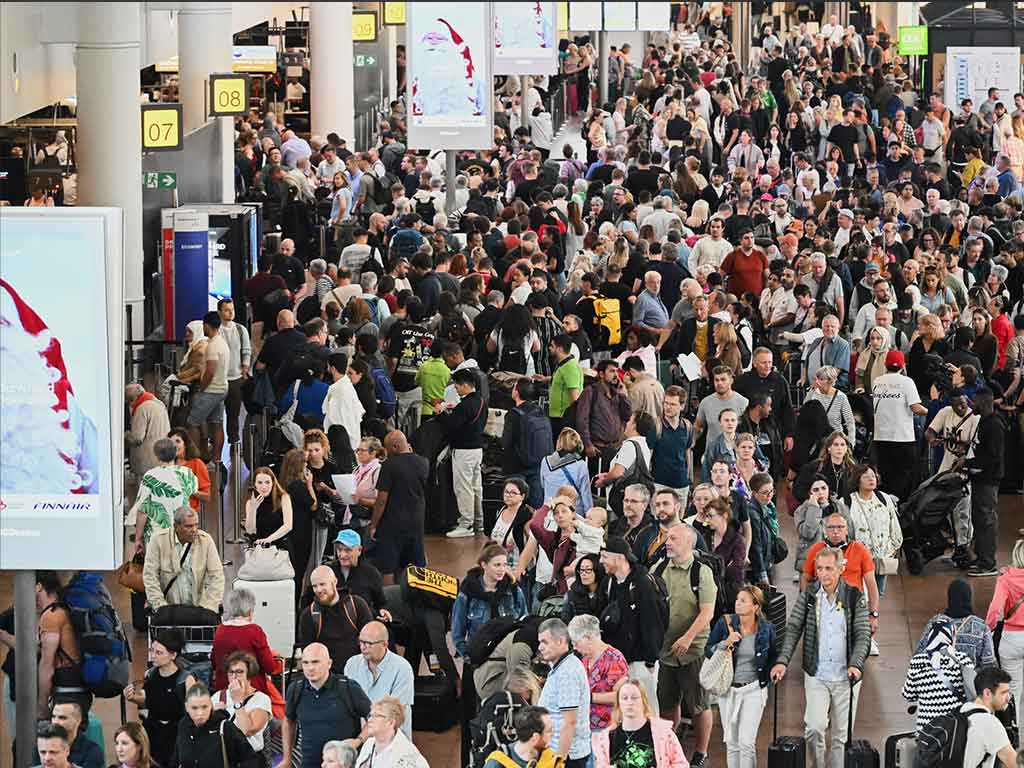
A major cyberattack crippled check-in systems at Heathrow, Berlin, and Brussels airports, sparking flight delays, cancellations, and chaos for travelers. The disruption, traced to Collins Aerospace’s MUSE software, exposed deep vulnerabilities in aviation cybersecurity and raised urgent questions about the resilience of Europe’s busiest air hubs.
Europe’s largest airports scrambled to restore normal operations after a hacking disruption hit automatic check-in systems, causing delays, cancellations, and long queues for travelers. The cyberattack targeted Collins Aerospace, a provider of check-in and boarding systems owned by RTX, affecting major hubs including London’s Heathrow, Berlin Airport, and Brussels. Passengers faced frustration as the incident unfolded on Saturday, although disruption eased significantly by Sunday, with most flights operating normally.
RTX described the event as a “cyber-related disruption” affecting its MUSE software, which several airlines rely on for check-in operations. The company had no immediate comment on Sunday. Regional regulators have launched investigations into the origin of the hack, which follows a series of cyberattacks on critical sectors, including automotive and retail, that have caused widespread operational and financial impacts.

Berlin Brandenburg Airport reported that some problems persisted but said it was working with Collins Aerospace to resolve the issues, implementing a manual workaround that prevented major delays or cancellations. Brussels Airport warned passengers that the cyberattack had a “large impact on the flight schedule,” resulting in cancellations and delays, though these were declining. Heathrow Airport stated that while recovery efforts continued, the vast majority of flights had been able to operate.
Aviation data provider Cirium analyzed the disruptions, describing delays at Heathrow as low, moderate at Berlin, and significant at Brussels, noting that the situation was improving as operations returned to normal. Travelers were advised to check flight statuses and allow extra time for processing while airports implemented contingency measures to mitigate the impact.
The incident highlights growing concerns over cybersecurity in the aviation sector, with reliance on centralized digital systems exposing airports and airlines to significant operational risks. As airports work to restore confidence in automated systems, regulators and industry stakeholders are emphasizing the need for enhanced security protocols and monitoring to prevent future disruptions.