
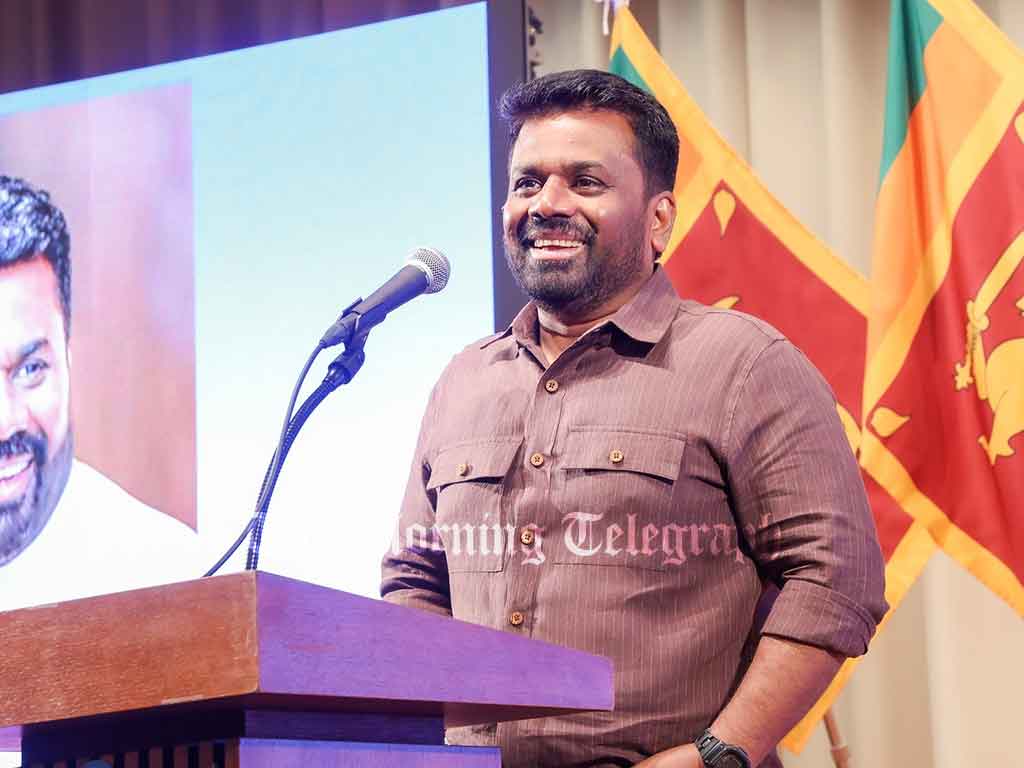
President Anura Kumara Dissanayake, addressing Sri Lankans in Japan, announced that the government will borrow Rs. 3 trillion next year to stabilize the economy, while assuring that no new taxes will be introduced. He highlighted unity, diplomacy, investment, and corruption-free governance as the pillars of the nation’s progress.
Sri Lanka is preparing for a decisive financial year with President Anura Kumara Dissanayake confirming that the government will borrow Rs. 3 trillion in 2026 to continue the country’s path of recovery. Addressing a gathering of Sri Lankans in Tokyo, the President assured that this borrowing will not result in the imposition of new taxes in the upcoming budget, and that efforts will instead focus on gradually reducing certain existing tax rates to provide relief to citizens already burdened by the cost of living.
Speaking at the Reiyukai Hall in Tokyo, during an event organized by the Sri Lankan Embassy and voluntary organizations, President Dissanayake said that Sri Lanka has managed to stabilize its economy, strengthen the rule of law, and rebuild trust in governance during the first year of his administration. He noted that no ethnic conflict erupted in the past year, calling it a historic achievement that must serve as the basis for building a stronger and more united Sri Lanka. According to him, the success of the government should not be measured by the expectations of those who resisted change, but rather by the hopes of the people who supported the National People’s Power coalition to bring about a transformation.

The President emphasized that Sri Lankans both at home and abroad did not bring his government to power for personal benefits or privileges, but with the shared aspiration of creating a new political and economic direction. He said the first step was taken by stabilizing a collapsed economy, noting that revenue collection had exceeded budgetary targets for the first time in the country’s history. However, he acknowledged that more work is needed to free the state apparatus from corrupt practices and inefficiencies that had undermined public trust for decades.
He reiterated that the government will not misuse public money, pointing out that for the first time in seventy-six years, Sri Lanka has a leadership committed to clean governance. He said that corruption, fraud, and political privilege were deeply entrenched in the system, but his government has taken the initial steps to dismantle these structures and create an efficient public service. He explained that strengthening the rule of law and ensuring equality before the law were critical pillars of this transformation, stressing that no individual, regardless of wealth or status, is above the law today.
The President said that in a globalized world, where economies and markets transcend borders, no country can progress in isolation. He praised his government’s efforts to maintain balanced diplomatic relations, noting that strong international engagement has become a cornerstone of Sri Lanka’s recovery. He reminded the gathering that national unity and stability in foreign relations are prerequisites for long-term growth, and that without these foundations, no nation can move forward.
Dissanayake explained that developing the external economy is the only way to reduce the tax burden on ordinary people. Exports, tourism, and investments must drive growth so that government revenue increases without suffocating businesses or households. He assured that Sri Lanka will not introduce new taxes in the next budget and that reductions in certain existing tax rates are being considered to stimulate economic activity. The President said that tourism will be one of the main growth drivers, with a target of attracting four million visitors and generating eight billion dollars in revenue by 2030. He said the government is committed to improving infrastructure, creating a favorable environment for investors, and enhancing the country’s global image as a premier destination.
He invited Sri Lankans living overseas to invest in their homeland, assuring them that the government is ready to provide all necessary support. He said the country’s most valuable asset, its land, must be put to better use, and that state-owned estates that remain unproductive will be made available for private investment. By managing land more efficiently and encouraging the private sector to take the lead, Sri Lanka can create jobs, boost exports, and raise incomes across the country.
Digital transformation is another focus of the government’s plan. The President said that by next year, all state transactions, including tenders and customs operations, will be conducted online. This digitization drive is aimed at increasing transparency, reducing corruption, and making the public service more efficient. He said Sri Lanka must embrace technology to modernize governance, cut red tape, and ensure faster service delivery.
The President also addressed social issues such as domestic violence and the drug menace. He said that violence has infiltrated homes, institutions, and even places of worship, warning that this trend threatens the values of society. He insisted that violence cannot be accepted as a conflict resolution tool, whether in homes or communities. On the issue of drugs, he said decisive measures are underway to dismantle criminal networks that profit from narcotics while destroying the lives of young people.
Dissanayake said that economic growth must directly improve the lives of citizens, and that growth without benefit to the people is meaningless. He said modernization of agriculture and livestock, rural development, and job creation are central to his government’s strategy. He acknowledged that citizens continue to face hardships but insisted that dedicated effort over the coming years will help overcome these struggles.
He noted that the government has also taken important steps to strengthen national unity by addressing the grievances of Tamil and Muslim communities in the North and East. Providing equal rights, legal protections, and development opportunities to communities that suffered during the civil war is part of the government’s plan to prevent the recurrence of conflict and ensure sustainable peace.
The President concluded by reminding Sri Lankans that the government is not seeking favors or donations but inviting investment and expertise to rebuild the country. He said the people chose a new path in the last elections because they were determined to reject corruption and dynastic politics. By laying a strong foundation for national rebuilding, Sri Lanka has begun its journey toward progress, and he called on Sri Lankans abroad to be partners in this effort. He stressed that the government has proven that it can exceed expectations in revenue, diplomacy, and governance, but the next phase requires collective participation to ensure that growth is sustainable, inclusive, and beneficial to all.
Lucky escape that investment is not coming to sri lanka. The clue is the word investment. If a company invests in a venture the company by definition is making more than they put in. The media will be employed to delude the people that there is trickle down economics. Trickle down economics did not work in any country. Look at Rio Tinto Zinc,DOLE ,Coca Cola,Bhopal etc. People are still starving ,disabled and poor.