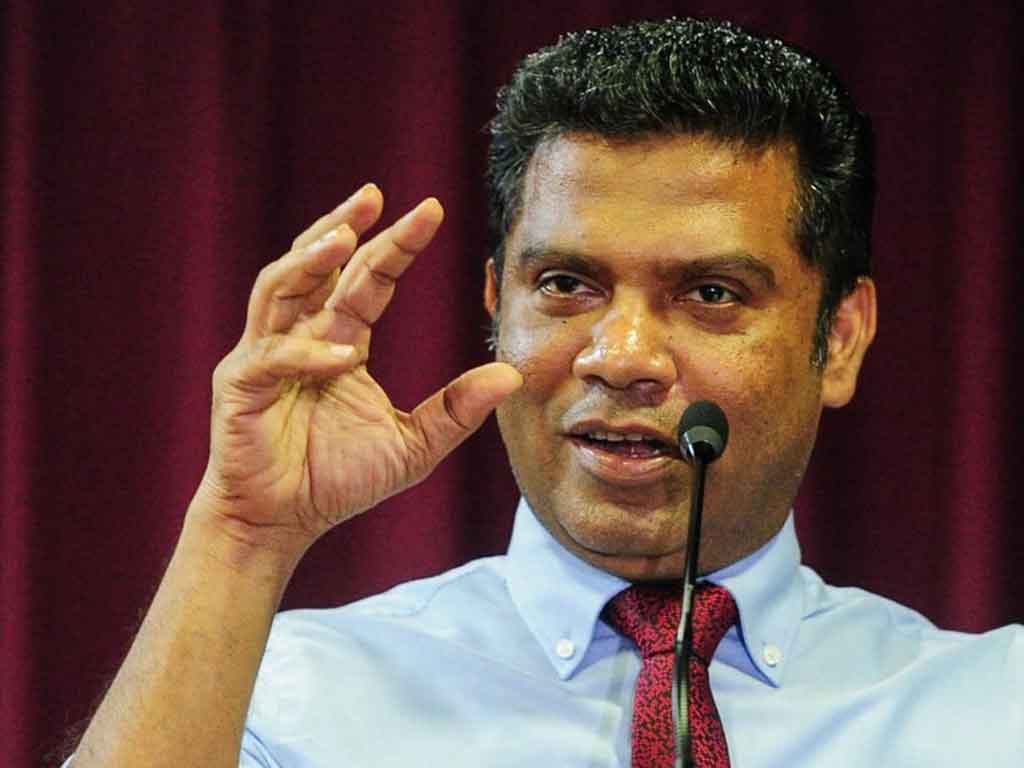
At the 48th commemoration of Professor Senaka Bibile, Sri Lanka’s legendary father of the National Drug Policy, Health and Mass Media Minister Dr. Nalinda Jayatissa admitted that solving today’s deep-rooted crises in the health sector cannot be achieved with a single pen stroke, as the battle against corruption and profiteering continues.
The 48th commemoration of Professor Senaka Bibile, the visionary founder of the State Pharmaceuticals Corporation (SPC) and the pioneer behind the National Drug Policy, was held on September 29, 2025, at the Sri Lanka Foundation Institute Auditorium in Colombo. The ceremony, organized under the patronage of Health and Mass Media Minister Dr. Nalinda Jayatissa, brought together doctors, trade union leaders, academics, and policymakers to reflect on the enduring legacy of a man celebrated as one of Sri Lanka’s greatest reformers in public health.

The event was opened by Dr. Ajith Kumara, Chairman of the Senaka Bibile Memorial Organization, who welcomed attendees and reminded them of Bibile’s humanistic vision. Speeches were delivered by Attorney-at-Law Samantha Korale Arachchi, Chairman of the All Ceylon Trade Union Federation, and Dr. Manuj C. Wirasinghe, Chairman of the State Pharmaceuticals Corporation. The main commemorative lecture was delivered by Professor Narada Warnasuriya, former Vice Chancellor of the University of Sri Jayewardenepura.
In his keynote address, Minister Jayatissa underscored that while many now romanticize the memory of Professor Bibile’s passing in Guyana on September 29, 1977, very few acknowledge the formidable obstacles Bibile faced during his years of reform from 1971 to 1976. It was during this time that Bibile established the State Pharmaceuticals Corporation and battled entrenched interests in both the political and medical sectors.
The Minister reminded the audience that some of the very people who had obstructed Bibile’s vision during his lifetime now participate in commemorations, speaking warmly about his death while forgetting the struggles he endured in Sri Lanka. He emphasized that history cannot be rewritten, and the real tribute to Bibile must be in continuing his fight to provide affordable, high-quality medicines to the people.
Jayatissa drew parallels between the challenges Bibile faced and the current climate. He accused certain politicians and doctors of accepting payments from pharmaceutical companies to manipulate media narratives, create false stories, and even engineer fake drug shortages in order to destabilize the SPC and undermine public confidence. He stated that a similar campaign of slander had been carried out against Bibile in his time, yet he persevered and created a drug policy model that has been internationally recognized.
The Minister also addressed Bibile’s call for a national laboratory capable of testing not only Western medicines but also Ayurvedic medicines, agricultural products, and cosmetics. He revealed that a modern laboratory project valued at 10 million US dollars is currently underway, directly inspired by Bibile’s recommendations nearly half a century ago.
However, Jayatissa cautioned that rebuilding Sri Lanka’s struggling health sector amid an ongoing economic crisis cannot be achieved overnight. “All shortcomings cannot be filled with a single pen stroke,” he admitted. “But step by step we will restore what is broken, just as Bibile once did.”
The commemoration also revisited Bibile’s towering achievements. Born on February 13, 1920, and educated at Trinity College, Kandy, Bibile graduated from Colombo Medical College in 1945 with first-class honors in medicine and surgery, receiving gold medals in both fields. He joined the medical faculty in 1954 as Head of Pharmacology, becoming Sri Lanka’s first Professor of Pharmacology in 1958. Later, as the first Dean of the Faculty of Medicine at the University of Peradeniya, he pioneered reforms in medical education and established the first Medical Education Unit in Sri Lanka.
Bibile’s most celebrated contribution was the establishment of the State Pharmaceuticals Corporation in 1971, where he served as its first chairman without accepting a salary. His groundbreaking National Drug Policy prioritized affordability, essential drug lists, and transparent procurement practices, challenging multinational pharmaceutical giants and corrupt local networks.
His sudden death in Guyana on September 29, 1977, cut short a revolutionary journey. Yet, his legacy continues to shape global discussions on equitable access to medicine.
This year’s commemoration concluded with a renewed call for Sri Lanka to embrace Bibile’s principles, free from political interference, profiteering, and corruption. Speakers agreed that the ultimate tribute to Professor Senaka Bibile is not in annual ceremonies but in real reforms that uplift ordinary citizens.
The message was clear: Sri Lanka’s health system, battered by shortages, scams, and corruption, can only be restored by returning to the integrity, vision, and courage of Professor Bibile. The battle is far from over, but the blueprint was written long ago.