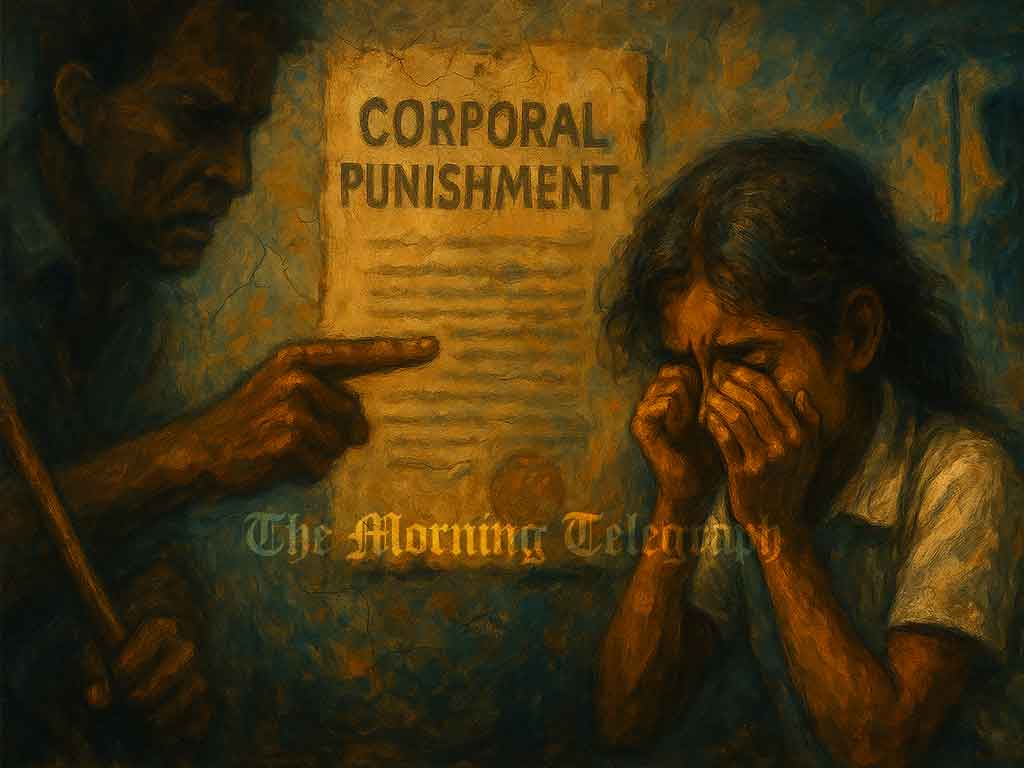
Sri Lanka is once again facing a heated debate inside Parliament and across society, this time over how the nation treats its youngest citizens. The Penal Code (Amendment) Bill, aimed at outlawing corporal punishment, has been tabled for its second reading, and the controversy it has sparked touches parents, teachers, unions, child rights activists, and lawmakers alike.
The bill, first presented on August 19, 2025, and debated again on September 24, has ignited fierce arguments. The government insists it will finally protect children from violence, humiliation, and cruelty. Opponents, however, warn that vague definitions and broad provisions could criminalize everyday discipline, create confusion in classrooms, and even strip parents of their traditional rights.
What began as an attempt to modernize Sri Lanka’s child protection laws has now escalated into one of the most divisive debates in years, raising the question: will this bill be a landmark in safeguarding children or a flawed law that punishes those trying to correct them?

What are the amendments mentioned in the bill?
At the heart of the debate is the amendment to Section 308 of the Penal Code under “Corporal Punishment of Children.”
Section 308B proposes that any person who, having the custody, charge, or guardianship of a person under the age of 18 years,
(a) does any act of physical force with knowledge that it will cause any pain or discomfort, however slight, as a means of punishment or correction; or
(b) does any act other than physical with knowledge that it will cause any humiliation, however slight, commits the offence of corporal punishment.
The punishments are severe. A conviction could mean up to six months in prison, a fine of up to Rs. 100,000, or both. If the child is under 18 and physically or mentally disabled, the penalties escalate to a possible two years in prison.
Introducing the bill, Minister of Women and Child Affairs Saroja Paulraj declared that “the full rights of a child lie with the District Magistrate of the area where the child lives.” She emphasized that neither parents, nor teachers, nor relatives, nor any other guardian has the right to inflict violence or cruelty. Since 2013, complaints of cruelty against children have hovered around 2,000 annually, she added, noting that evidence shows the negative effects of corporal punishment far outweigh any supposed positives.
Opposition warns of “serious sensitive issues”
While opposition MPs agree in principle that corporal punishment should be abolished, they argue that the wording of the bill is dangerously overbroad.
MP Ajith P. Perera voiced his concerns in Parliament, stating: “Honorable Minister, whether you know it or not, the interpretation of Section 308B is too broad. Even if a child’s grades fall and a teacher tells them to work harder, this could be interpreted as humiliation. Are we ready to criminalize teachers for motivating their students?”
He demanded that the bill include clearer definitions of terms such as “humiliation” and that the phrase “good faith” be added to protect parents and teachers who act responsibly in the child’s best interest. Without these safeguards, he warned, the bill could create a legal minefield for ordinary discipline in classrooms and homes.
Child rights defenders push back
Not all lawmakers share those fears. MP Dr. Kaushalya Ariyaratne reminded Parliament that the UN Committee on the Rights of the Child has already defined humiliation clearly as belittling, mocking, threatening, or intimidating children. Quoting General Comment No. 8, she accused critics of creating false arguments to protect outdated practices.
“Do not create scapegoats. Humiliation is well defined internationally. What this bill seeks to do is align Sri Lanka with global standards in protecting children. We should not be watering it down with excuses,” she said.
Teachers’ unions raise alarm
Beyond Parliament, the country’s powerful teachers’ unions have reacted sharply, fearing that the bill could paralyze school discipline.
Joseph Stalin, General Secretary of the Sri Lanka Teachers’ Union, said: “What are ‘non-physical acts’? If even queuing late students can be considered humiliation, teachers could be dragged to court and sentenced to six months in prison. How do you protect children without discipline? Where is the counseling process? Where are the alternatives?”
Ramith Wijesiri of the National United Teachers’ Union added: “Students often arrive late, and principals ask discipline teachers to queue them or keep them after school. If that child says it was humiliating, the teacher could end up with a criminal conviction. This is deeply unfair.”
The unions are now demanding clearer definitions, government guidelines, and training for teachers if the bill is passed. Without it, they argue, teachers will be left in constant fear of legal action.
Global context and WHO’s position
Globally, corporal punishment remains common. The World Health Organization estimates 1.2 billion children experience it every year, often at home. The UN’s 2030 Sustainable Development Agenda calls for the complete elimination of violence against children, explicitly including corporal punishment.
The UN Committee on the Rights of the Child defines corporal punishment as “any punishment, however slight, that is intended to cause pain or suffering.” This includes hitting with a hand or instrument, kicking, shaking, ear-pulling, pinching, scratching, or forcing children into uncomfortable positions. Studies consistently show that frequent punishment increases aggression, reduces academic performance, and weakens personality development, creativity, and mental strength.
Alternatives to punishment
Local experts argue that alternatives already exist. Dr. Nuwan Thotawatta, who specializes in early childhood development, told the BBC Sinhala Service that punishment is outdated and counterproductive.
“There is no evidence that people succeed because of punishment. Developed countries like Finland have long abandoned it, adopting systems that reward good behavior instead of punishing bad. Children then want to go to school, and their motivation improves. We should be adopting those models, not clinging to harmful methods,” he said.
A cultural crossroads
The bill has struck a nerve because it challenges deep-rooted cultural practices. For generations, corporal punishment has been normalized in both homes and schools. For many parents and teachers, it is seen as discipline rather than cruelty. Critics of the bill say the law risks criminalizing cultural norms. Supporters say culture cannot justify violence against children.
What makes the issue even more contentious is the vagueness of terms like “humiliation.” Could a public reprimand qualify? Could corrective measures such as detention or extra assignments be treated as crimes? These questions remain unanswered and fuel the growing backlash.
Where the debate stands
For now, the Penal Code (Amendment) Bill remains one of the most controversial pieces of legislation before Parliament. It pits child rights advocates, who argue for absolute protection, against teachers and opposition MPs who want clarity and safeguards.
The stakes are high. If the bill passes without changes, it could transform child protection laws in Sri Lanka but also risk crippling discipline in schools. If amended too heavily, it could water down protections and leave children vulnerable.
What is clear is that Sri Lanka is at a crossroads. The debate over this bill is about more than just corporal punishment. It is about what kind of society the country wants to be — one that tolerates traditional methods of discipline or one that fully embraces global standards of child rights.