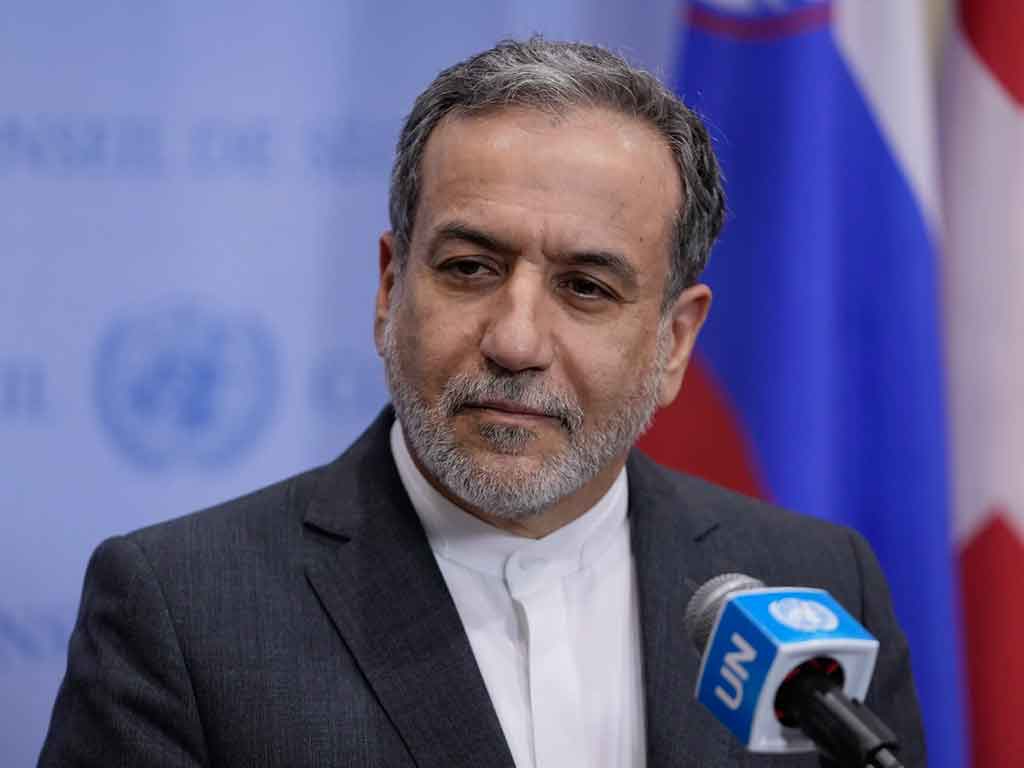
Iran’s Foreign Minister has written directly to Sri Lanka, urging solidarity against what Tehran calls politically motivated UN sanctions driven by the United States and its allies. The move places Sri Lanka at the crossroads of a major geopolitical standoff with global repercussions.
Iran has turned to Sri Lanka for support as sweeping economic and military sanctions reimposed by the United Nations intensify pressure on Tehran. Iranian Foreign Minister Abbas Araghchi has written to his Sri Lankan counterpart, Vijitha Herath, seeking solidarity at what he describes as a defining moment for the credibility of international law. The move follows accusations from the UK, France, and Germany that Iran failed to uphold its nuclear commitments, leading to the reactivation of sanctions nearly a decade after they were lifted.

Iran’s Ambassador to Colombo, Alireza Delkosh, revealed the development during a meeting with journalists, accusing the United States of manipulating international law. “Today Iran is the target, tomorrow maybe South Asia, and the day after, Africa. This is not just Iran’s struggle, this is about defending the dignity of international law,” he said. He added that the Foreign Minister had also written to the Maldives, urging nations in the region to stand against what Tehran sees as selective and dangerous use of international institutions.
The Ambassador emphasized that the sanctions are narrowly targeted at Iran’s nuclear-linked trade and do not cover essential goods such as tea, oil, medicine, or food. Trade with partners like Sri Lanka and China is therefore not directly restricted. However, the resolutions authorize inspections of Iranian ships and cargo to ensure no nuclear-related items are being transported, creating logistical challenges that could affect regional trade flows.
Responding to questions about bilateral ties, Ambassador Delkosh insisted that Iran and Sri Lanka share “very good” political relations and continue to cooperate in multilateral forums. Economic cooperation remains active, with both sides awaiting the next session of their joint economic commission. Cultural exchanges also continue, reinforcing longstanding links between the two nations.
The Iranian Foreign Minister’s letter reportedly framed the moment as a “critical test for the credibility of international law,” warning that ignoring established norms would undermine the international system painstakingly built after two world wars. The Ambassador argued that if countries remain silent in the face of unilateral power, the same strategy could easily be used against others in South Asia or Africa in the future.
While the sanctions focus primarily on nuclear-related activities, the geopolitical backdrop is far wider. By recalling ambassadors to the UK, France, and Germany, Iran has signaled its determination to resist diplomatic isolation. At the same time, by appealing directly to nations like Sri Lanka and the Maldives, Tehran is attempting to build a coalition of solidarity in the Global South, countering Western pressure.
For Sri Lanka, the request comes at a sensitive time. The country is balancing its recovery from an economic crisis while navigating complex foreign policy choices, including commitments to the International Monetary Fund and growing engagement with China and India. Offering solidarity with Iran could enhance Sri Lanka’s standing among nations skeptical of Western dominance, but it also risks straining ties with powerful global players.
The Iranian Ambassador was clear in his message: “We should not ignore international norms and dignities and simply accept that the United States can do anything it wants. This is bigger than Iran—it is about the global order itself.”
As tensions mount, Sri Lanka’s response to Iran’s appeal may not only shape bilateral relations but also signal how smaller nations choose to position themselves in an era of resurgent geopolitical rivalries.