Sri Lanka’s vehicle market is witnessing a silent but powerful transformation. While Chinese carmaker BYD records an explosive 80% rebound in registrations, suspicions of corruption, customs roadblocks, and hidden agendas threaten to derail the nation’s shift toward electric mobility. At stake is not only consumer choice but also the future of the economy, the environment, and policy credibility.
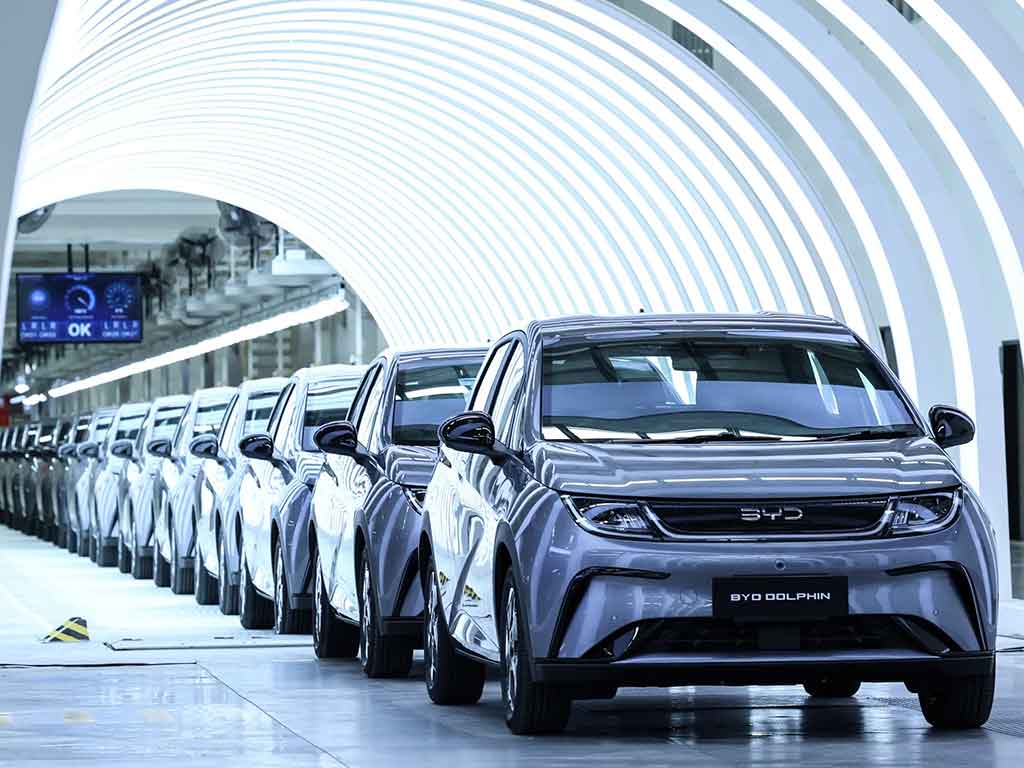
Sri Lanka’s automobile sector, long dominated by conventional fuel-powered imports from Japan and India, is now facing a tectonic shift. The entry of Chinese electric vehicle (EV) giant BYD has reshaped the landscape, capturing consumer demand at a scale that alarms traditional importers. In August 2025, BYD vehicle registrations soared to 1,424 units, a remarkable 80% increase from 790 in July, cementing the brand’s position as the fastest-growing nameplate in the market.
At the heart of this surge was the BYD Atto, which alone recorded 554 registrations, followed by the Sealion with 465 and the Seal with 307. These figures highlight a market increasingly tilting toward affordable EV technology, supported by advanced features and lower running costs compared to fuel-driven alternatives.
Yet, as BYD thrives, the broader industry is embroiled in controversy. Allegations are mounting that Sri Lanka Customs has deliberately stalled EV clearances, creating an uneven playing field designed to protect vested interests in the fuel-powered vehicle import business. This dual narrative of growth and obstruction paints a complex picture of Sri Lanka’s mobility transition.
BYD’s Triumph Amid a Modest Market Recovery
The broader Sri Lankan vehicle market recorded only 1.9% growth month-on-month in August, with total registrations reaching 38,240 compared to 37,543 in July. Within this, individual market segments painted a mixed story.
- Three-wheelers saw an extraordinary revival, with registrations soaring by 430% to 2,497 units. Bajaj maintained near-total dominance, commanding a 92% market share with 2,286 units.
- Automobiles, in contrast, declined by 4%, falling from 6,745 in July to 6,475 in August.
- Motorcycles registered a marginal dip of 2%, recording 27,585 units. Still, they held the lion’s share of the market at 72%, with Bajaj and TVS capturing 37% and 25% market share respectively.
- Trucks performed moderately, with 918 registrations, where Toyota led at 24% market share, followed by Lanka Ashok Leyland and Tata at 13% each.
- Buses, however, remained a niche segment, with just 72 registrations, again led by Lanka Ashok Leyland at 22% market share.
While these statistics underline volatility across fuel-driven segments, EVs spearheaded by BYD stood out as a category of growth and disruption.
Customs Controversy: A Hidden Agenda Against EVs?
Despite BYD’s success in August, industry watchers point out that July’s slump was linked to customs detention of incoming shipments. Critics allege that Sri Lanka Customs has selectively targeted BYD vehicles under the guise of “technical inspections,” while other importers faced no such barriers.
The suspicion is that elements within Customs are colluding with traditional vehicle importers to slow down the growth of EVs and protect fuel-based imports. EconomyNext recently reported plans to halt EV imports under the pretext of detailed “evaluations,” raising fears of an orchestrated campaign.
For consumers, this translates into delayed deliveries, restricted options, and artificially inflated prices. For policymakers, it raises questions about transparency, corruption, and the credibility of Sri Lanka’s commitment to clean energy and investment promotion.
The Consumer’s Loss: Price, Environment, and Trust
The fallout of a restricted EV market is threefold:
- Price Inflation: With limited competition, EV prices could soar, pushing buyers back into the used fuel-vehicle market. This would undo the affordability advantage of EVs and restrict access to advanced technology.
- Environmental Setback: Blocking EV adoption undermines Sri Lanka’s climate commitments, particularly the pledge to reduce greenhouse gas emissions and dependence on fossil fuels.
- Economic Harm: Greater fuel imports would increase the trade deficit, while stalled EV growth discourages foreign direct investment in new technology and charging infrastructure. Tax revenues, too, would suffer if imports shift back to under-valued used vehicles rather than transparent new EV registrations.
Such consequences highlight why the EV sector is not just an industry story but a national policy challenge.
A Tale of Two Markets: EVs vs Fuel Imports
The tension between EVs and fuel vehicles is not unique to Sri Lanka. Globally, nations are transitioning toward electrification, with countries like China and India making rapid strides. But in Sri Lanka, the contest has taken a distinctly political and bureaucratic form.
Fuel-vehicle importers, long accustomed to dominating the market with Japanese reconditioned cars, now face existential competition from brands like BYD offering factory-new, tech-driven EVs at comparable prices. The customs blockade, critics argue, is simply a way to buy time for these entrenched interests to adjust—or to block the EV wave entirely.
The Political Economy of Customs
Customs officials often claim that inspections are part of due diligence to verify specifications such as engine output and compliance with local standards. However, industry veterans note that globally accepted manufacturer certifications should be sufficient. By singling out EVs, the system creates suspicion of collusion between white-collar officials and powerful import lobbies.
This controversy comes at a delicate time for Sri Lanka, where public trust in institutions is already fragile. If consumers perceive that policy is being manipulated to deny them access to affordable EVs, the backlash could extend beyond the automobile market into wider debates on governance and accountability.
The Broader Implications: Economy, Investment, and Policy
Beyond consumer inconvenience, the customs standoff has implications for Sri Lanka’s broader economy. The EV sector is tied to global investors, supply chains, and technology transfer opportunities. By restricting growth, Sri Lanka risks losing billions in potential investment, much-needed during its fragile recovery.
Moreover, policy inconsistency damages the nation’s global reputation. Investors look for stability and fairness in regulations. A perception of corruption or selective enforcement can drive capital elsewhere, just as Sri Lanka struggles to rebuild after years of economic crisis.
The Dream vs the Reality
For Sri Lankan consumers, EVs symbolize more than just cars. They represent a dream of affordability, modernity, and environmental responsibility. But the customs deadlock threatens to turn this dream into disillusionment.
A government that once promised a “green transition” and technological progress now faces accusations of enabling a black market of corruption that benefits a few at the cost of millions. Used vehicle dealers, oil importers, and select bureaucrats may profit, but consumers pay with higher costs, lost opportunities, and a polluted environment.
The Call for Action
To restore faith, policymakers must act decisively. This includes:
- Ordering Customs to immediately release detained EVs in line with global best practices.
- Creating a transparent EV import framework with clear, published rules to prevent manipulation.
- Promoting a level playing field where fuel and electric vehicles compete fairly on consumer demand rather than bureaucratic favoritism.
- Expanding EV infrastructure—charging stations, tax incentives, and financing schemes—to encourage adoption.
- Engaging with global EV leaders like BYD to secure long-term investment, technology transfer, and joint ventures.
Only such measures can undo the perception that Sri Lanka is hostile to innovation and consumer choice.
A Defining Moment for Sri Lanka
The detention of BYD vehicles at customs is more than a trade dispute. It is a litmus test of Sri Lanka’s governance, economic direction, and environmental commitment. Will the country embrace the future of clean mobility, or will it remain trapped in the politics of patronage and protectionism?
As EV adoption surges globally, Sri Lanka cannot afford to fall behind. The choice before policymakers is clear: support consumer rights, transparency, and sustainable growth or risk sacrificing the nation’s future for short-term gains.
BYD’s 80% rebound in registrations proves that Sri Lankan consumers are ready for EVs. But unless customs manipulation and corrupt networks are dismantled, the nation risks derailing its own green transition. The government must act, not only to protect buyers but also to safeguard the economy, environment, and credibility of public institutions.
Sri Lanka’s journey toward electrification is at a crossroads. Which path it takes will determine not just the future of its auto industry but also its standing in the global economy.