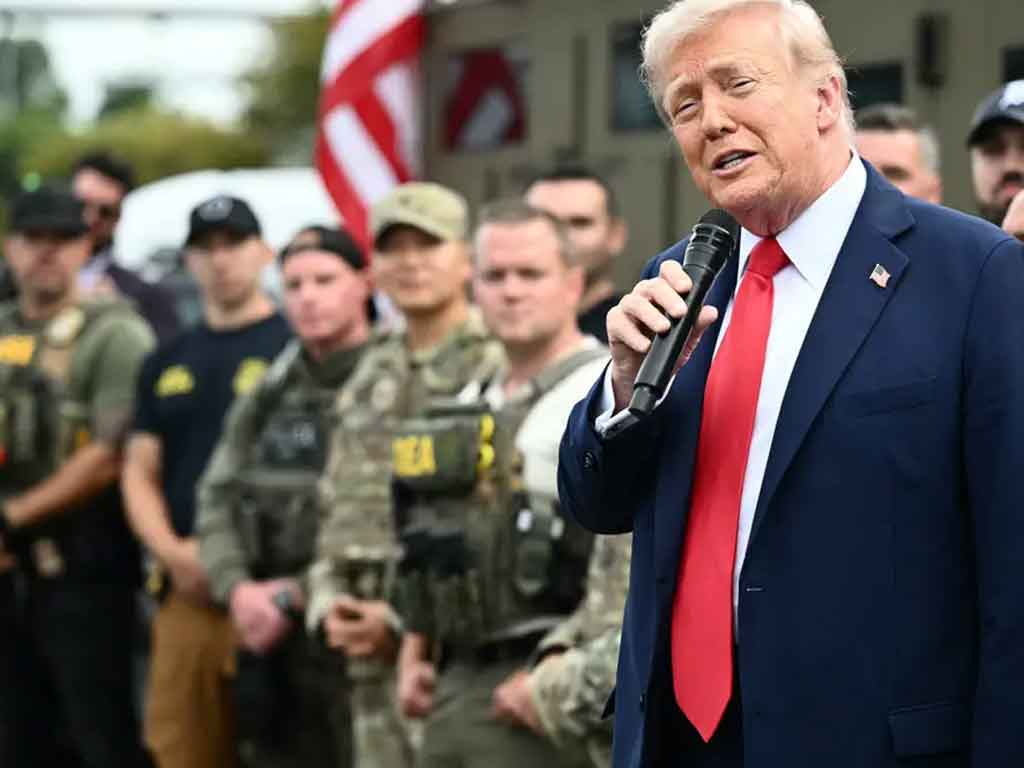
The Trump administration is expanding federal law enforcement deployments across several Democratic-led cities, framing the effort as part of a broader crackdown on crime. President Donald Trump has described the strategy as both a public safety measure and a potential “training ground” for the military, with Memphis, Portland, Chicago, Los Angeles, and Washington, DC, among the key focus areas. While the White House argues the initiative will restore order, many Democratic leaders are pushing back, calling the moves unnecessary, politically motivated, and a misuse of federal power.
In Memphis, a new task force has already deputized more than 200 officers, leading to dozens of arrests. Federal officials, including Attorney General Pam Bondi, insist the operation will continue regardless of the ongoing government shutdown. However, Memphis Police Chief C.J. Davis has voiced concerns about the scope of the National Guard’s involvement, stressing the importance of sustainable crime reduction rather than short-term suppression. Local officials are also preparing for a possible surge in prosecutions tied to the expanded federal presence.

Portland has also become a flashpoint. Trump announced the arrival of the National Guard, though local officials disputed the timeline. Oregon’s governor and mayor have challenged the deployment in court, arguing it is unlawful and unnecessary given the largely peaceful nature of ongoing protests near an ICE detention facility. The operation involves about 200 federalized Guard troops who now answer directly to U.S. Northern Command rather than state leadership, heightening tensions between federal and state authorities.
Chicago is bracing for its own deployment, with Governor JB Pritzker condemning the move and even suggesting Trump should be removed from office. Federal agents have already clashed with protesters near ICE facilities, fueling fears about civil liberties. Similar disputes have played out in Los Angeles and Washington, DC, where earlier Guard deployments faced legal challenges. Despite growing resistance and lawsuits, Trump and his allies argue these deployments demonstrate a strong stance on law and order, underscoring how policing has become a central political battleground.