A quiet Sri Lankan village has been torn apart by one of the largest pyramid schemes in recent history, leaving farmers, teachers, health workers, and entire families drowning in debt as the masterminds flee with billions.
The people of Pannalgama village in Ampara are facing financial ruin after falling prey to a massive pyramid scheme that promised quick profits but ended in despair. What started months ago as a small lamp-making business named Arunalu Pahansilu quickly transformed into one of the largest scams in recent history, defrauding villagers and residents of nearby areas of nearly Rs. 200 crores.
The scheme first appeared harmless. Villagers were asked to invest Rs. 50,000, for which they received 1,000 incense sticks and boxes. After packing and returning the finished products, participants were rewarded with Rs. 75,000. The business seemed profitable, and word spread quickly across Pannalgama and neighboring villages. Encouraged by early returns, hundreds of residents rushed to join.

As the scheme gained momentum, the organizers expanded. They introduced a second stage, asking investors for Rs. 250,000, promising even greater returns. Villagers received 6,000 incense boxes and were told that after returning them, they would get back their investment plus Rs. 150,000 profit. This created a frenzy. Many families mortgaged their paddy fields, pawned jewelry, borrowed from moneylenders at high interest rates, and even sold household goods to participate. Amounts as high as Rs. 10 lakhs, 30 lakhs, and even 100 lakhs were handed over, with the hope of securing life-changing profits.
However, the dream quickly collapsed. Raw materials stopped arriving on time, excuses multiplied, and repayments were delayed. Some villagers managed to recover part of their money, but most were left empty-handed. Desperation turned to anger when, on October 3, 2025, the scheme’s operators, Suranga Sadaruwan and Piyumi Buddhini Jayathunga, fled the village. Shockingly, they even left their child behind, who was later returned to them through a relative.
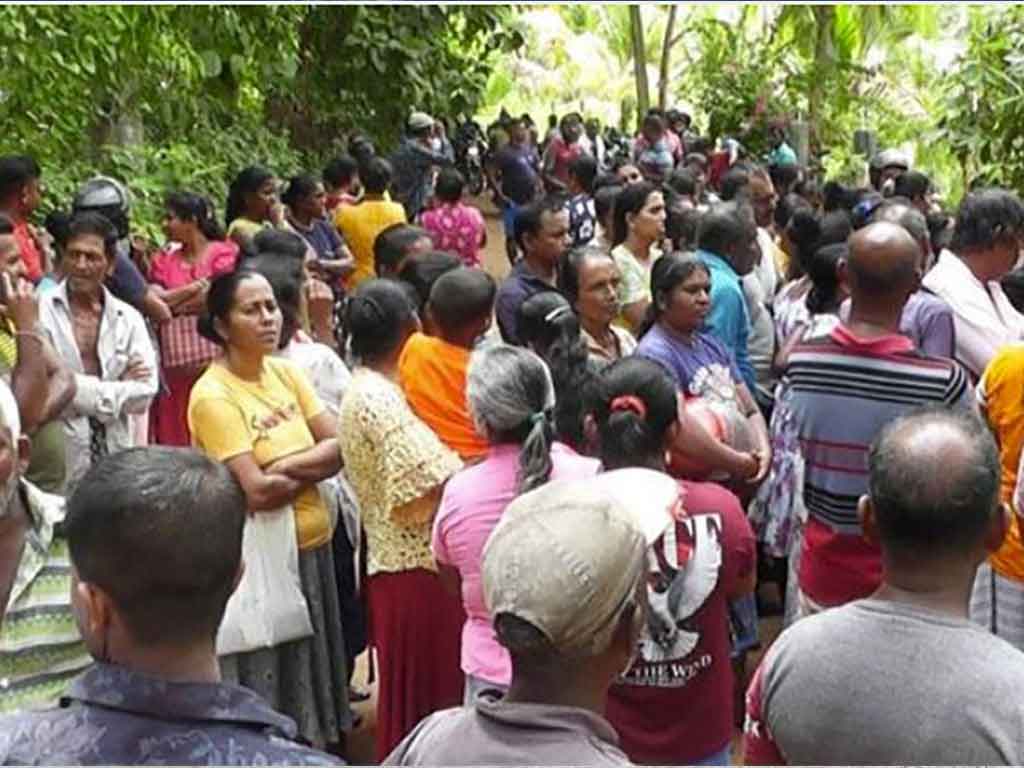
By then, the damage was done. Hundreds of villagers were left stranded with debts they could not repay. On September 29, 2025, a meeting was held at the Pannalgama temple to discuss the crisis, attended by villagers and local political leaders. But promises of repayment within a month proved hollow, as the fraudsters disappeared days later. Now, only the parents of Piyumi remain in the house that once operated as the business’s center, while villagers gather outside in anger and despair.
The scam’s impact has devastated not only Pannalgama but also neighboring areas such as Thottama, Kumana, Bakmitiyawa, Higurana, Thimbirigolla, Madawalalanda, Ekkaloya, Uhana, Koknahara, Siyambalanduwa, Wellawaya, and Monaragala. Victims include not just villagers but also teachers, health workers, police officers, and businessmen, showing the scale of deception.
The fraud was sophisticated. Participants were issued receipts stamped “PAID,” giving the appearance of legitimacy. Representatives were appointed in surrounding villages to collect money, further expanding the scheme. These local agents are now being accused of enabling the racket, though the masterminds have fled.
The Damana Police Station and the Fraud Investigation Unit at the Ampara Superintendent of Police’s Office have received multiple complaints. But for villagers who mortgaged land and borrowed at 10 percent monthly interest, justice may not come fast enough. Some women laborers, who borrowed heavily to join the scheme, now find themselves unable to repay lenders. Domestic tensions have escalated, with families torn apart after wives secretly handed over savings or pawned goods without informing their husbands.
The human cost is staggering. Farmers say they cannot cultivate their paddy fields or henna crops this season because all their capital is gone. Households once hopeful of financial progress now face crushing debts. The entire community has been reduced to what one villager described as “a graveyard,” with livelihoods destroyed and trust shattered.
Unofficial estimates suggest that in Pannalgama alone, multiple individuals invested Rs. 10 lakhs or more, with the total scam amounting to nearly Rs. 200 crores across the region.
This incident exposes the risks of pyramid schemes that promise unrealistic profits. Villagers who ignored warnings from a few cautious individuals are now paying the price. Their desire for quick money, combined with the professional appearance of the scam, led to one of the worst financial frauds to hit rural Sri Lanka in decades.
As investigations continue, the future for the people of Pannalgama looks uncertain. With their savings gone, debts piling up, and anger rising, they now wait for authorities to deliver justice and attempt recovery of their funds. But even if arrests are made, the scars left by this fraud will linger for years.