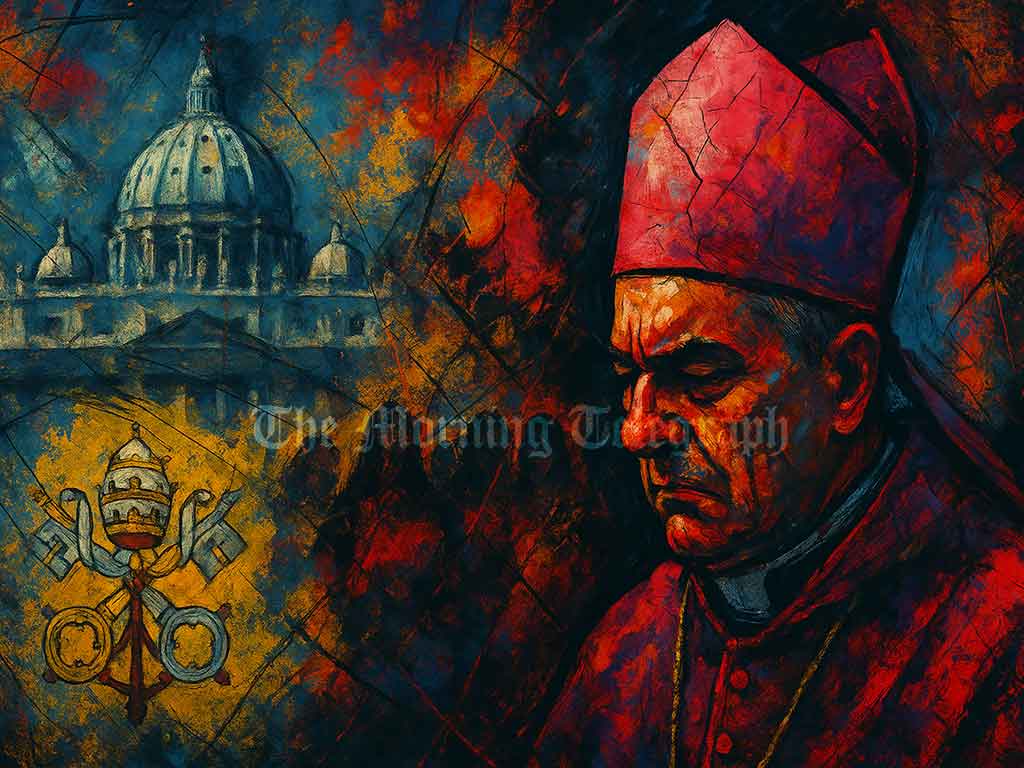
A Vatican probe into Bishop Ciro Quispe López has uncovered a shocking saga of lust, betrayal, and corruption that has left the Peruvian Catholic Church reeling and the Vatican scrambling to restore its credibility.
A dramatic scandal has rocked the Catholic Church in Peru after Bishop Ciro Quispe López of Juli was forced to resign following a Vatican investigation that uncovered an explosive mix of sexual misconduct, corruption, and financial irregularities. The revelations have not only shocked the faithful but also raised fresh questions about the moral authority of the Church in Latin America.

The Times UK first revealed that Bishop Quispe, aged 51, had maintained simultaneous relationships with as many as 17 mistresses, including a nun and a lawyer. The scandal reached its peak when several of the women discovered they were romantically linked to the same man, leading to confrontations that nearly turned violent. Peruvian journalist Paola Ugaz, who reviewed the Vatican’s internal report, described the affair as “a real soap opera that also lifted the lid on serious abuse of power.” Many of the women were reportedly too afraid to come forward, fearing the bishop’s influence and connections.
The Vatican launched its investigation after journalist Kevin Moncada of Sin Fronteras published an exposé in April last year, which revealed that two of the bishop’s lovers had fought over him. What investigators uncovered went far beyond rumors. Audio messages, photographs, and videos allegedly sent by Quispe to his mistresses were obtained, with one embarrassing mistake reportedly occurring when he forwarded explicit material to his cleaning lady. The housekeeper later told Church authorities she had found women’s hair in his shower and stained sheets in his residence, evidence that further fueled suspicions of misconduct.
Despite mounting accusations, Quispe has denied wrongdoing, dismissing the scandal as a smear campaign orchestrated by what he called “dark hands.” Yet reports from Infobae, a Peruvian outlet, suggested that the bishop admitted in a private message to having sex inside his official residence, a direct violation of his vows.
The Vatican’s probe did not stop at sexual impropriety. Investigators uncovered claims that Quispe embezzled Church funds and misappropriated money from the United Nations meant for indigenous Aymara communities. Locals confronted him over the alleged misuse of funds, and according to Ugaz, he only returned the money after they threatened to lynch him. The scandal deepened further with bizarre revelations of Quispe’s involvement in a chicken restaurant chain named Patas Arriba, literally translated as “legs in the air.” Reports indicated that he used Church furniture to furnish one of the restaurants, adding to accusations of financial misconduct.
The Vatican accepted Quispe’s resignation, with Pope Leo XIV personally acknowledging the severity of the scandal. Pope Leo, who spent decades working in Peru, is no stranger to the challenges of its troubled clergy. He previously investigated cult-like sexual abuse within the Sodalitium Christianae Vitae order and has publicly backed journalists like Ugaz who exposed systemic corruption within the Church.
According to Ugaz, Pope Leo’s decision sends a strong message that the Vatican is determined to confront corruption and abuse within its Latin American ranks. Yet the scandal underscores how deep-rooted the crisis has become. The Times UK described the Quispe affair as “a scandal of lust, power, and hypocrisy,” exposing not just individual failings but also the structural weaknesses of the Peruvian Catholic Church.
This affair highlights a broader moral crisis within the global Church, where cases of abuse and financial impropriety continue to erode public trust. The Vatican faces increasing pressure to tighten oversight and restore accountability in a region where Catholicism remains deeply embedded in cultural and social life. For many believers in Peru, the fall of Bishop Quispe is both a shocking betrayal and a painful reminder of how fragile faith in institutions can be when leaders fail to live by the values they preach.