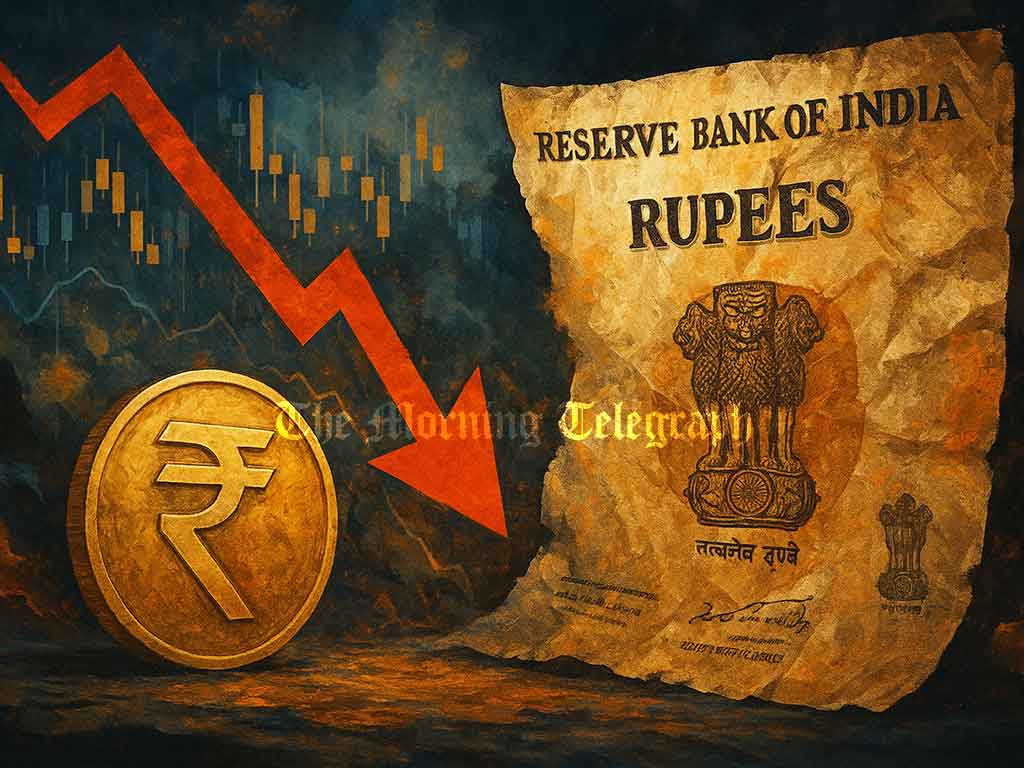
India’s central bank is battling to stabilize a collapsing rupee that has now become Asia’s worst-performing currency of 2025. Despite aggressive interventions in offshore markets, the rupee has fallen 3.6 percent against the US dollar, underperforming peers like the Taiwanese dollar, which has recorded gains of over 7 percent. The decline reflects deepening vulnerabilities in India’s financial system, driven by record capital outflows, equity sell-offs, and growing fears of trade disputes with the United States.
Bloomberg reports that the Reserve Bank of India (RBI) has re-entered the non-deliverable forwards (NDF) market in a decisive way, after reducing its presence there over the past year. In just two to three weeks, the central bank built short dollar positions of at least $15 billion, signalling its determination to protect the rupee. These interventions, while costly, are designed to limit volatility and reassure global investors that the RBI will not allow the currency to spiral out of control.

The rupee’s fall has been particularly concerning because it coincides with broader global pressures. Heavy selling of Indian assets has led to sharp capital flight, while speculation about potential punitive tariffs from Washington has rattled investor confidence. Market participants have been offloading Indian equities at a record pace, intensifying pressure on the rupee and forcing the RBI to act more aggressively than in previous episodes of currency instability.
RBI Governor Sanjay Malhotra has acknowledged the seriousness of the situation, stating that the bank is closely monitoring the rupee and will take “appropriate steps” as needed. Economists at HSBC argue that the central bank’s actions represent a clear shift from its usual reactive approach. Instead of focusing only on short-term fluctuations, the RBI is now directly targeting offshore market volatility, particularly through one-month NDF contracts.
Sources confirm that interventions have intensified since August and spiked in September, especially when the rupee breached the 89-per-dollar threshold. Activity reportedly peaks before the Mumbai market opens, ensuring that the currency’s offshore trading does not destabilize domestic sentiment. Analysts note that these efforts have reduced one-month volatility, suggesting at least some success in calming markets during a period of heightened uncertainty.
By relying on offshore NDF contracts, the RBI can influence the rupee’s exchange rate without directly selling large amounts of dollars from its reserves. This method preserves valuable foreign exchange buffers while sending a strong signal of commitment to defend the currency. However, it also highlights the delicate balancing act the bank faces: defending the rupee externally while managing domestic liquidity pressures internally.
Despite these efforts, the structural challenges weighing on the currency remain unresolved. Capital outflows, widening trade imbalances, and fragile global growth continue to undermine India’s financial position. The interventions may buy time, but they cannot replace the long-term policy reforms needed to restore investor confidence and strengthen the country’s economic fundamentals.
For now, India finds itself in a precarious position. The rupee’s weakness has amplified fears of imported inflation, higher debt servicing costs, and increased pressure on the government to stabilize the economy. Global investors are watching closely to see whether the RBI’s aggressive tactics can halt the slide or whether further depreciation is inevitable.
The rupee crisis underscores the vulnerability of emerging-market currencies in times of global uncertainty. As the RBI doubles down on interventions, the outcome will determine not just the stability of India’s currency, but also the confidence of international markets in one of Asia’s largest economies.