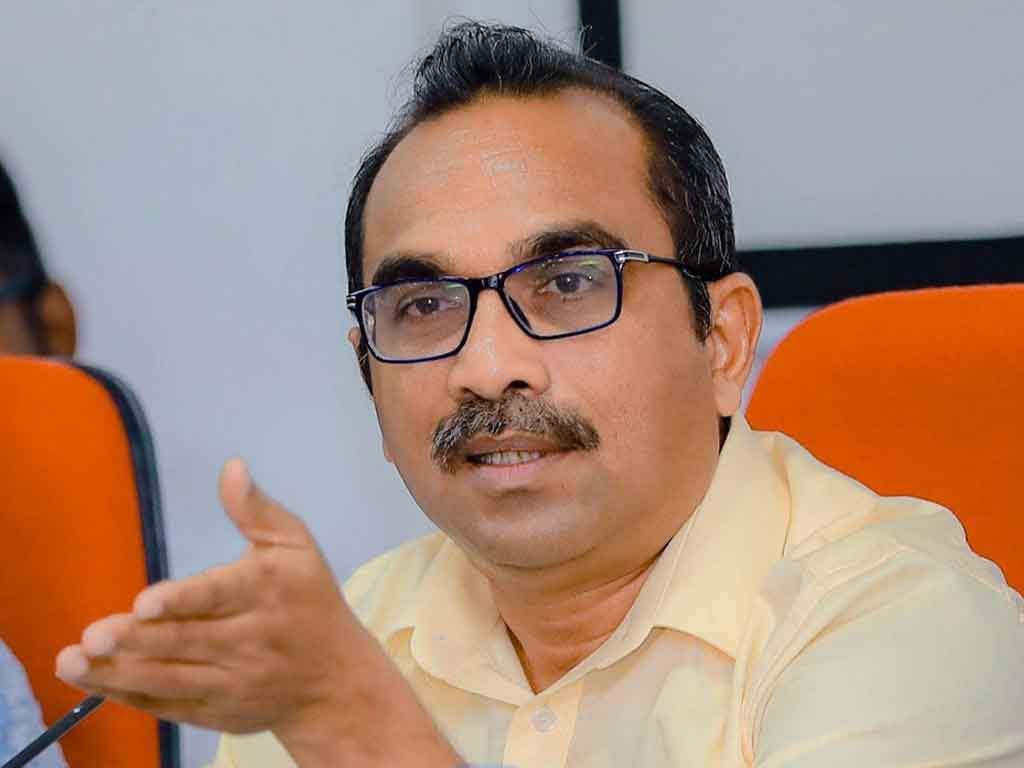
After taking charge of his powerful new portfolio, Minister Bimal Ratnayake dismissed criticism from the opposition, stressing that his accountability lies with his party, his family, and society, while hinting at bigger political ambitions ahead.
Bimal Ratnayake assumed duties as the new Minister of Transport, Highways and Urban Development following a cabinet reshuffle that was preceded by months of intense political discussions. Speaking to the media after being sworn in, Ratnayake made it clear that he does not expect validation from the opposition, declaring that no party in the current opposition has the vision or strategy to challenge his party in 2029.

According to him, the decision to make ministerial adjustments, including the creation of new deputy ministerial posts and one additional cabinet position, was a carefully considered move reached through common consent within the government. He acknowledged that his new role comes with greater responsibility and significant expectations, noting that the ministry of urban development is central to the lives of the people, unlike his previous assignment in Ports and Maritime Services.
Ratnayake explained that while the ports sector is strategically important for trade and commerce, its impact on the daily lives of ordinary citizens is limited. By contrast, urban development, highways, and transportation affect communities directly and require constant decision-making that shapes how people live and work. He described the portfolio as more challenging but also more crucial in terms of governance.
Responding to critics, Ratnayake firmly stated that he is not being judged by the opposition, nor does he need their approval. Instead, he stressed that his performance is measured by his political party, his family, and society at large. This remark highlights his belief that long-term credibility comes from those closest to his political journey rather than external voices.
Political observers note that Ratnayake’s comments reflect confidence in the stability of the current administration and his party’s future electoral strategy. His dismissal of the opposition’s relevance suggests that the government is preparing to consolidate power in the years ahead, especially with the 2029 election in view. However, by taking on the urban development ministry, Ratnayake also places himself in the spotlight, where every policy decision and infrastructure project will be closely scrutinized by the public.
The reshuffle underscores both opportunity and risk. While it strengthens the ruling party’s lineup with new faces and wider responsibilities, it also places heightened expectations on ministers like Ratnayake to deliver visible results.