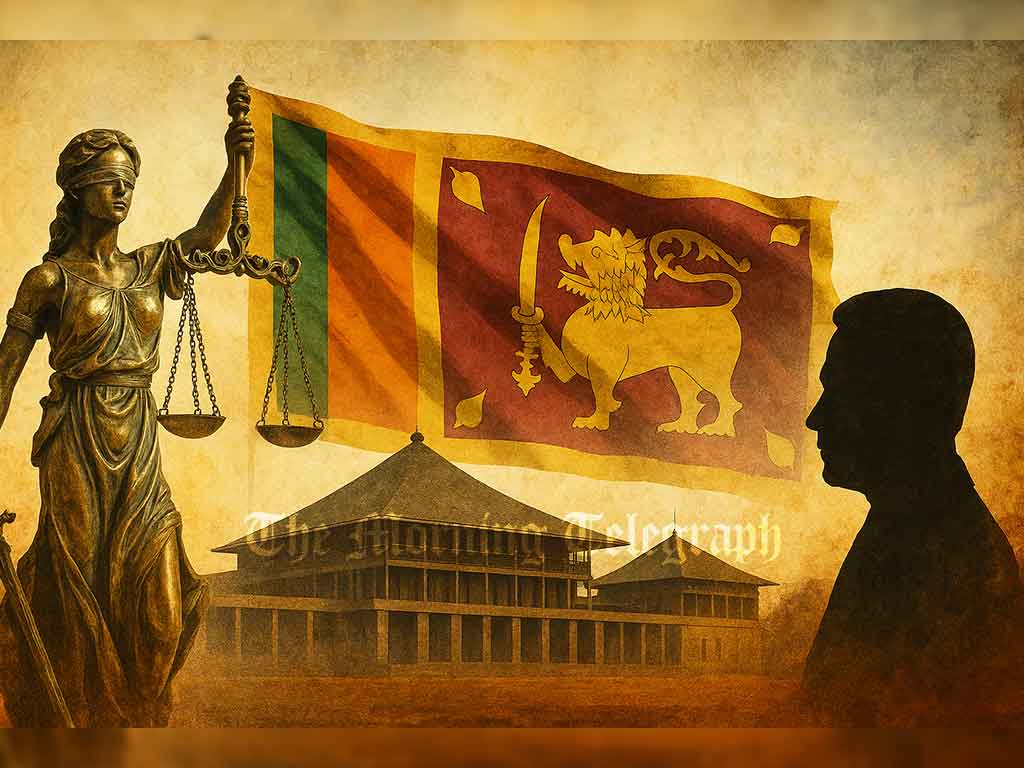
As Sri Lanka experiments with shifting from presidentialism back to parliamentarism, the country has become a test case for democracy’s adaptability. In an era of political polarization, authoritarian temptations, and eroding public trust, its trajectory may shape South Asia’s and the world’s debate over which governance models can truly endure.
Sri Lanka’s Democratic Turning Point
Sri Lanka’s 2024 elections marked a watershed moment in the country’s political trajectory. The crisis of 2022, when mass protests toppled a government and forced sweeping limits on presidential powers, reset the debate over governance. By 2025, the new administration was actively moving to restore the parliamentary system that governed the island during its early independence years, before the 1978 shift to a presidential model.
This potential swing back to parliamentarism highlights Sri Lanka’s role as South Asia’s “democracy lab.” The island’s political institutions have long reflected the region’s broader experimentation with governance models. Pakistan, for instance, began as a parliamentary state but oscillated between presidential and parliamentary rule. Bangladesh also shifted from parliamentary to presidential systems before returning to parliamentarism in 1991. Sri Lanka’s trajectory fits into this wider cycle of searching for institutional balance in a region where democracy remains fragile but deeply contested.
The debate is not confined to South Asia. Across the globe, questions of governance models—parliamentary, presidential, and semi-presidential—are being asked with renewed urgency. As authoritarian regimes like China, North Korea, and Saudi Arabia cling to centralized rule, most other states maintain at least the façade of democracy through regular elections. According to the education platform OpenStax, roughly 36 percent of democracies are parliamentary, 25 percent presidential, and 39 percent semi-presidential.

Democracy Under Pressure
Though democracy has become the global default, its legitimacy is under strain. Many regimes that label themselves democratic manipulate elections, silence dissent, and concentrate power in ways that hollow out democratic meaning. Even long-established democracies are experiencing declining trust in institutions, from legislatures and courts to the press.
The ideological battlefield has shifted inside democracies themselves. The fiercest struggles today are not between democracy and dictatorship, but between competing visions of democracy: majoritarian versus pluralist, centralized versus decentralized, populist versus institutional. Understanding how different models work, where they fail, and why they endure is now essential to safeguarding the democratic project.
The roots of modern democracy stretch back to ancient Athens, where limited forms of self-rule laid early foundations. The United States pioneered the presidential republic in 1789, establishing a directly elected executive separate from the legislature. This design promised independence, stability, and energy in governance but relied on checks and balances to prevent monarchical excess. By the 1800s, newly independent states across the Americas adopted the presidential model to assert sovereignty and resist foreign interference.
Parliamentary systems took a different path. Emerging from medieval Europe and shaped by England’s Glorious Revolution of 1688, parliamentarism bound monarchs to legislative consent. Over the next centuries, parliamentary institutions spread across Europe and former British colonies like Canada, Australia, and New Zealand. Their strength lay in flexible accountability: prime ministers could be removed by votes of no confidence, while coalition governments balanced shifting political forces.
Lessons of the 20th Century
The 20th century tested both systems. After World War II, parliamentary government was encouraged in war-torn Europe and Asia to prevent the rise of strongmen. The U.S.-led occupations of Germany and Japan demonstrated how external pressure and institutional design could anchor democratic transformation. Success showed that democracy could, under certain conditions, be transferable.
Meanwhile, the decolonization wave produced new democracies across Asia, Africa, and the Caribbean. India, building on British administrative frameworks, became the world’s largest parliamentary democracy after independence in 1947. But in Africa and elsewhere, many anti-colonial movements rejected parliamentarism in favor of presidentialism. Leaders argued that centralized presidential power would unify fractured states, ensure decisive governance, and resist external meddling. Ghana, Nigeria, Kenya, and Uganda all began with parliamentary systems but switched to presidential rule. Sri Lanka and Guyana also opted for presidentialism, reflecting frustrations with perceived parliamentary paralysis.
Yet presidentialism carried risks. Frequent collapses, weak coalitions, and legislative deadlock in parliamentary systems had prompted experimentation. France, after years of instability, created the semi-presidential Fifth Republic in 1958. Charles De Gaulle’s model balanced a directly elected president responsible for foreign affairs with a prime minister accountable to parliament. It institutionalized “cohabitation”—power-sharing between rival parties—and inspired other countries seeking a blend of strong leadership and legislative oversight.
Democracy in the Modern Era
The fall of communism after 1989 opened new space for democratic expansion. Many Eastern European states adopted parliamentary systems, while others experimented with semi-presidentialism. Georgia and Armenia reformed into parliamentary democracies in the 2010s, while Moldova steadily reduced presidential power. Romania and Poland adopted hybrid models, while Russia and Central Asian states entrenched super-presidentialism—executive dominance under strongman leaders.
Kyrgyzstan experimented with parliamentary democracy after its 2005 and 2010 uprisings, but constitutional changes in 2021 returned it to presidentialism. Ukraine’s reforms to weaken the presidency were reversed after the 2022 Russian invasion, which concentrated executive power in the name of wartime unity.
The U.S. also pursued pragmatic support for democracy abroad, encouraging parliamentary forms in post-Soviet Europe while tolerating presidential strongmen in Africa and the Middle East. Iraq was designed as a parliamentary system to foster consensus, while Afghanistan’s U.S.-backed presidentialism collapsed once external military support was withdrawn.
The Perils of Presidentialism
Political scientist Juan J. Linz warned in his 1990 essay “The Perils of Presidentialism” that new democracies should favor parliamentarism. He argued that presidential systems, with their winner-take-all dynamic, encouraged zero-sum politics, gridlock, and polarization. Without incentives for coalition-building, they often slid into authoritarianism.
Linz’s warnings proved prescient. Presidential democracies from Latin America to Africa often succumbed to breakdown or executive overreach. But parliamentary democracies were not immune. India and the UK both witnessed erosion of democratic norms under majoritarian governments, showing that concentration of power can also occur without presidentialism.
The strongman archetype has reemerged in diverse settings. Israel briefly experimented with direct election of its prime minister before reverting to parliamentary norms, only for Benjamin Netanyahu to later centralize power. In Hungary, Viktor Orbán reshaped parliamentary institutions to entrench his party’s dominance. In India, Prime Minister Narendra Modi has centralized executive authority, echoing earlier experiments by Indira Gandhi during the 1975–77 Emergency.
Strengths and Weaknesses of Models
Each governance model carries risks. Presidential systems promise stability but are vulnerable to coups and entrenchment of power. Parliamentary systems allow accountability but can collapse into deadlock when consensus fails. Belgium, for instance, went without a federal government for 652 days between 2018 and 2020, surviving only through institutional resilience.
Semi-presidentialism offers a middle path but introduces its own complexities. France has shown that cohabitation can lead to gridlock, while Tunisia’s post-Arab Spring instability highlighted how blurred executive boundaries can destabilize governance.
Sri Lanka’s evolution fits this global story. After years under presidentialism, the move back to parliamentarism is seen by many as a way to restore accountability, avoid concentration of executive power, and rebuild trust. Yet strong presidentialism retains allure in crisis-prone societies, offering a seductive promise of order and unity.
Democracy’s Future
The global wave of democratic backsliding has made experimentation inevitable. Democracies today face sharper internal rivalries than external threats. In many cases, divisions within democratic systems—between parties, ideologies, and competing governance models—are driving instability.
Sri Lanka, by swinging back toward a parliamentary framework, is positioning itself as a test case for whether pluralism, coalition-building, and legislative accountability can revive democratic legitimacy. Its experiment is being watched closely across South Asia and beyond, where similar pressures challenge fragile democracies.
The broader lesson is that no single model guarantees resilience. Parliamentary, presidential, and hybrid systems all succeed or fail depending on institutional culture, checks and balances, and political leadership. The coming decades will likely see even more hybrid experimentation, with governments borrowing elements from different systems to address crises. Council-manager governments in the U.S. already show how small-scale adaptations mimic parliamentary accountability.
Sri Lanka as the Democracy Lab
Sri Lanka’s democratic shift embodies the risks and possibilities of governance in the 21st century. For a nation scarred by civil war, economic collapse, and political turmoil, institutional design matters deeply. Its decision to move away from presidential concentration of power could inspire others—but failure could strengthen arguments for strongman rule.
The stakes extend beyond Sri Lanka. In a world of growing authoritarian confidence and democratic fragility, the island’s trajectory may help answer the defining question of our time: which model of democracy can adapt, endure, and inspire trust?