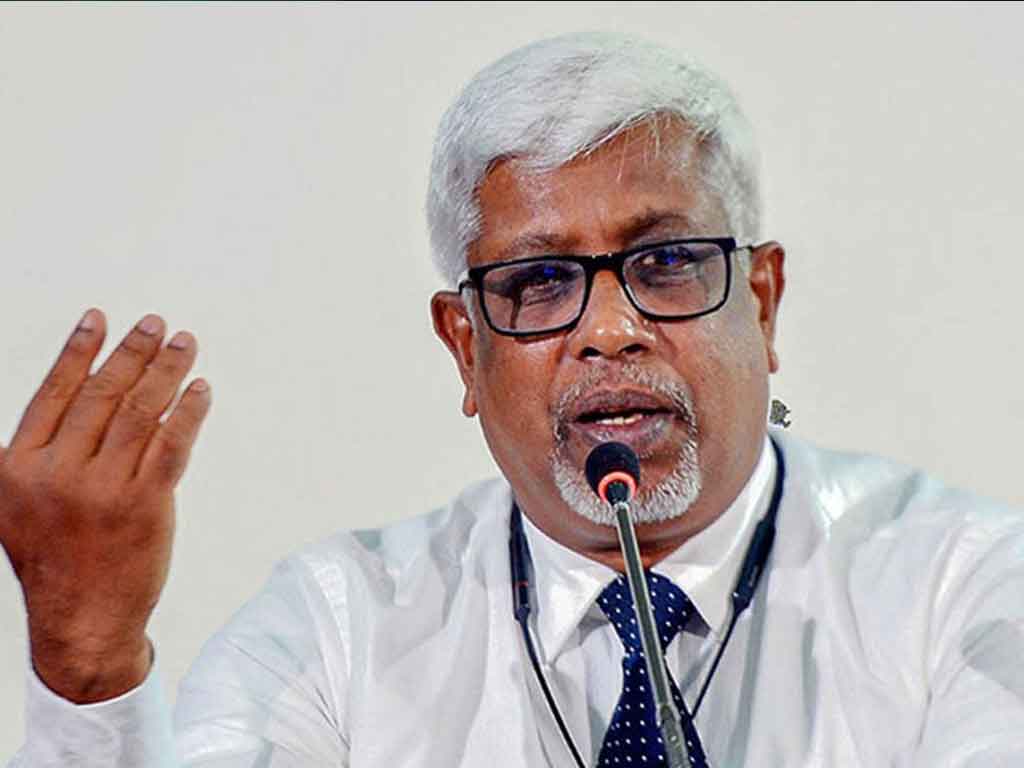
Sri Lanka’s democracy faces a troubling deadlock as Elections Commissioner General Saman Sri Ratnayake revealed that there is currently no legal framework in place to conduct provincial council elections. Speaking on the matter, he stressed that since the previous law was repealed, the new legislation meant to replace it has been left stalled since 2018, leaving the electoral process in limbo.
Ratnayake made it clear that the full responsibility lies with Parliament, which must act decisively to pass the necessary laws without further delay. He urged lawmakers to show genuine commitment to restoring the provincial council system, emphasizing that people’s representatives must prioritize establishing the legislation to ensure citizens’ rights to local governance are upheld.

The crisis traces back to the 50:50 mixed proportional representation system proposed in 2018, which also included delimitation as a core element. Although the delimitation report was completed and submitted to Parliament, the entire chamber, including the subject minister, rejected it. In response, a Prime Minister-led committee and later another chaired by former Speaker Karu Jayasuriya were tasked with resolving the issue, but both efforts collapsed following the dissolution of Parliament.
As a result, provincial council elections have been indefinitely postponed, undermining democratic accountability and weakening local governance structures. Ratnayake’s remarks underscore the urgency of resolving this legislative vacuum, warning that further delays will only deepen public disillusionment with the political system.
Without immediate legislative action, Sri Lanka risks allowing provincial governance to remain paralyzed, eroding citizens’ trust in both their representatives and the democratic process itself.