After Donald Trump’s historic visit to Israel, Hamas released hostages in exchange for Palestinian prisoners, marking the first step in his controversial Gaza peace plan. But with Israeli withdrawals, international monitors, and sweeping governance changes ahead, questions loom over whether this deal can deliver lasting peace.
One year after his re-election, US President Donald Trump has made his boldest move yet in Middle East diplomacy. In a dramatic first phase of his Gaza peace plan, Hamas has released all surviving Israeli hostages held in the Gaza Strip in exchange for the release of Palestinian prisoners. The unprecedented prisoner-hostage swap, announced at noon local time on Friday, has been hailed by Trump as the “historic dawn of a new Middle East.” Yet as celebrations fade, new questions arise about the future of Gaza, the stability of Israel, and the fate of Palestinians under a sweeping 20-point roadmap that promises to reshape the region.

The Hostage Release: A Painful Chapter Ends
The ceasefire agreement brokered by the Trump administration mandated the release of 48 Israeli hostages held by Hamas for over two years. Of these, only 20 were confirmed to be alive. Their release took place in two stages on October 13: seven in the first stage, followed by thirteen in the second.

The names of the first hostages released included Eitan Mor, Gali Berman, Ziv Berman, Mathan Angrest, Omari Miran, Alan Ohel, and Guy Gilbo-Dalal. Their return sparked emotional scenes across Israel, as families reunited after years of anguish.
The hostages were part of a larger group of 251 people captured during Hamas’s surprise attack on Israel on October 7, 2023, which left 1,200 people dead. Israel’s response was devastating, with its military operations in Gaza resulting in more than 67,000 deaths according to the Hamas-run Gaza Health Ministry.
The Prisoner Exchange: A Controversial Swap
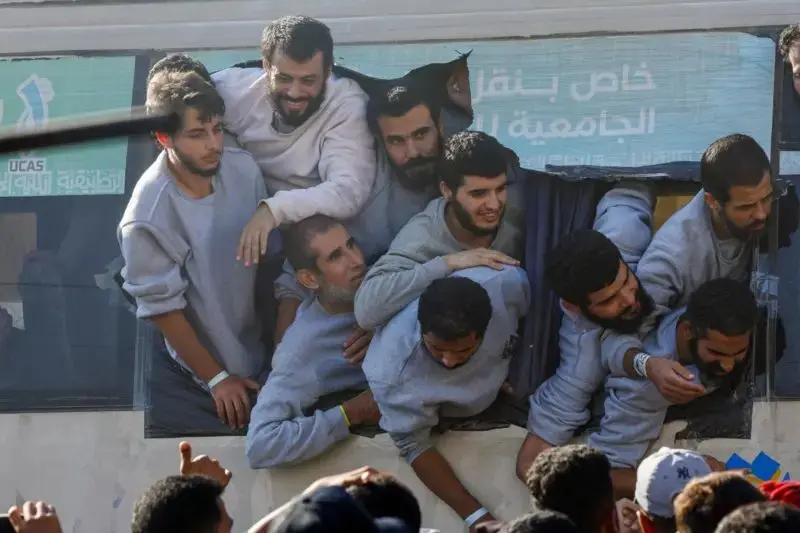
In exchange for the release of Israeli hostages, Israel agreed to release 250 Palestinian prisoners serving life sentences, along with 1,700 detainees held in the Gaza Strip. Among the released were 15 minors, whose return was celebrated by their families and communities.
The list of released prisoners did not include high-profile figures such as Marwan Barghouti or Ahmed Sadat, both of whom were demanded by Hamas but excluded from the deal. Israeli media reported that of the 250 released, about 100 would be deported to the West Bank, 15 to East Jerusalem, and 135 to Gaza or other countries.
For many Palestinians, the release represented a rare victory in the face of years of imprisonment and military occupation. Celebrations erupted in cities across Gaza and the West Bank, though critics argued that the exclusion of top political detainees showed the limits of Hamas’s bargaining power.
Trump in Israel: A Historic Speech
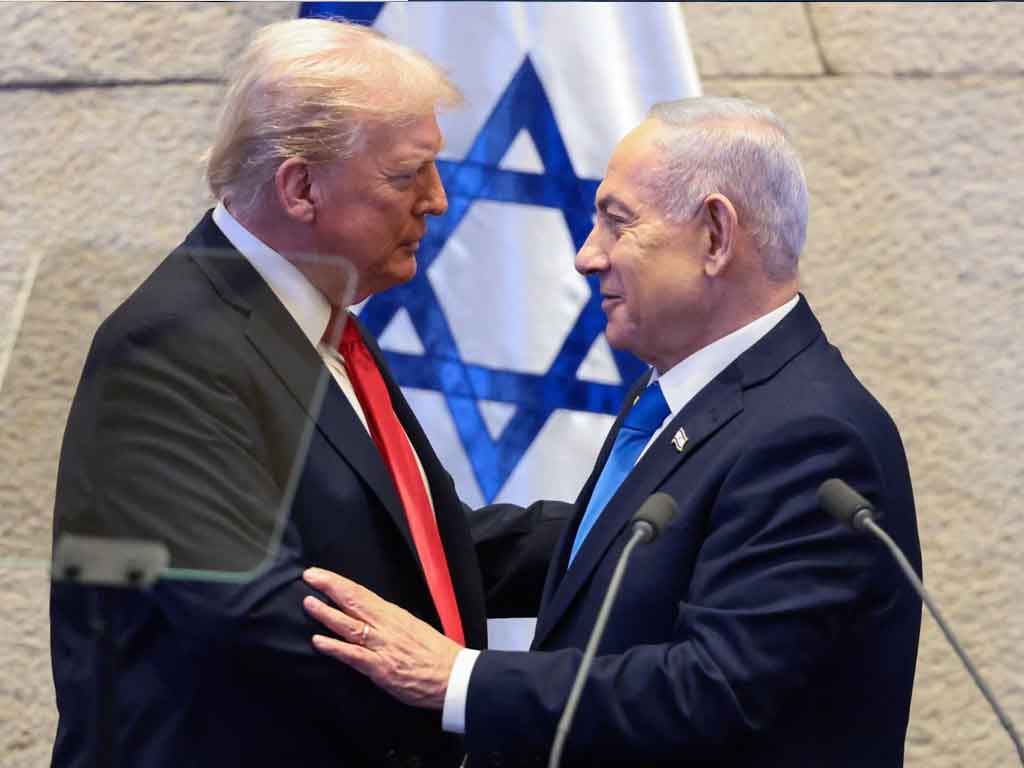
Marking the first time since 2008 that a US president addressed the Israeli Knesset, Trump used his speech to declare that “the long and painful nightmare is finally over.” He was met with chants of “Trump, Trump, Trump” as he outlined his vision for peace.
“This is the most challenging success of all peace efforts,” Trump told lawmakers. “Finally, for the Israelis, but also for the Palestinians, a long and painful nightmare is finally over.”
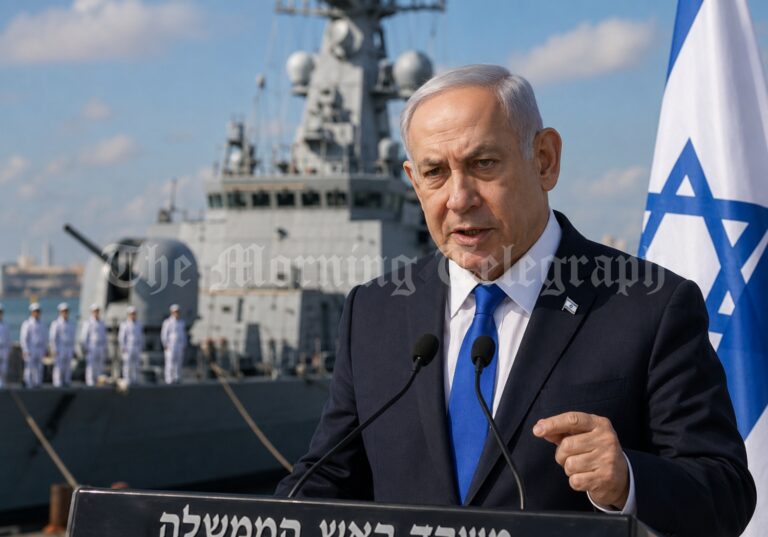
Prime Minister Benjamin Netanyahu praised Trump as Israel’s “greatest friend in the White House” and credited him with changing the US approach to Israel’s military operation in Gaza. The Israeli leader pledged to commit to peace under Trump’s plan, while also thanking US envoy Steve Witkoff and Trump’s son-in-law Jared Kushner, who attended alongside his wife Ivanka Trump.
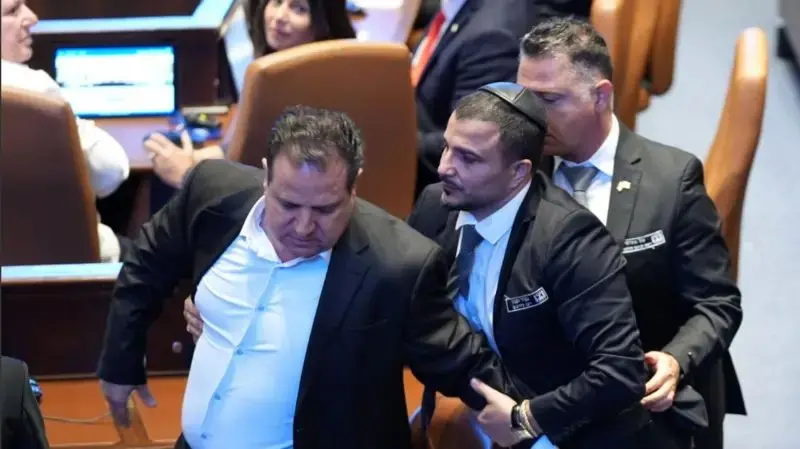
The speech was briefly interrupted by opposition MP Eman Odeh, who held a sign demanding recognition of a Palestinian state. Security quickly escorted him out, but his protest underscored the deep divisions that remain.
The Ceasefire: Monitored by International Forces
Under the agreement, Israeli forces began withdrawing before the hostages were released, reducing their control to about 53% of the territory. This marks the first stage of a phased withdrawal outlined in Trump’s peace plan.
To monitor the ceasefire, a multinational force of around 200 troops will operate in Gaza, overseen by the US military but without US ground troops. The force is expected to include soldiers from Egypt, Qatar, Turkey, and the United Arab Emirates, reflecting the international nature of Trump’s framework.
Trump’s 20-Point Gaza Peace Plan
The long-term vision rests on a comprehensive 20-point plan that Trump insists will “end the war if both sides agree.” The key elements include:
- Demilitarization of Gaza: All military and terrorist infrastructure must be dismantled.
- Provisional governance: Gaza will initially be governed by a Palestinian expert panel, overseen by an international “peace panel” that includes former UK Prime Minister Tony Blair, led directly by Trump.
- Transition to Palestinian Authority: After reforms, control of Gaza will shift to the Palestinian Authority, which currently governs parts of the West Bank.
- Exclusion of Hamas: Hamas will have no direct or indirect role in governance. Members may receive amnesty if they commit to peace, or safe passage to another country.
- Voluntary movement: Palestinians will not be forced to leave Gaza, but those who wish to emigrate will have the right to return.
- Economic revival: A “Trump Economic Development Plan” will be launched, aimed at rebuilding Gaza’s infrastructure, boosting employment, and encouraging foreign investment.
The Challenges Ahead
While Trump hailed the hostage release and prisoner exchange as “a new dawn,” experts warn that the road ahead is fraught with uncertainty. Hamas remains deeply entrenched in Gaza despite being excluded from governance under the plan. The Palestinian Authority, often seen as corrupt and disconnected from ordinary Palestinians, faces skepticism about its ability to govern effectively.
Israeli hardliners also remain wary of any concessions that might weaken Israel’s security. For many families of terror victims, the release of Palestinian prisoners was a painful compromise.
Meanwhile, human rights groups point to the staggering civilian death toll in Gaza as evidence that peace will require more than military withdrawals and political agreements. They argue that true reconciliation can only be achieved through recognition of Palestinian statehood, a demand echoed by Odeh’s protest in the Knesset.
A Defining Moment or a False Dawn?
Trump’s Gaza peace plan represents one of the most ambitious efforts to resolve the decades-long Israeli-Palestinian conflict. By securing the release of hostages and prisoners, he has achieved a milestone that eluded previous administrations. His speech in Jerusalem positioned him as both a peacemaker and a disruptor, unafraid to take bold steps.
Yet questions remain: Can the demilitarization of Gaza be enforced? Will the Palestinian Authority gain legitimacy in the Strip? Can international monitors prevent new outbreaks of violence? And will Hamas accept amnesty or seek new ways to resist?
As Trump heads to Sharm el-Sheikh for a peace summit with Egyptian President Abdel Fattah al-Sisi and other leaders, the world waits to see if this fragile truce will hold. For now, the release of hostages and prisoners marks a symbolic turning point. But whether it leads to lasting peace or becomes just another failed chapter in Middle East diplomacy remains to be seen.