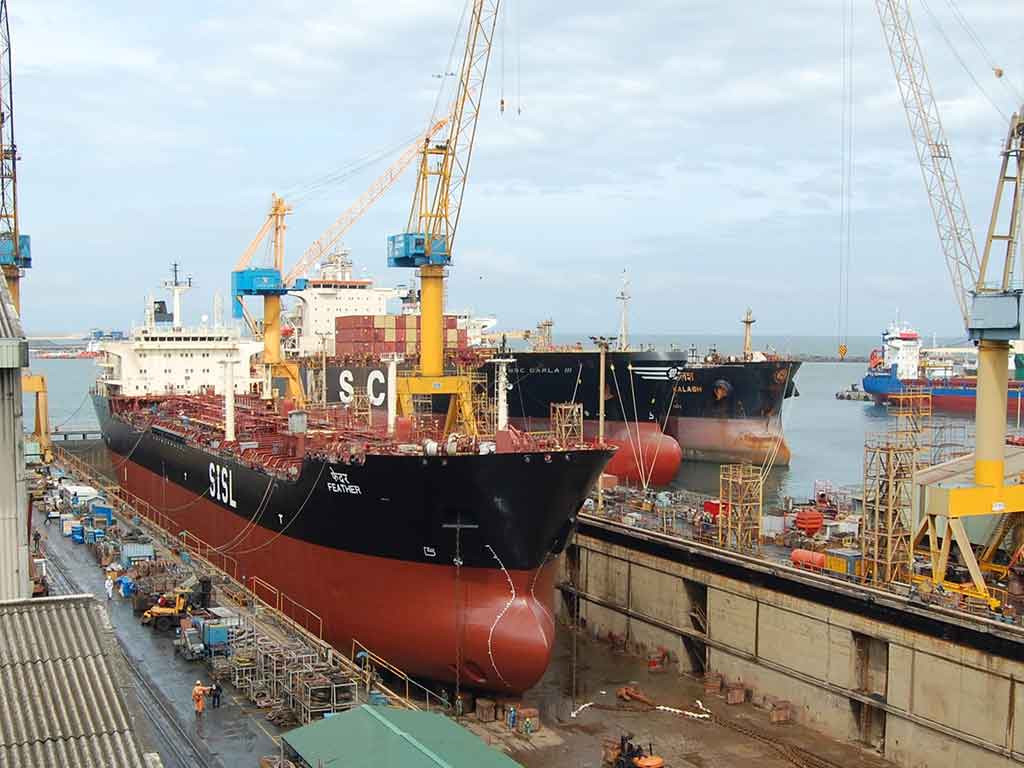
Colombo Dockyard tweaks its billion-rupee rights issue once again, with shareholder politics steering the course and small investors left wondering if they are just passengers on someone else’s ship.
Colombo Dockyard has announced that it will proceed with its long-discussed Rs. 12.93 billion rights issue, but with a fresh twist in the transaction structure. In a filing to the Colombo Stock Exchange, the shipbuilding and repair firm disclosed that its majority shareholder, Onomichi Dockyard Company Limited, will no longer renounce its rights in favour of Mazagon Shipbuilders Limited as initially planned. Instead, Onomichi will refrain from subscribing to its entitlement, allowing the ordinary voting shares tied to those rights to be directly allotted to Mazagon. This allocation will bypass existing shareholders who might have applied for additional shares, reserving the block exclusively for Mazagon.

The change requires shareholder approval via a special resolution, with the board of directors having cleared the revised procedure on October 1. This latest shift highlights how Colombo Dockyard’s fundraising plan is being carefully choreographed around its major shareholders rather than the open market.
The rights issue, first unveiled in July, involves 323.4 million new ordinary voting shares priced at Rs. 40 each, structured at nine new shares for every two currently held. The company’s stated objective is to strengthen working capital and ease liquidity pressures. However, the issue was postponed in August due to what were described as unavoidable circumstances, delaying a deal that had already drawn significant attention from investors.
With the revised structure, questions now linger about the real winners in this exercise. While Colombo Dockyard stresses that the rights issue is critical to its long-term stability, the exclusive treatment of Mazagon at the expense of smaller shareholders raises eyebrows about corporate governance, transparency and shareholder equity.
In Sri Lanka’s capital market, where confidence often rests on consistency and fairness, Colombo Dockyard’s latest maneuver underscores how investor trust can be tested when strategic interests overshadow broader shareholder participation. The company insists the move is designed to secure financial stability, but critics suggest it highlights the imbalance of power between large foreign shareholders and the wider investor community.
For now, the Rs. 12.93 billion rights issue sails ahead, but whether it anchors trust or stirs further discontent remains to be seen.