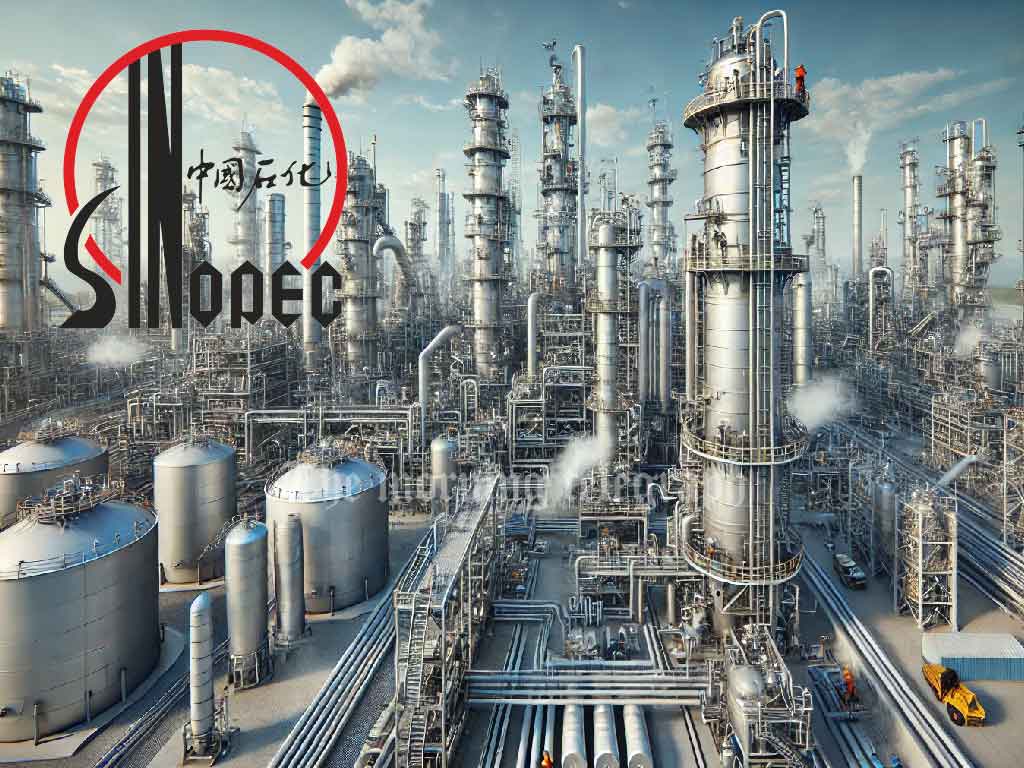
Sri Lanka has rejected a bold request from China’s energy giant Sinopec to sell 40 percent of crude oil refined at the $3.7 billion Hambantota refinery in the local market, signaling that Colombo will not allow foreign investment to override national energy laws and sovereignty.
The Hambantota refinery, the largest foreign direct investment in Sri Lanka’s history, was agreed upon earlier this year when President Anura Kumara Dissanayake signed the deal during his official visit to Beijing. While the project is viewed as a potential game-changer for Sri Lanka’s energy sector and economy, recent developments reveal growing friction between Sinopec’s ambitions and Sri Lanka’s regulatory framework.
Under the current agreement, Sinopec is permitted to sell only 20 percent of its output in the domestic market, with the remainder mandated for export under the Board of Investment (BOI) Act. However, Sinopec has pressed for the right to double this allowance to 40 percent, arguing that it would strengthen its commercial viability and market presence in Sri Lanka. Government sources confirm that this request has been rejected, citing legal and strategic reasons, though officials are weighing whether to allow a marginal increase to 25 percent.

An official at the BOI explained that the law is unambiguous: 80 percent of products from factories operating in investment zones must be exported, and only 20 percent may be sold locally. Any attempt to exceed this would not only violate the BOI Act but also set a precedent for foreign companies to demand exceptions. Allowing Sinopec to bypass this rule, officials caution, could undermine energy independence, destabilize the domestic oil sector, and create undue reliance on foreign-controlled supplies.
The government’s concern is not merely legalistic but strategic. If Sinopec were to offload nearly half its refined crude into the domestic market, it could distort pricing, weaken Sri Lanka’s control over energy policy, and increase vulnerabilities in times of geopolitical conflict. This, officials argue, strikes at the heart of Sri Lanka’s sovereignty in energy decision-making.
The issue has gained urgency as the Hambantota project begins to gather momentum. On October 15, a high-level Sinopec delegation met with Foreign Affairs Minister Vijitha Herath in Colombo to discuss the refinery’s progress. During the meeting, Sinopec representatives assured the government that construction would begin without delay and emphasized their commitment to moving the project forward within this year. Minister Herath, while welcoming the investment, conveyed that the government expected adherence to Sri Lanka’s laws and regulations. He also assured the delegation that any bureaucratic or procedural hurdles would be addressed promptly, but reiterated that the government would protect national interests first.
The Hambantota refinery, projected at $3.7 billion, is touted as a centerpiece of Sri Lanka’s long-term energy strategy. Positioned strategically near global shipping lanes, it has the potential to transform the island into a regional energy hub. For China, it represents not just an economic investment but also an extension of its Belt and Road footprint in South Asia. Yet, the current standoff underscores the complex balance Sri Lanka must strike between welcoming large-scale foreign investment and safeguarding domestic control over key sectors.
For Colombo, the stakes are high. With energy security a critical national priority, any arrangement that allows a foreign player excessive access to domestic markets risks undermining policy flexibility. Officials stress that export-oriented investment must remain the foundation of BOI agreements to ensure that local markets are not swayed by external pressures.
President Anura Kumara Dissanayake’s administration is expected to walk a careful line between honoring commitments made to Beijing and ensuring Sri Lanka’s legal and strategic frameworks remain intact. Analysts say the government may compromise by slightly increasing the local quota from 20 percent to 25 percent, but stopping short of Sinopec’s demand for 40 percent. Such a move would allow some flexibility without overturning the BOI’s central principles.
As construction gears up, the Hambantota refinery is set to become a landmark in Sri Lanka’s economic landscape. But the controversy surrounding Sinopec’s request has already revealed the tensions that come when global giants intersect with national priorities. For Sri Lanka, the challenge will be to harness the economic benefits of the project while ensuring that sovereignty, energy independence, and local stability are not sacrificed in the process.