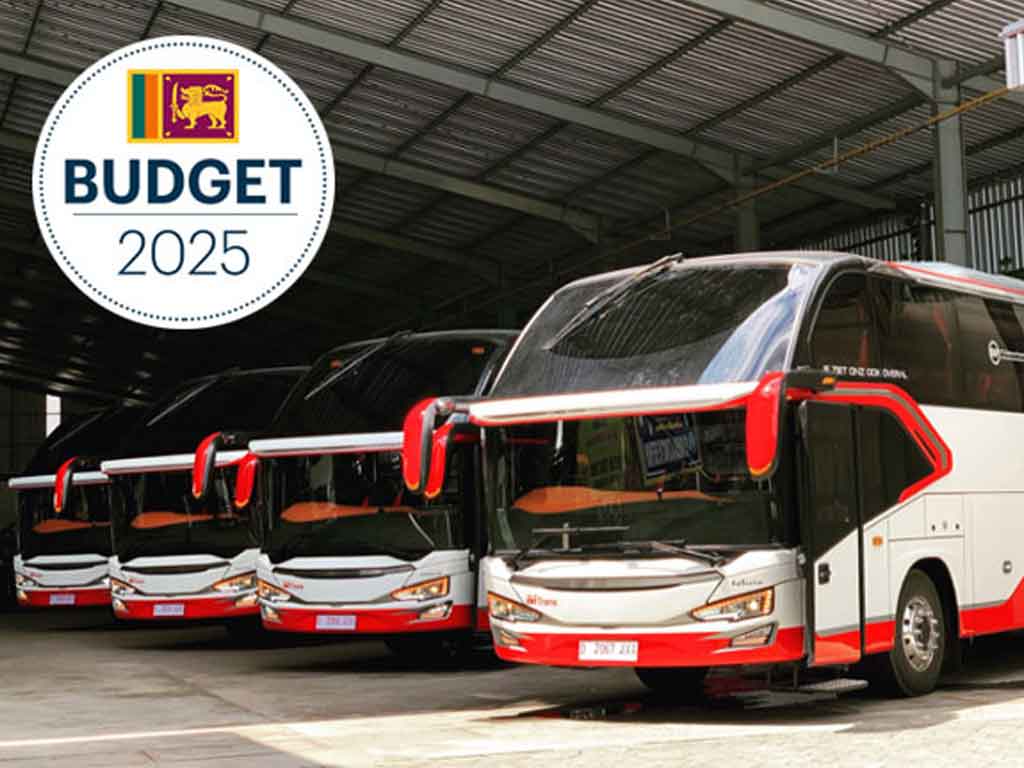
A multi-billion-rupee tender to purchase 100 luxury buses under the 2025 budget has ignited controversy, with allegations that the bidding process was deliberately designed to favor one dominant automobile company in Sri Lanka.
The Rs. 3 billion project, set to establish a state-backed Metro Bus Company, was introduced as a flagship initiative to modernize Sri Lanka’s urban transport. Key routes such as Kottawa-Pittakotuwa, Kadawatha-Pittakotuwa, and Moratuwa-Pittakotuwa are targeted for this new service, which the government claims will be a milestone in digitalized transport and improved public mobility. Yet, procurement specialists, market observers, and civil society groups are raising alarm bells, arguing that the tender conditions restrict fair competition.
Suspicion deepened when the share price of a major listed automobile firm, one of the potential bidders, rose sharply just weeks after the announcement of the bus purchase plan. Political analysts and market commentators described this surge as more than coincidence, suggesting that insider information about the tender’s terms may have leaked before the official release. Reports confirm that officials involved in drafting the bid documents are now subject to an internal investigation.

The most contentious issue is the financial eligibility criteria. The tender requires bidders to demonstrate an annual turnover exceeding Rs. 6 billion (approximately US$18 million) for at least three of the past five years. Additional conditions include a positive asset-liability ratio below 60 percent, working capital exceeding Rs. 3 billion (US$9 million) for two of the past five years, and a strong liquidity position. Critics argue these requirements are disproportionate to the project’s scale and unfairly exclude numerous local bus importers who have a proven track record of supplying vehicles to government agencies.
A former senior Transport Ministry official observed, “Turnover limits should not exclude reliable competitors. The focus should be on competence and delivery, not creating filters that shut out capable bidders.”
The technical specifications have also been criticized for being overly restrictive. Bidders must represent manufacturers that have produced at least 750 buses annually in three of the last five years, exported to at least five countries, and secured a range of ISO certifications. While international procurement standards are often stringent, analysts argue that these unified benchmarks conveniently align with the production profile of one specific multinational bus manufacturer, narrowing the competition to virtually one eligible player.
This overlap between the tender’s terms and the market footprint of a single supplier has intensified accusations that the tender was structured to benefit that company. The concern is not only about fair play in procurement but also about the long-term consequences for transparency, competition, and public confidence in the government’s flagship projects.
For the public, the stakes are high. The Metro Bus Company is being positioned as a transformative initiative, yet if its foundations are marred by favoritism, it risks undermining both the credibility of the transport sector and the integrity of government procurement.